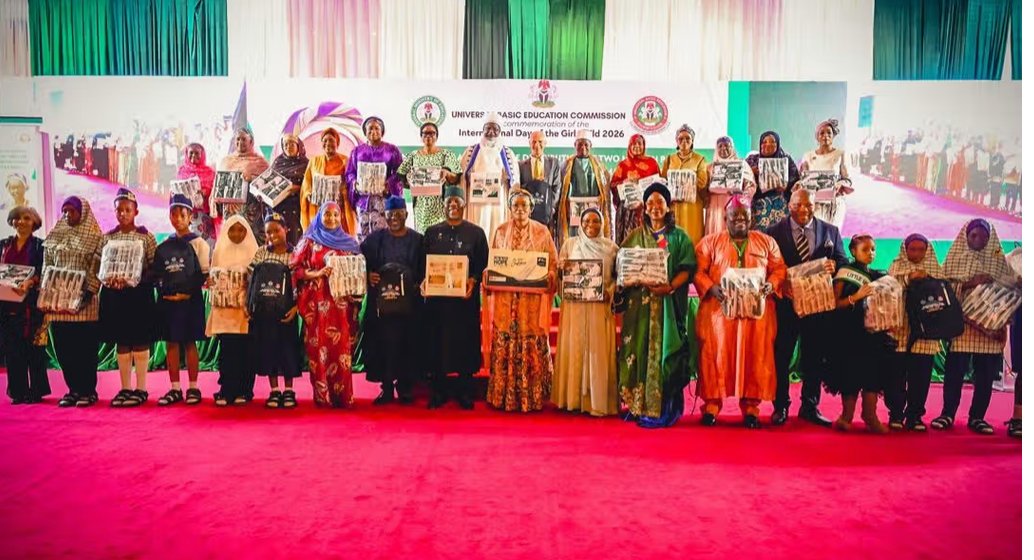
Nigeria’s First Lady, Senator Oluremi Tinubu, has said no Nigerian girl should be denied the opportunity to learn and fulfil her potential because of menstrual hygiene challenges or her family’s inability to provide basic educational materials.
Tinubu made the statement on Monday, stressing the importance of addressing barriers that prevent girls from participating fully in education. Her remarks highlight the connection between menstrual health, access to school supplies and efforts to ensure that every girl has the opportunity to complete her education.
For many families, the cost of essential learning materials can place additional pressure on household finances. Meanwhile, inadequate access to menstrual hygiene products, clean water and suitable sanitation facilities can make managing menstruation at school difficult for some girls.
The First Lady’s message underscores the need for practical interventions that protect girls’ dignity, support regular school attendance and create an environment where they can learn without avoidable obstacles.
Menstrual Hygiene and Girls’ Education
Menstrual hygiene is an important part of girls’ health, wellbeing and participation in education. When girls lack access to appropriate menstrual products and adequate sanitation facilities, managing their periods at school can become challenging.
Concerns about privacy, discomfort, stigma and the availability of clean facilities may also affect their confidence and classroom participation.
Addressing these challenges requires more than distributing sanitary products. Schools need access to clean water, functional toilets, suitable disposal facilities and private spaces where girls can manage menstruation safely and comfortably.
Education and awareness are equally important. Providing accurate information about menstrual health can help girls understand their bodies, seek assistance when needed and manage menstruation without unnecessary fear or embarrassment.
Teachers, parents and community leaders can also contribute by encouraging open, respectful conversations and challenging misconceptions that may expose girls to shame or discrimination.
Financial Barriers Can Limit Access to Learning
The First Lady’s remarks also draw attention to the financial pressures that can affect children from low-income households.
Basic educational materials, including exercise books, writing materials, school uniforms and other required supplies, can represent significant expenses for families already managing competing financial responsibilities.
When children cannot obtain these materials, they may experience difficulties participating fully in classroom activities. Such challenges can affect their learning experience and widen existing inequalities between students from different economic backgrounds.
Targeted assistance, school-based support programmes and partnerships with community organisations can help reduce these barriers.
However, support must be designed to reach the children who need it most. Transparent distribution systems and effective monitoring can help ensure that educational materials and other forms of assistance reach intended beneficiaries.
Creating Safe and Supportive Learning Environments
Ensuring that girls remain in school requires attention to the broader conditions in which they learn.
Schools must provide environments where students can participate without discrimination, humiliation or unnecessary barriers. This includes maintaining appropriate sanitation facilities, promoting health education and ensuring that girls can seek assistance when they encounter menstrual hygiene challenges.
Teachers and school administrators also have important roles in identifying difficulties affecting students and connecting them with available support.
Parents and guardians can reinforce these efforts by encouraging school attendance, discussing menstrual health without stigma and seeking assistance when financial difficulties threaten a child’s education.
Community organisations, private-sector partners and public institutions can complement these efforts through awareness campaigns, the provision of essential supplies and support for improvements in school infrastructure.
Shared Responsibility for Girls’ Development
The First Lady’s statement places girls’ education within a wider conversation about equity, public health and social development.
While government policies can establish frameworks for improving access to education and essential services, sustained progress also depends on implementation at the school and community levels.
Relevant interventions may include expanding access to menstrual hygiene products, improving water and sanitation facilities, supporting vulnerable households with educational materials and strengthening health education programmes.
These measures should be accompanied by efforts to understand the specific challenges girls face in different communities. The barriers confronting a student in a remote rural school may differ from those experienced by a girl in an urban settlement, making locally responsive solutions important.
Monitoring school attendance, access to essential supplies and the condition of sanitation facilities can also help stakeholders identify gaps and measure progress.
Protecting Every Girl’s Opportunity to Learn
Tinubu’s message reinforces the principle that menstruation and household financial difficulties should not prevent girls from accessing education or developing their abilities.
Achieving that goal requires practical support for families, appropriate school facilities, menstrual health awareness and policies that address the needs of vulnerable students.
It also requires sustained cooperation among government institutions, schools, parents, communities and organisations working to improve children’s welfare.
Ultimately, ensuring that every Nigerian girl has the opportunity to learn and fulfil her potential means addressing the everyday challenges that can interrupt her education. By making menstrual hygiene support and access to basic learning materials part of broader educational efforts, stakeholders can help create conditions in which girls are better equipped to attend school, participate confidently and pursue their ambitions.
About The Author