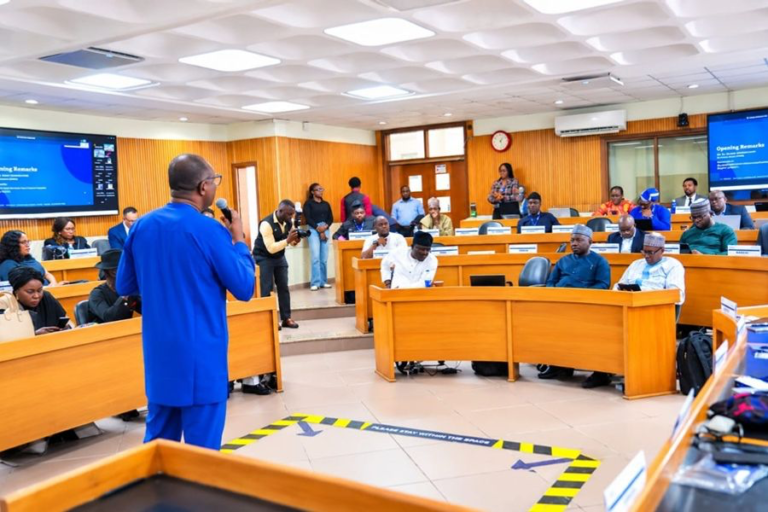
The Renewed Hope Initiative (RHI), the social intervention platform of Nigeria’s First Lady, Senator Oluremi Tinubu, has extended its Food Outreach Scheme to Osun State, bringing the number of beneficiary states to 31.
The expansion represents another phase of the initiative’s efforts to provide food assistance to communities facing economic pressures and difficulties accessing essential household supplies.
By extending the scheme to Osun, the Renewed Hope Initiative is broadening its geographical reach and bringing its food intervention programme to more beneficiaries. The development also highlights the growing importance of targeted social support as households continue to contend with the cost of food and other basic necessities.
Renewed Hope Initiative Expands Food Support
The Renewed Hope Initiative was established under the leadership of Nigeria’s First Lady, Oluremi Tinubu, to support vulnerable groups and promote social welfare through targeted interventions.
Its Food Outreach Scheme forms part of these efforts, focusing on food assistance for beneficiaries in participating states.
The extension to Osun brings the programme’s reach to 31 states, demonstrating the scale of its geographical expansion. However, the number of participating states alone does not establish how many individuals or households have received assistance, making beneficiary figures and distribution details important measures of the programme’s impact.
Food assistance initiatives can provide immediate relief to households struggling to meet daily nutritional needs. They can also help reduce some of the pressure on families whose incomes have been affected by rising living costs.
For beneficiaries, the value of such interventions depends on the quantity and quality of food supplied, the fairness of the selection process and the regularity of support.
Why Food Outreach Matters
Food affordability remains an important social and economic concern because household spending on essential food items can place considerable pressure on limited incomes.
When food prices rise faster than earnings, families may be forced to reduce consumption, change their diets or redirect money from other necessities such as healthcare, education and transportation.
Targeted food outreach can help ease some of these immediate difficulties, particularly for households with limited financial resources.
Such programmes may also support older people, persons with disabilities, low-income families and other vulnerable groups, depending on their eligibility criteria and implementation arrangements.
The extension of the RHI scheme to Osun therefore creates an opportunity to reach additional communities through direct food support.
Nevertheless, food distribution programmes are most effective when assistance reaches intended beneficiaries transparently and is coordinated with broader measures aimed at improving household welfare.
Osun Becomes the 31st Beneficiary State
With Osun joining the programme, the initiative has expanded its presence across a substantial number of states.
The development may also provide an opportunity for state-level institutions and community organisations to support implementation, identify eligible beneficiaries and facilitate the distribution of food items.
Effective coordination is essential because local communities may have different needs, population characteristics and logistical challenges. Working with relevant stakeholders can help ensure that food assistance reaches the people who need it most.
Clear communication about distribution arrangements, eligibility requirements and the quantity of assistance available can also help improve public understanding and accountability.
While the expansion to 31 states marks a milestone in the scheme’s geographical reach, the programme’s overall effectiveness will ultimately depend on the scale of assistance delivered and the difference it makes to beneficiary households.
The Role of Social Intervention Programmes
Social intervention programmes can provide an important safety net during periods of economic uncertainty. Food support, in particular, can address immediate needs while governments and other institutions pursue longer-term solutions to poverty and food insecurity.
However, food distribution alone cannot resolve the structural causes of food insecurity. Sustainable improvements also depend on agricultural productivity, affordable transportation, effective storage facilities, functioning supply chains and stronger household incomes.
Support for farmers, investment in food processing and improvements in rural infrastructure can help strengthen food availability over time. Employment opportunities and income-generating programmes can also enable households to purchase food more consistently without depending entirely on periodic assistance.
For this reason, initiatives such as the RHI Food Outreach Scheme can make a stronger contribution when they complement broader efforts to improve livelihoods and access to essential services.
Accountability and Measuring Impact
As the programme expands, monitoring its implementation will be important for assessing whether assistance reaches intended beneficiaries and delivers meaningful relief.
Useful indicators include the number of households supported, the quantity of food distributed, the geographical coverage of deliveries and feedback from recipients.
Transparent beneficiary selection and clear reporting can help strengthen public confidence and ensure that available resources are used effectively.
It is also important to distinguish between the number of states covered and the number of people assisted. Although the programme’s presence in 31 states reflects wider geographical reach, its social impact must be assessed through evidence of actual delivery and improvements in household welfare.
Regular evaluation could help programme administrators identify gaps, improve distribution methods and direct resources towards communities with the greatest needs.
Conclusion
The extension of the Renewed Hope Initiative’s Food Outreach Scheme to Osun State marks a further expansion of the food assistance programme led by First Lady Oluremi Tinubu.
With Osun becoming the 31st beneficiary state, the initiative has broadened its geographical coverage and created an opportunity to support more households facing food-related challenges.
The next important consideration is how effectively the scheme delivers assistance to vulnerable residents and whether its implementation produces measurable benefits.
Ultimately, sustained attention to transparency, beneficiary needs and complementary economic interventions will be essential to ensuring that food outreach contributes meaningfully to improved welfare and food security.
About The Author