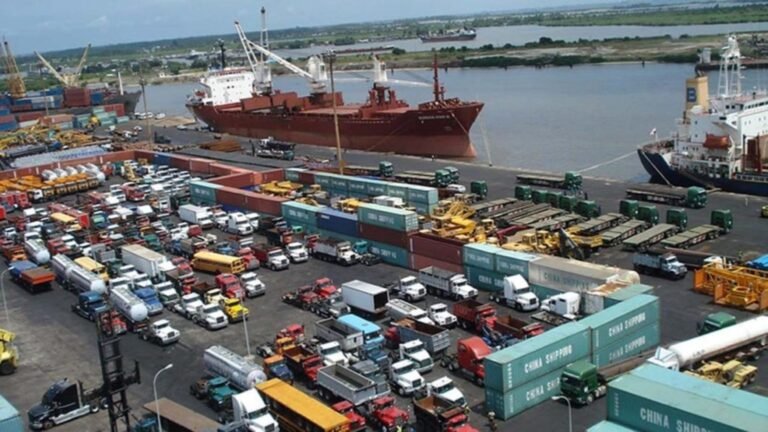

The Mile 2–Apapa Expressway witnessed severe traffic congestion after tanker operators shut down sections of the strategic corridor, disrupting the movement of motorists, commuters, and cargo vehicles.
The development attracted the attention of key maritime and transport stakeholders, including the Nigerian Ports Authority (NPA), the Nigerian Maritime Administration and Safety Agency (NIMASA), and other relevant agencies, as efforts continued to monitor the situation and assess its impact on port operations and road transportation.
Furthermore, the disruption renewed concerns about persistent traffic challenges along one of Nigeria’s busiest economic corridors.
Gridlock Affects Port and Commercial Activities
The shutdown created long queues of trucks and private vehicles, slowing commercial activities and delaying the movement of goods to and from the nation’s seaports.
Businesses that depend on the Apapa logistics corridor experienced disruptions as transportation costs and delivery times increased because of the congestion.
In addition, commuters and transport operators faced significant delays, highlighting the economic importance of maintaining free movement along the expressway.
Stakeholders Observe Developments
Officials from the NPA, NIMASA, and other government agencies closely monitored developments while engaging relevant stakeholders to ensure that the situation did not escalate further.
The agencies continue to emphasize the importance of collaboration among transport unions, tanker operators, security agencies, and government institutions in maintaining order around the nation’s critical port infrastructure.
Such coordination remains essential for sustaining efficient port operations and protecting economic activities linked to maritime trade.
Need for Sustainable Traffic Management
The latest disruption has once again drawn attention to the need for long-term solutions to the recurring traffic congestion affecting the Apapa port corridor.
Experts believe that improved truck scheduling systems, expanded logistics infrastructure, better road maintenance, and greater use of rail and inland waterways could significantly reduce pressure on the expressway.
Moreover, stronger enforcement of traffic regulations and coordinated transport planning would enhance the movement of cargo while improving safety and convenience for road users.
Economic Importance of the Apapa Corridor
The Mile 2–Apapa Expressway serves as a critical gateway to Nigeria’s busiest seaports and industrial zones, making uninterrupted access essential for trade and economic growth.
Efficient transportation along the corridor supports import and export activities, manufacturing, distribution networks, and thousands of businesses that rely on timely cargo movement.
Consequently, any prolonged disruption has the potential to affect supply chains, increase logistics costs, and impact broader economic activities.
Calls for Lasting Solutions
As stakeholders continue to monitor the situation, many industry observers have called for sustainable reforms that will permanently address traffic congestion and improve logistics management around the Lagos port corridor.
Strengthening infrastructure, enhancing inter-agency cooperation, and implementing modern transport solutions are expected to improve efficiency while supporting Nigeria’s ambition to become a leading maritime and trade hub in West Africa.
The latest incident serves as another reminder of the urgent need for coordinated action to ensure the smooth movement of people and goods along one of the country’s most strategic transport routes.
About The Author