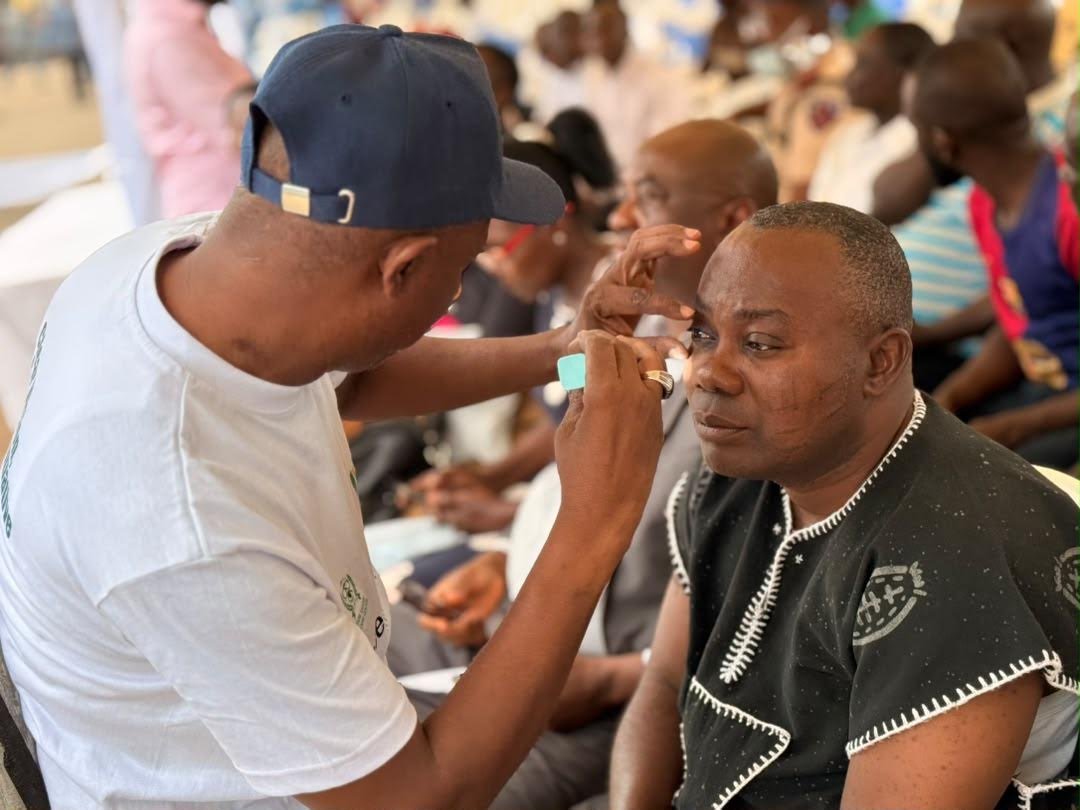
About 500 commercial drivers and motorists in the Federal Capital Territory have benefited from a free eye care and medical outreach supported by Seyi Tinubu to commemorate World Sight Day 2026.
The initiative, organised by BATMEDICS in collaboration with the Federal Road Safety Corps (FRSC), took place on Thursday, October 8, at the Abuja Medical Store beside Jabi Park. It was designed to improve access to eye care among professional drivers whose work requires sustained visual alertness and quick responses to changing road conditions.
Beyond eye examinations, the programme provided medical assessments and access to prescription medication, while BATMEDICS committed to funding corrective eye surgeries for beneficiaries who require further treatment.
The intervention highlights the importance of preventive healthcare in road safety, particularly for commercial motorists who spend long hours navigating busy roads, identifying hazards and transporting passengers.
Seyi Tinubu Supports Healthcare Intervention
Seyi Tinubu, son of President Bola Ahmed Tinubu and patron of BATMEDICS, was acknowledged by the organisers and FRSC representatives for supporting the outreach.
According to Petra Akinti Onyegbule, the organisation’s National Director of Research, Media and Strategic Communications, the programme was designed to bring essential eye care closer to commercial drivers and address medical needs that might otherwise go unattended.
For many motorists, routine health checks can be difficult to prioritise because of demanding work schedules and the need to earn a daily income. The initiative sought to reduce those barriers by providing services directly to drivers at a location accessible to the transport community.
The organisers also emphasised that the intervention went beyond identifying visual problems. By supporting medication and necessary corrective surgeries, BATMEDICS aimed to help eligible beneficiaries obtain treatment after their initial assessments.
However, the number of people who will ultimately undergo surgery depends on individual medical assessments and treatment needs. The approximately 500 figure refers to the drivers and motorists reached by the outreach, rather than a confirmed number of surgical procedures.
BATMEDICS Highlights Drivers’ Health Needs
Speaking during the exercise, BATMEDICS Director-General Ojeje Amin Onimisi said commercial drivers occupied an important but vulnerable position within Nigeria’s transport system.
He stressed that regular health examinations, particularly detailed eye tests, should become an essential part of maintaining drivers’ fitness for work.
According to Onimisi, identifying a visual impairment is only the first step. Beneficiaries who require treatment must also be able to access appropriate medication, professional guidance and corrective procedures.
The organisation therefore committed to supporting necessary medical interventions for people diagnosed with serious visual conditions during the exercise.
This approach recognises that untreated vision problems can affect more than an individual’s comfort or quality of life. For professional drivers, impaired sight can make it harder to identify road signs, judge distances, recognise pedestrians and respond to sudden hazards.
By combining screening with follow-up treatment support, the initiative sought to address those risks before they contribute to avoidable road incidents.
FRSC Links Eye Health to Road Safety
The FRSC commended BATMEDICS for partnering with the agency to improve motorists’ health and promote safer road use.
The Corps Marshal, Shehu Mohammed, was represented at the event by Assistant Corps Marshal Ibrahim M. Bazama, who is responsible for Special Duties and External Relations.
Bazama stressed that road safety depends not only on the condition of vehicles and roads but also on the health and alertness of the people behind the wheel.
A vehicle may be mechanically sound, he noted, but its safety is also influenced by the driver’s ability to perceive hazards and make timely decisions.
Drivers must continually monitor traffic signals, road signs, pedestrians, other vehicles and unexpected obstacles. Poor eyesight can compromise these tasks, particularly at night or in difficult weather conditions.
The FRSC representative described the outreach as a preventive intervention that could help identify and address vision-related risks before they contribute to road crashes.
The agency also encouraged motorists to take regular medical examinations seriously and seek professional attention when they experience symptoms such as blurred vision, difficulty seeing at night or persistent eye strain.
World Sight Day and the Need for Preventive Care
World Sight Day provides an opportunity to draw attention to eye health, preventable visual impairment and the importance of accessible eye care.
For commercial drivers, these concerns have direct implications for both personal wellbeing and public safety. Their working conditions often involve prolonged driving, exposure to dust and sunlight, irregular rest periods and the pressure to complete multiple journeys in a day.
Consequently, regular eye examinations can help identify problems early and determine whether a driver needs prescription glasses, medication or more specialised treatment.
Nevertheless, a screening exercise cannot replace ongoing medical care. Drivers who receive a diagnosis must follow professional advice and attend recommended follow-up appointments to ensure that their conditions are appropriately managed.
The outreach also illustrates the potential value of cooperation between public institutions and non-governmental organisations in addressing specific healthcare needs among occupational groups.
While the FRSC brings its road safety mandate and access to motorists, BATMEDICS provides support for the medical intervention. Such partnerships can complement broader public health efforts, although sustained access to affordable eye care remains important beyond commemorative events.
Beneficiaries Welcome Access to Free Treatment
Some participating drivers expressed appreciation for the opportunity to receive eye care without paying the full cost of the services themselves.
Beneficiaries said the exercise brought medical attention closer to them and offered relief to motorists who might otherwise postpone examinations because of financial pressures or work commitments.
Their reactions reflect a wider challenge facing many workers whose livelihoods depend on remaining active every day: seeking preventive healthcare can mean sacrificing time and income.
By conducting the exercise near Jabi Park, the organisers made the services accessible to drivers operating around a major transport location.
The initiative also reinforced the message that motorists should not ignore symptoms that may affect their ability to drive safely. Early assessment can help identify conditions requiring treatment and reduce the risk of leaving potentially serious visual problems unaddressed.
Sustaining the Impact Beyond World Sight Day
The intervention has drawn attention to the connection between healthcare access and road safety, particularly for commercial drivers whose daily responsibilities affect passengers and other road users.
However, the lasting value of the exercise will depend on whether beneficiaries receive the follow-up treatment they need and whether regular health checks become a more consistent part of drivers’ working lives.
For BATMEDICS and the FRSC, the outreach demonstrates how targeted medical interventions can support preventive road safety while addressing the healthcare needs of a group exposed to demanding working conditions.
As Nigeria continues efforts to reduce road crashes and improve public health, initiatives that combine early detection, professional guidance and access to treatment can form part of a wider approach to protecting motorists and passengers.
The World Sight Day programme therefore serves as a reminder that safer roads require more than traffic enforcement and vehicle inspections. They also depend on drivers being healthy, medically assessed and able to see clearly enough to respond safely to the demands of the road.
About The Author