Few public figures in Nigeria today generate as much discussion without holding public office as Seyi Tinubu. From youth engagement programs to nationwide outreach activities, his visibility has increased significantly over the past few years. Supporters describe him as a bridge between young Nigerians and national leadership. Critics question whether his growing profile represents genuine grassroots engagement or the emergence of political influence without electoral accountability. The controversy has fueled countless debates across social media, news platforms, and political circles. Yet amid the arguments and speculation, one fact remains clear. Seyi Tinubu’s has succeeded in becoming a major voice in conversations about youth participation, leadership, and national development. The real question may not be why he is influential. The more important question is why his influence has become such a controversial subject in the first place.
The Rise of a New Public Figure
Political influence in Nigeria has traditionally been associated with elected officials, party leaders, governors, ministers, and lawmakers.
Seyi Tinubu does not occupy any of those positions.
Despite this reality, his public engagements regularly attract national attention.
Whether attending youth forums, community development initiatives, business-related events, or social interventions, his activities often become topics of public conversation.
Supporters view this visibility as evidence of effective engagement.
Critics view it as evidence of expanding political relevance.
Either way, the growing attention demonstrates his increasing presence within Nigeria’s public sphere.
The City Boy Movement Debate
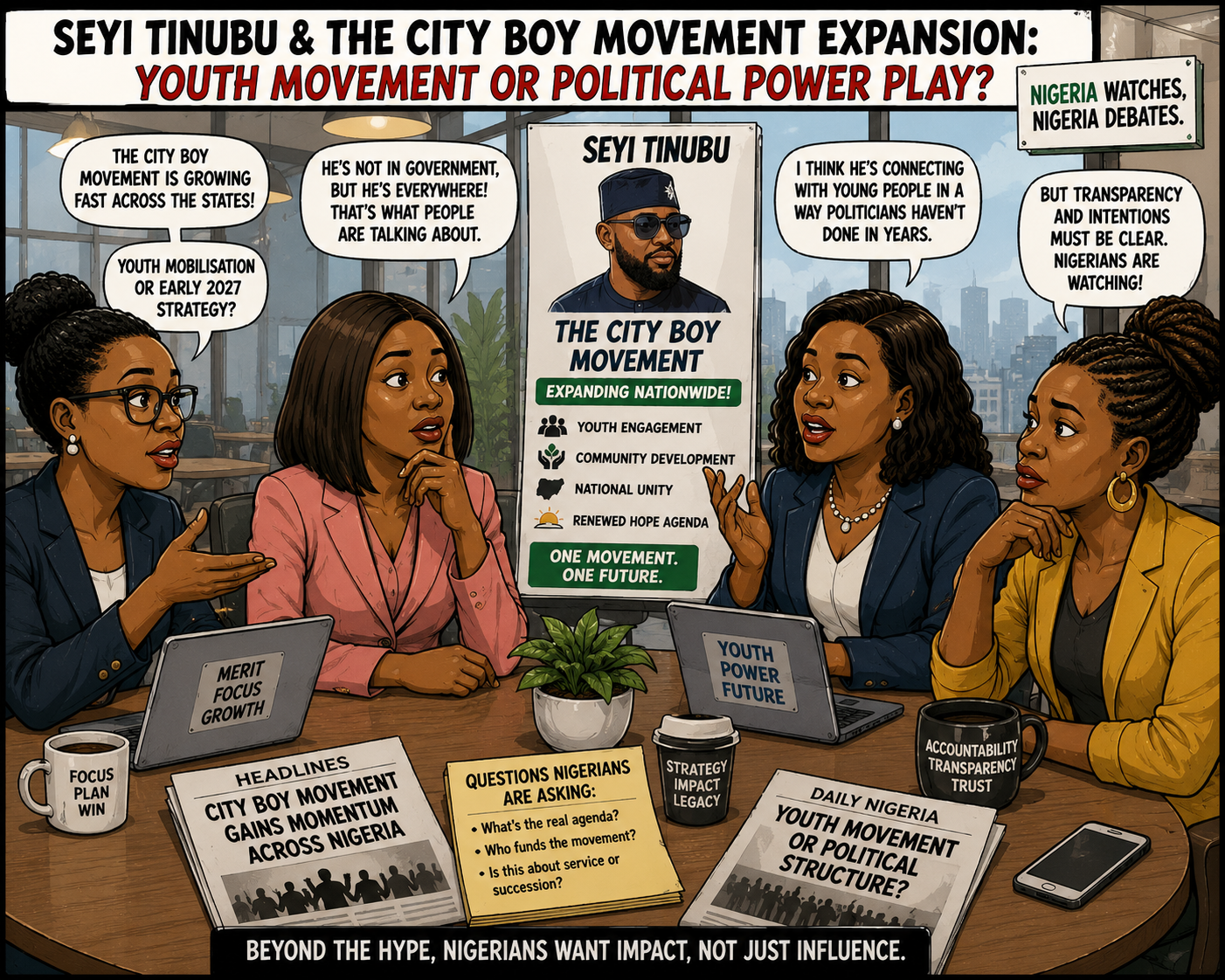
One of the most controversial aspects of Seyi Tinubu’s public profile involves the expansion of the City Boy Movement.
Supporters describe the movement as a platform that encourages youth participation, community engagement, and support for national development initiatives.
They argue that the movement provides opportunities for young Nigerians to connect, organize, and contribute positively to society.
Critics, however, see a different picture.
Some believe the movement represents an emerging political structure with implications beyond youth engagement.
Questions frequently arise regarding its future direction, organizational objectives, and long-term influence.
These debates have intensified as the movement expands into additional states and communities.
Yet supporters insist that encouraging civic participation should not automatically be interpreted as political ambition.
The Influence Without Office Question
Perhaps the most persistent criticism surrounding Seyi Tinubu concerns influence itself.
How can someone without formal government responsibilities command such attention?
For critics, this question reflects concerns about power, access, and accountability.
For supporters, the answer is straightforward.
Influence does not always originate from public office.
Business leaders influence economies. Activists influence social movements. Philanthropists influence communities. Entrepreneurs influence industries.
Leadership can emerge through engagement rather than appointment.
Supporters argue that Seyi Tinubu’s activities reflect this broader understanding of influence.
They maintain that visibility alone should not be treated as evidence of inappropriate political power.
Connecting With Younger Nigerians
One reason for his growing popularity involves his interaction with younger audiences.
Nigeria possesses one of the world’s youngest populations.
Many young citizens frequently express frustration with traditional political structures. They often seek leaders who communicate directly, understand their challenges, and participate in conversations about opportunity, entrepreneurship, education, and development.
Seyi Tinubu has actively positioned himself within this space.
His supporters argue that he represents a generation more comfortable with direct engagement than traditional political formalities.
This connection has helped build a loyal following among segments of Nigeria’s youth population.
Beyond Family Background
No discussion about Seyi Tinubu can avoid the issue of family legacy.
As the son of President Bola Ahmed Tinubu, his public activities inevitably attract heightened attention.
Critics frequently suggest that his visibility stems primarily from his family name.
Supporters acknowledge the advantages associated with public recognition but argue that visibility alone cannot sustain relevance.
Maintaining public attention requires communication skills, organizational ability, consistency, and active engagement.
According to this perspective, family connections may create opportunities, but they do not automatically create influence.
Influence must still be cultivated through action and interaction.
Why the Debate Matters
The controversy surrounding Seyi Tinubu reflects broader questions about leadership in modern Nigeria.
Citizens increasingly debate how influence should be earned. They question the relationship between public engagement and political authority. They examine the role younger generations should play in shaping national conversations.
These discussions are healthy within any democracy.
Public figures should face scrutiny. Citizens should ask questions. Influence should be examined carefully.
At the same time, criticism should remain balanced and evidence-based.
Assumptions should not replace facts.
Looking Ahead
Whether admired or criticized, Seyi Tinubu has become an important participant in conversations about youth engagement and national development.
His growing profile continues to spark debate because it challenges traditional expectations about leadership and influence.
Supporters see an energetic advocate connecting with communities and encouraging participation. Critics remain cautious about the implications of his expanding visibility.
Both perspectives contribute to an ongoing national conversation.
However, one conclusion appears increasingly difficult to dispute. Seyi Tinubu’s influence is not growing because people ignore him. It is growing because millions of Nigerians continue discussing his activities, evaluating his message, and engaging with the ideas he represents.
The controversy may continue, but it also highlights a changing political landscape in which leadership, visibility, and public engagement are no longer defined solely by official titles. In that environment, Seyi Tinubu has emerged as one of the most closely watched figures of his generation.
About The Author