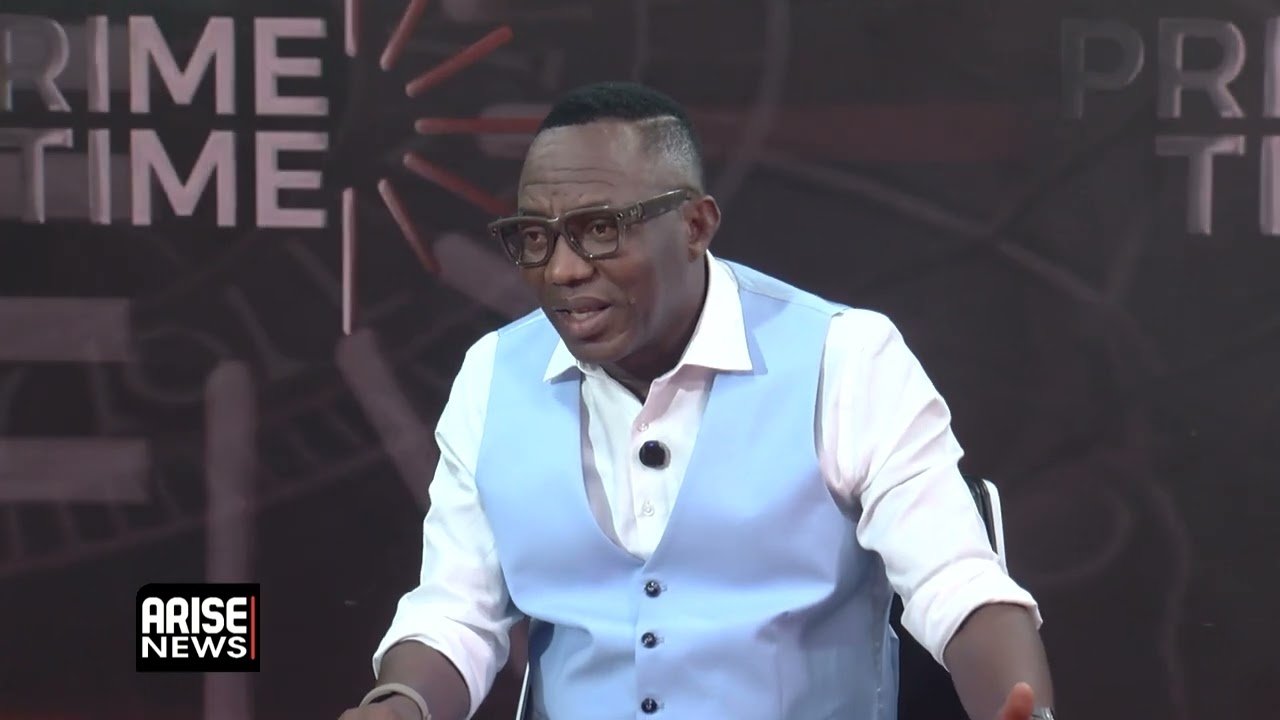


Senator representing Lagos East Senatorial District, Adetokunbo Abiru, has defended the economic reforms introduced by President Bola Tinubu, saying the administration inherited an economy already in severe decline when it assumed office in 2023.
Speaking in an interview on ARISE News on Sunday, Abiru said Tinubu met an economy weighed down by subsidy payments, foreign exchange distortions and declining investor confidence.
“I believe very strongly that he walked into a house that was already on fire,” Abiru said.
The senator said the president inherited an economy facing major structural problems, including what he described as a damaging fuel subsidy regime and weakened confidence in key institutions.
“We all know how the state of the economy at that time, how the oil subsidy issue had become a major drain on the physical space in the country,” he said.
“And of course, the immediate bold initiative of the president was to do away with that. That is an initiative that a lot of our past leaders have shied away from because of the major challenges it can pose.”
Abiru said the administration also moved to address instability in the foreign exchange market by unifying multiple exchange rate systems.
“What the president has done now is to unify. And today, you know, there is stability around the foreign exchange market.”
“That stability has encouraged investors to believe in the country. It’s brought a lot of confidence into the monetary agency of the government.”
The lawmaker also pointed to reforms in the banking sector, saying recapitalisation efforts had strengthened financial institutions and improved their ability to support economic growth.
“Today, most of the banks now run on a very strong footing, and of course, the ability to support the economy, and of course, the desire for a 1 trillion economy will can also gradually begin to build.”
Responding to concerns over rising poverty and hardship under the administration, Abiru argued that economic reforms take time before ordinary citizens begin to feel their impact.
“The way this Tinubu administration has come into play is from a reform and a reset arrangement,” he said.
“You’ve got to start with the sticky areas. You have to get the macros properly aligned. And that, I believe very strongly, that is what we have gradually achieved in the last three years.”
Abiru acknowledged that more work was needed to reduce poverty but maintained that the administration had laid the groundwork for future improvement.
“Yes, I agree with the need to lift people out of poverty, but we are seeing a lot of almost all hands on deck on the federal level via grants and all kinds of arrangements.”
“The foundation is already laid. The next level is to begin to see how people gradually then get out of poverty.”
Faridah Abdulkadiri
About The Author