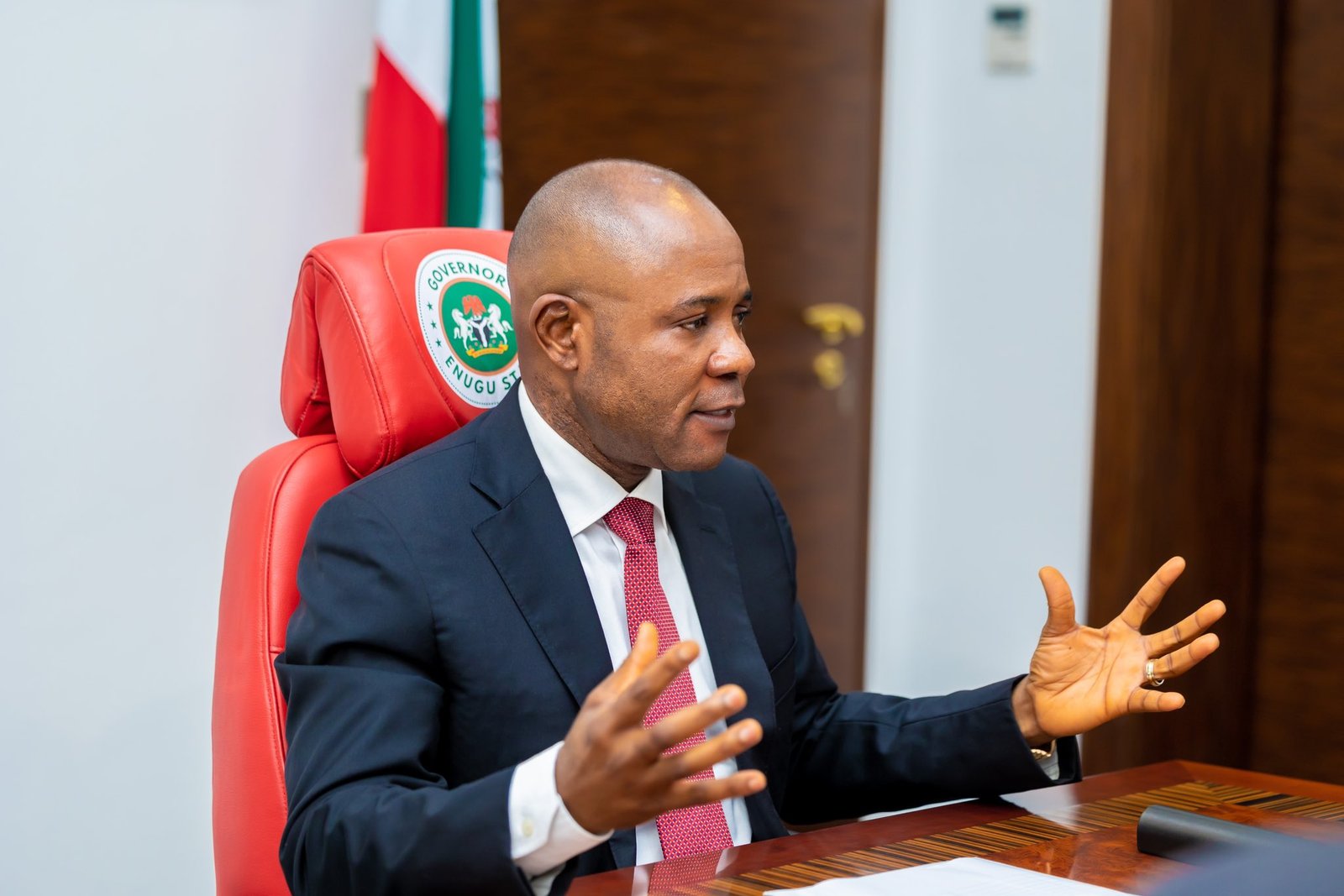
The Civil Rights Realisation and Advancement Network (CRRAN) has called on Enugu State Governor Peter Mbah to urgently intervene in the developing crisis surrounding the election of a new traditional ruler in Ozom Mgbagbu Owa Autonomous Community, Ezeagu Local Government Area.
The group wants the state government to take necessary measures to resolve the disagreement surrounding the interpretation of the community’s constitution before the election scheduled for October 10, 2026.
Dispute Centres on Rotational Arrangement
The controversy reportedly centres on the rotational system contained in the community’s constitution for producing its traditional ruler.
According to CRRAN, the constitution provides for rotation among the community’s 10 council wards. The previous traditional ruler, Igwe Raymond Oguji, reportedly came from Ward 8, comprising Umuoma, Umuowe and Umuewo.
CRRAN therefore maintains that Ezedume Council Ward, identified as Ward 9, should be next in line to produce candidates for the vacant traditional stool.
The disagreement has intensified because of conflicting positions over which ward should participate in the selection process.
CRRAN Raises Questions Over Eligibility
CRRAN said representatives of the community met with the Enugu State Commissioner for Chieftaincy Affairs, C.C. Egumgbe, on September 29 to discuss the succession process.
According to the group, the commissioner acknowledged during the meeting that Ezedume Ward was next in line under the community’s rotational arrangement.
However, CRRAN alleged that subsequent developments created uncertainty over the process after a position attributed to the community’s President-General suggested that another ward could also present candidates.
The group said the alleged development has raised concerns among community members about whether the established constitutional procedure will be followed.
Community Constitution Becomes Central Issue
At the heart of the disagreement is the question of whether the community’s established rotational arrangement should determine which ward produces candidates for the next traditional ruler.
Reports on the dispute indicate that the community’s constitution provides for succession to the Igweship stool on a rotational basis according to the seniority of the 10 wards.
Under the reported procedure, the ward whose turn it is would conduct an open contest among eligible candidates before candidates are presented to the appropriate selection panel and eventually to the General Assembly for ratification.
Consequently, any disagreement over which ward is entitled to participate could affect the acceptance of the eventual outcome.
CRRAN Seeks Mbah’s Intervention
CRRAN has therefore appealed directly to Governor Mbah to step into the matter before the October 10 election.
The organisation wants the state government to ensure that the community’s constitution is respected and that the election follows the position reached during the September 29 meeting with the Commissioner for Chieftaincy Affairs.
For the rights group, resolving the disagreement before voting begins is important not only for the credibility of the election but also for maintaining peace within the community.
CRRAN warned that allowing the disagreement to continue could deepen divisions and increase tension among competing groups.
Why the Election Matters
Traditional institutions remain important in many communities across Enugu State, where traditional rulers play roles in community leadership, dispute resolution, cultural preservation and engagement with government authorities.
Therefore, disagreements over succession can have consequences beyond the election itself.
A contested traditional ruler election can divide residents, affect relationships among community groups and make subsequent reconciliation more difficult.
For this reason, CRRAN is urging the relevant authorities to resolve the disagreement before it develops into a wider community crisis.
State Government Faces Pressure to Clarify Process
The dispute also comes against the backdrop of the Enugu State Government’s recent interventions in traditional institutions and town unions.
In September, the state government suspended another traditional ruler over alleged misconduct. Earlier in July, the government also suspended traditional rulers and presidents-general in Ezeagu Local Government Area over alleged misconduct connected with security matters.
Against that background, the Ozom Mgbagbu Owa dispute places additional attention on the role of the Ministry of Chieftaincy Affairs in managing traditional leadership processes.
A clear explanation from the relevant authorities could help reduce uncertainty among residents and give stakeholders a common understanding of the rules governing the election.
Peaceful Resolution Remains the Priority
Beyond the question of which ward should produce candidates, the immediate concern is ensuring that the community avoids confrontation.
Government authorities and community leaders have a responsibility to create conditions in which disagreements can be resolved through dialogue and established procedures.
Moreover, any clarification should reach all interested parties so that competing groups understand the rules governing the election.
Such an approach could reduce misinformation, limit suspicion and give residents greater confidence in the process.
October 10 Election Approaches
With the scheduled election approaching, pressure is mounting on government authorities and community stakeholders to resolve the dispute.
CRRAN’s intervention has added another voice to calls for the state government to address the disagreement before the election date.
Ultimately, the central issue is whether the traditional ruler selection process will follow the community’s constitutional provisions and receive broad acceptance among residents.
For now, the rights group wants Governor Mbah to act quickly, arguing that a transparent and constitutionally grounded process offers the best opportunity to prevent further tension and protect peace in Ozom Mgbagbu Owa.
As October 10 draws closer, the ability of the state government and community leaders to settle the disagreement through dialogue and clear procedures could determine whether the election proceeds peacefully or becomes another source of prolonged community division.
About The Author