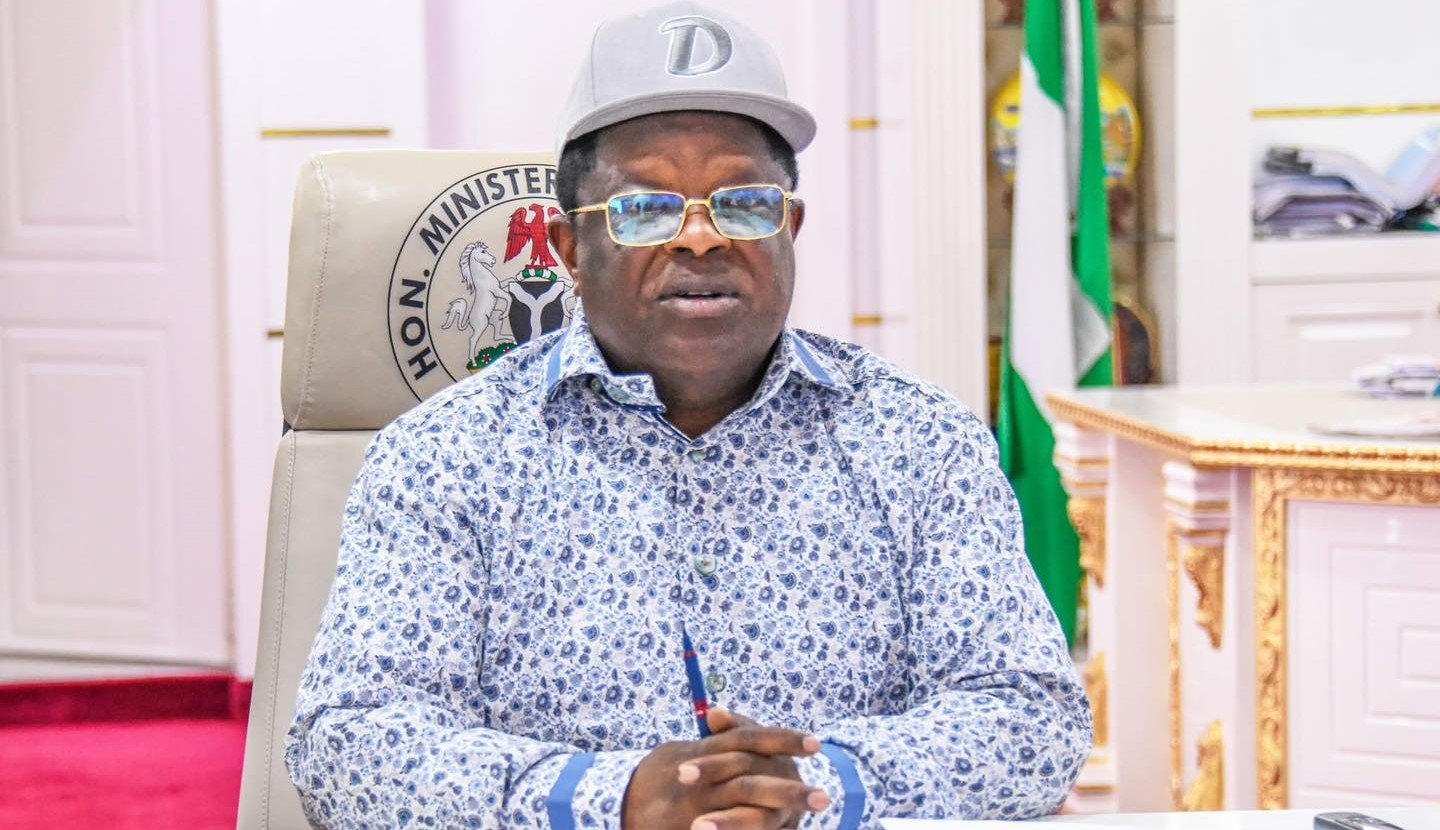
Minister of Works, Senator David Umahi, has expressed confidence that President Bola Ahmed Tinubu will secure victory in all five states of the South-East during the 2027 presidential election. Umahi said he was personally working to increase support for the President across the region and believed Tinubu could make significant gains compared with the 2023 election.
The former Ebonyi State governor made the remarks while discussing the political outlook in the region, where he also urged South-Easterners to move beyond regional politics and participate more actively in national political affairs.
Umahi Says Tinubu Can Make Major Gains
According to Umahi, his expectation is that Tinubu can secure all five South-East states in the next presidential election.
The minister said his confidence was based partly on his assessment of changing political relationships between the Federal Government and political stakeholders in the region.
Umahi also indicated that he was actively working toward that objective by engaging with people and explaining what he considers the achievements of the Tinubu administration.
However, his prediction remains a political assessment rather than an established electoral outcome. The actual result will ultimately depend on voters and the electoral process.
A Different Political Landscape From 2023
The South-East produced a strong regional result for Peter Obi in the 2023 presidential election, when he contested on the platform of the Labour Party and won all five states in the zone.
Those states are Abia, Anambra, Ebonyi, Enugu and Imo.
Since then, however, the political landscape has continued to change. Political parties have strengthened or lost control of states, while politicians have shifted alliances and built new relationships ahead of 2027.
The APC currently controls several states in the region, while opposition parties remain influential in others.
Consequently, the 2027 presidential contest in the South-East will take place against a political backdrop that differs considerably from the one that shaped the 2023 election.
Umahi Calls for an End to Regional Politics
Beyond his prediction about the five states, Umahi urged residents of the South-East to avoid restricting political engagement to regional considerations.
He argued that the region should build stronger connections with the rest of Nigeria and participate more actively in national political discussions.
According to the minister, regional politics alone does not necessarily advance the interests of the South-East. Instead, he believes stronger engagement with the Federal Government and political actors from other regions can create additional opportunities for development and representation.
That argument reflects a broader debate over how regional interests should interact with national politics in Nigeria.
Minister Defends Tinubu’s South-East Record
Umahi also defended what he described as changes in the Federal Government’s relationship with the South-East under Tinubu.
He pointed to federal appointments and infrastructure projects as evidence of increased engagement with the region.
As a member of the Federal Executive Council himself, Umahi said the South-East now has representation within important areas of the national administration.
He has also repeatedly highlighted major infrastructure projects across the region, arguing that they demonstrate the administration’s commitment to improving transportation and economic connectivity.
For Umahi, these developments form part of the argument for stronger political cooperation between the South-East and the Tinubu administration.
Sixth State Debate Remains Important
The Works Minister also referred to the longstanding discussion over the creation of an additional state in the South-East.
The region currently has five states, while other geopolitical zones have six or more in some cases.
Umahi has argued that the South-East deserves greater structural balance and has supported efforts to establish a sixth state.
The proposal has generated political discussion among leaders and communities, particularly around the question of where a new state should be created and how it would affect the existing political structure.
However, creating a new state would require constitutional procedures and broad political agreement.
Infrastructure Becomes Part of the Political Argument
Infrastructure has also become an important part of Umahi’s case for stronger political engagement between the South-East and the Federal Government.
As Works Minister, he has repeatedly highlighted projects including the Enugu-Onitsha Expressway, Enugu-Port Harcourt Expressway, Enugu-Abakaliki Road and infrastructure connected to the Second Niger Bridge.
These projects are designed to improve movement within the region while strengthening links between the South-East and other parts of Nigeria.
Moreover, better transportation infrastructure can support businesses, reduce travel difficulties and improve the movement of agricultural and manufactured goods.
Umahi has therefore presented infrastructure development as both an economic issue and an important part of the political conversation about federal attention to the region.
2027 Will Test Political Claims
As preparations for the 2027 elections continue, political parties are already working to strengthen their structures across the country.
For the APC, expanding its support in the South-East would represent a significant change from its performance in the 2023 presidential election.
Meanwhile, opposition parties and other political movements will also seek to retain or expand their influence across the region.
Voters will ultimately consider multiple issues, including economic conditions, infrastructure, security, federal appointments, regional representation and the performance of political leaders.
Therefore, Umahi’s prediction should be viewed within the broader political mobilisation taking place ahead of the election.
South-East Emerges as a Key Political Battleground
The five South-East states remain important to Nigeria’s political calculations because of their population, commercial networks and strong political identities.
At the same time, winning support in the region will require more than national-level declarations. Political parties will need effective grassroots structures, credible candidates and messages that address the concerns of voters across different communities.
Furthermore, political alliances can change considerably before an election, particularly as parties negotiate nominations, coalitions and campaign structures.
That means the political environment will continue to evolve as 2027 approaches.
Umahi Sets Out an Ambitious Political Expectation
Umahi has now set out an ambitious expectation for the 2027 presidential election, predicting that Tinubu will win all five South-East states.
His position reflects his broader argument that the region should strengthen its relationship with the Federal Government while recognising infrastructure projects, political representation and other areas of engagement.
Nevertheless, the prediction remains his political assessment.
The eventual outcome will be determined by voters and the electoral process. Until then, the South-East is likely to remain a major focus of political mobilisation as parties seek to build stronger grassroots support ahead of the 2027 presidential election.
About The Author