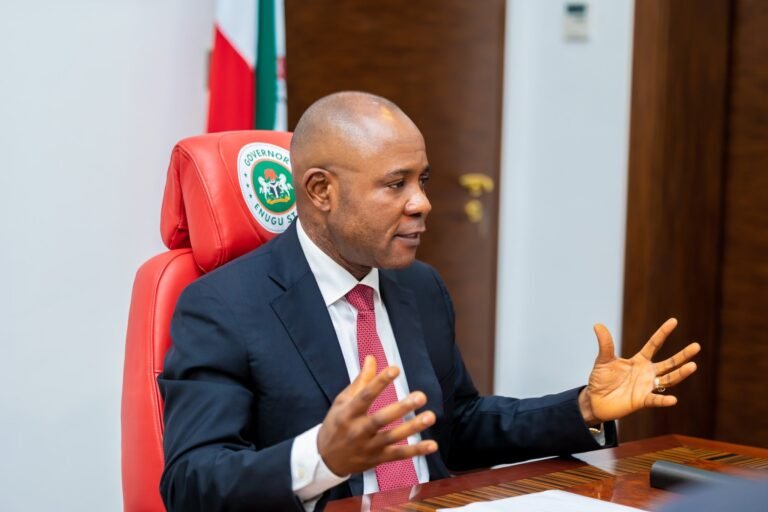

The Enugu State Government has constituted development centres across the state’s 17 local government areas as part of efforts to deepen grassroots participation in governance, strengthen community engagement and improve the way government responds to local needs. Through the new structures, the administration of Governor Peter Mbah aims to create stronger links between communities and government while giving residents greater opportunities to contribute to decisions that affect their daily lives.
Taking Governance Closer to Communities
The development centres represent a deliberate attempt to move governance closer to the people.
Rather than relying solely on state-level institutions to identify problems and determine priorities, the initiative creates additional channels through which communities can communicate their concerns and participate in development discussions.
This approach matters because communities often understand their own challenges better than officials working far from the affected areas.
For example, residents can identify problems involving roads, water, schools, healthcare, agriculture, sanitation and other basic services based on their daily experiences.
Therefore, stronger grassroots structures can help government understand those challenges more quickly and respond with programmes that better reflect local realities.
Building a Stronger Link Between Government and Residents
The development centres are expected to serve as a bridge between communities and government.
Through the structures, residents can communicate development priorities while government officials can use community feedback to improve planning and implementation.
Moreover, the centres can help government communicate its programmes more effectively.
When residents understand why government introduced a particular policy or project, they can participate more meaningfully in its implementation and monitoring.
At the same time, government can receive feedback about what works, what does not work and where communities need additional support.
That two-way communication can ultimately strengthen trust between citizens and public institutions.
Covering All 17 Local Government Areas
The new structures extend across Enugu’s 17 local government areas, giving the initiative a broad geographical reach.
The state has organised the centres around different communities and development areas rather than treating each local government as a single, uniform unit.
This approach recognises that communities within the same local government can have very different economic and social needs.
For instance, farming communities may prioritise agricultural support, rural roads, irrigation and access to markets. Meanwhile, urban communities may place greater emphasis on transportation, sanitation, housing, employment and public infrastructure.
Consequently, community-level structures can help government identify those differences instead of applying the same approach everywhere.
Grassroots Participation Becomes More Important
The initiative also reflects a wider shift towards participatory governance.
Government can build roads, schools, hospitals and other infrastructure, but communities ultimately use and maintain many of those facilities.
Therefore, involving residents in development planning can create a stronger sense of ownership.
When communities participate in identifying priorities, monitoring projects and providing feedback, they can also help government detect problems earlier.
For example, residents can draw attention to a damaged road, a poorly maintained public facility or a shortage of essential services before the problem becomes significantly worse.
In addition, community representatives can help communicate urgent concerns to the appropriate authorities.
Development Centres Must Produce Results
However, establishing development centres alone will not guarantee better governance.
The real test will come from what the structures accomplish.
If the centres merely hold meetings without influencing government decisions, their impact will remain limited. Conversely, if they regularly gather community concerns, communicate them to government and follow up on responses, they could become valuable instruments of grassroots development.
Therefore, the administrators, secretaries and other representatives working within the centres will need to remain accessible to the people.
They must listen carefully, document concerns and maintain regular communication with residents.
Government agencies, in turn, must respond to legitimate concerns rather than allowing community feedback to disappear into bureaucracy.
Connecting Communities With Local Government
The development centres can also complement the work of elected local government authorities.
Local government remains the formal administrative structure closest to residents. However, community-based development structures can provide another channel through which residents engage with public officials.
This relationship could prove particularly useful in areas where communities have specific development priorities that require coordination between local and state authorities.
For instance, a community seeking improvements in healthcare may need the local government to address primary healthcare facilities while also requiring state intervention for larger health projects.
Similarly, agricultural communities may need local support alongside state programmes involving extension services, infrastructure, processing and market access.
Consequently, better coordination between development centres, local councils and state agencies could improve the delivery of public programmes.
Accountability Must Remain Central
At the same time, grassroots participation requires accountability.
Residents need to know what their representatives can do, what falls outside their responsibilities and how they can raise concerns.
The development centres must therefore maintain clear communication with their communities.
Furthermore, representatives should provide regular updates on issues raised by residents and explain what actions government has taken.
Such transparency can prevent misinformation and help communities understand the progress of development initiatives.
It can also encourage residents to hold representatives accountable for their responsibilities.
From Community Voices to Government Action
One major opportunity presented by the development centres is the possibility of improving government responsiveness.
Policies often fail to achieve their full potential when officials lack timely information about conditions on the ground.
By creating stronger grassroots communication channels, government can receive information directly from communities and use it to improve planning.
For example, feedback from farmers can help shape agricultural programmes, while information from parents and teachers can help government identify challenges within schools.
Likewise, residents can provide valuable information about infrastructure, environmental challenges, public safety and social services.
Therefore, grassroots engagement should not simply involve government telling communities what it plans to do. It should also involve government listening to what communities need.
Communities Can Become Partners in Development
Beyond communication, the initiative can encourage communities to become active partners in development.
Residents who participate in planning and monitoring projects may develop a stronger sense of responsibility for public infrastructure.
That sense of ownership can help protect schools, healthcare centres, roads, markets and other public assets.
Moreover, community participation can encourage local organisations, traditional institutions, youth groups, women’s groups and other stakeholders to contribute ideas and resources to development efforts.
As a result, government does not have to carry the entire burden alone.
Instead, it can build partnerships with communities that understand their own environment and possess valuable local knowledge.
The Bigger Goal Is Better Governance
Ultimately, the development centres form part of a broader question about how government can become more responsive to citizens.
Good governance requires more than policies announced from government offices. It requires institutions that listen, communicate and respond.
That is particularly important at the grassroots level, where government policies eventually become real experiences for citizens.
If a policy improves a school, residents experience the result directly. If a road project reduces transportation difficulties, communities feel the benefit immediately. If an agricultural programme increases farmers’ access to markets, households experience the economic impact.
Therefore, government must create systems that connect policy decisions with those everyday experiences.
From Structures to Lasting Impact
The constitution of development centres across Enugu’s 17 local government areas provides a framework for achieving that connection.
However, the real measure of success will not be the number of centres created or representatives appointed. Instead, it will be the quality of engagement that follows.
The centres must listen to communities, identify priorities, communicate concerns and follow up on government responses.
Meanwhile, state and local authorities must remain open to community input and ensure that legitimate concerns receive attention.
If both sides maintain that relationship, the initiative could strengthen grassroots participation and make government more responsive to the people.
For the Mbah administration, the next challenge is therefore clear: transform the new development centres from administrative structures into active platforms where communities can speak, government can listen and development priorities can move from local conversations to practical action.
That is where grassroots governance becomes meaningful — not simply when communities are represented, but when their voices help shape the decisions and projects that determine their future.
About The Author