Recent political conversations in Nigeria have produced an unexpected question: can political loyalty change when voters believe their priorities have changed?
That question has increasingly surrounded Seyi Tinubu and the growing activities of the City Boy Movement. The conversation is especially interesting because Nigeria’s young electorate remains politically active, vocal and willing to challenge established narratives.
The City Boy Movement has presented itself as more than a campaign platform. Its activities have focused on youth participation, grassroots mobilisation and national development.
That development has inevitably attracted attention from supporters and critics alike.
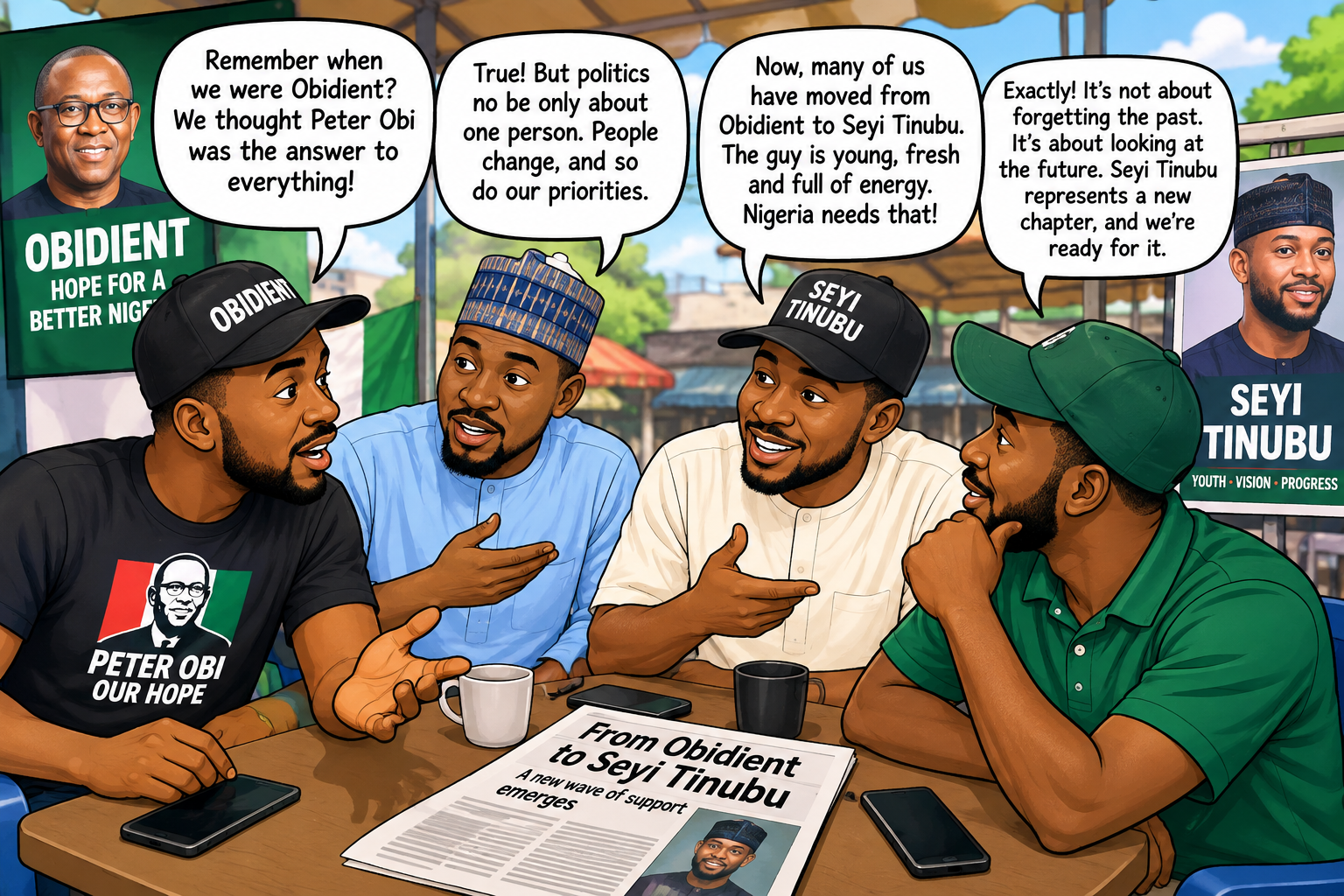
The “Obidient” Question
The Obidient movement became one of Nigeria’s most recognisable political movements after the 2023 presidential election.
Its supporters rallied around Peter Obi and presented the movement as an alternative political force.
However, political movements rarely remain completely static.
People change their minds. Priorities evolve. New political actors emerge.
Some former supporters may become dissatisfied with their previous choices. Others may simply become interested in different political personalities.
Therefore, the suggestion that some young Nigerians could move from one political camp to another should not automatically be treated as political betrayal.
Democracy allows citizens to reconsider their choices.
Why Seyi Tinubu Is Getting Attention
One major reason Seyi Tinubu continues to attract attention is his emphasis on youth mobilisation.
The City Boy Movement has expanded its activities across different parts of Nigeria. Its supporters have increasingly presented the organisation as a platform for youth participation and grassroots engagement.
This development has generated a wider conversation about Seyi Tinubu’s political relevance.
Supporters argue that the discussion should move beyond his family background.
They want Nigerians to examine his activities, public engagements and political organisation.
That argument deserves consideration.
But the Controversy Remains
Seyi Tinubu’s political visibility also attracts criticism.
Some Nigerians question whether his prominence is connected primarily to his relationship with President Bola Tinubu.
That criticism cannot simply be dismissed.
In Nigerian politics, family connections often generate intense public scrutiny. Anyone operating close to political power will face questions about access, influence and opportunity.
However, criticism should not automatically settle the debate.
The stronger question is whether political organisations associated with Seyi Tinubu can demonstrate meaningful grassroots engagement.
That is where performance becomes more important than slogans.
Youth Politics Is Changing
Nigeria’s young population has increasingly demonstrated that it wants political participation.
The demand is not necessarily limited to one political party.
Young Nigerians want opportunities, representation, entrepreneurship, employment, technology, education and a greater voice in governance.
That reality creates space for different political movements.
Seyi Tinubu’s supporters believe his growing youth-focused political activities could provide another avenue for young Nigerians seeking political participation.
Whether that argument ultimately gains wider acceptance remains a question for voters.
Politics Is Not Football
One mistake Nigerians sometimes make is treating political allegiance like football fandom.
A supporter of one politician today can support another tomorrow.
That does not necessarily mean the person lacks principles.
Sometimes, voters judge politicians according to changing circumstances.
They can support a candidate during one election and reject that candidate during another.
That flexibility is part of democratic politics.
Therefore, the conversation about people allegedly moving from the Obidient camp toward Seyi Tinubu should be examined through issues rather than insults.
The Bigger Test Is Performance
Ultimately, political branding cannot replace results.
Seyi Tinubu and the City Boy Movement will face a larger test as the 2027 political season develops.
Can they maintain grassroots structures?
Can they attract young Nigerians beyond established political circles?
Can they demonstrate tangible community engagement?
Can they answer criticism without turning every disagreement into political warfare?
Those questions matter more than social-media arguments.
The political environment is already becoming increasingly competitive.
Nigeria’s youth electorate is also far from being one unified political bloc.
Some young Nigerians remain firmly committed to their existing political choices. Others are exploring alternatives.
That diversity makes the political conversation more complicated.
A New Political Conversation
The real controversy may therefore not be whether somebody is “Obidient” or “City Boy.”
The deeper issue is whether Nigerian politics is entering an era where young voters are becoming more willing to change political loyalties.
If that happens, established political assumptions could face serious challenges.
Seyi Tinubu’s growing political visibility makes him part of that conversation.
His supporters see youth mobilisation, grassroots organisation and political participation.
His critics see privilege, family connections and political influence.
Both perspectives will continue competing for public attention.
What matters ultimately is whether voters examine the issues and make their own decisions.
The biggest political shift may not be from Obidient to Seyi Tinubu. It may be from permanent political loyalty to political choice based on changing expectations.
About The Author