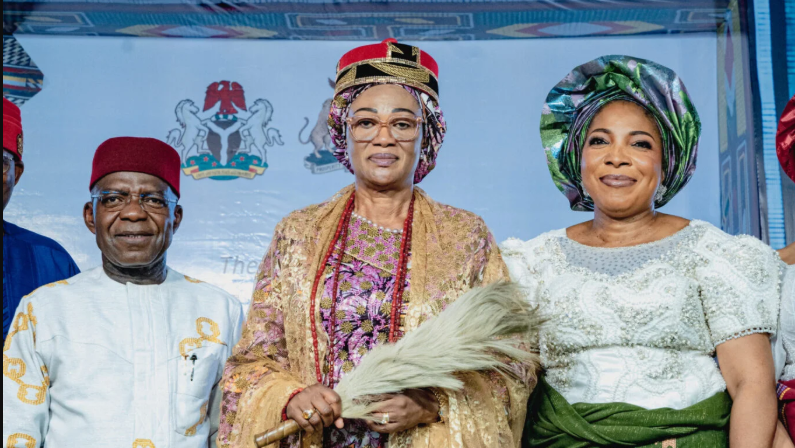
Nigeria’s First Lady, Senator Oluremi Tinubu, has donated ₦2 billion to the Abia State Government to support the development and revitalisation of Akwete fabric, the internationally recognised hand-woven textile that originates from the historic Akwete community in Abia State.
The landmark donation is aimed at preserving one of Nigeria’s most treasured cultural assets while transforming the traditional textile industry into a major driver of employment, tourism, entrepreneurship, and economic development.
Furthermore, the First Lady said the intervention reflects the Federal Government’s commitment to promoting indigenous industries, empowering women, preserving Nigeria’s cultural heritage, and creating sustainable economic opportunities through the creative economy.
She noted that Akwete fabric represents far more than a traditional textile because it symbolises Nigeria’s rich cultural identity, craftsmanship, innovation, and entrepreneurial spirit.
A Historic Investment in Indigenous Industry
Senator Oluremi Tinubu described the ₦2 billion donation as an investment in both cultural preservation and economic transformation.
Furthermore, she explained that supporting indigenous industries remains essential for creating wealth, expanding local production, reducing unemployment, and strengthening Nigeria’s non-oil economy.
According to the First Lady, traditional industries possess enormous untapped potential capable of contributing significantly to national development when properly supported through investment, innovation, and modern market access.
Indigenous industries create lasting value.
She expressed confidence that the investment would breathe new life into the renowned Akwete weaving tradition.
Preserving a National Cultural Treasure
Akwete fabric has earned national and international recognition for its distinctive weaving techniques, colourful patterns, durability, and cultural significance.
Furthermore, generations of skilled artisans have preserved the centuries-old craft despite changing economic realities and increasing competition from imported textiles.
The First Lady stressed that protecting cultural heritage remains a responsibility shared by every generation.
Culture strengthens national identity.
She explained that preserving indigenous craftsmanship also creates opportunities for younger generations to acquire valuable traditional skills while maintaining Nigeria’s unique cultural legacy.
Empowering Women Through Textile Production
Women have traditionally remained at the centre of Akwete weaving.
Furthermore, many families depend on the craft as an important source of income, making investments in the industry particularly beneficial for women’s economic empowerment.
Senator Tinubu emphasised that empowering women economically remains one of the most effective ways to reduce poverty, strengthen households, and stimulate local economies.
When women prosper, communities thrive.
She noted that expanding the Akwete industry would provide greater opportunities for women entrepreneurs, artisans, cooperatives, and small businesses across Abia State.
Creating Employment Opportunities
The First Lady stated that revitalising the Akwete fabric industry has the potential to generate thousands of employment opportunities throughout the production value chain.
Furthermore, opportunities extend beyond weaving itself to include cotton sourcing, dye production, fashion design, garment manufacturing, packaging, marketing, logistics, retail, tourism, and exports.
Creative industries generate employment.
Expanding production capacity will therefore contribute significantly to youth employment while encouraging entrepreneurship within surrounding communities.
She urged young Nigerians to embrace opportunities within Nigeria’s growing creative and cultural industries.
Supporting the Creative Economy
Senator Tinubu explained that the development of indigenous textiles aligns with broader efforts to strengthen Nigeria’s creative economy.
Furthermore, fashion, arts, culture, crafts, entertainment, and tourism continue emerging as important contributors to economic diversification.
Nigeria’s cultural products possess significant international market potential.
Creativity drives economic growth.
The First Lady encouraged greater collaboration between artisans, designers, investors, educational institutions, and government agencies to promote Nigerian-made products globally.
Boosting Tourism and Global Recognition
The revitalisation of Akwete fabric is also expected to strengthen tourism within Abia State.
Furthermore, visitors increasingly seek authentic cultural experiences, making traditional textile production an attractive tourism asset capable of generating additional revenue for local communities.
Cultural tourism supports local economies.
The First Lady expressed optimism that renewed investment would position Akwete fabric as one of Nigeria’s globally recognised luxury cultural brands.
Greater international visibility could also stimulate export opportunities for Nigerian artisans.
Supporting Economic Diversification
Senator Tinubu reaffirmed that Nigeria’s long-term economic prosperity depends on expanding productive sectors beyond oil.
Furthermore, indigenous manufacturing, cultural industries, agriculture, technology, tourism, and entrepreneurship all contribute to building a more resilient economy.
Diversification strengthens national resilience.
Investments in traditional industries therefore complement broader government efforts aimed at encouraging local production while reducing dependence on imported goods.
She encouraged continued support for locally made products across every sector of the economy.
Partnership with Abia State
The First Lady commended the Abia State Government for supporting initiatives capable of preserving cultural heritage while promoting economic development.
Furthermore, she expressed confidence that effective collaboration between the Federal Government, Abia State Government, artisans, private investors, and community leaders would ensure the successful implementation of projects funded through the intervention.
Collaboration delivers sustainable results.
She urged all stakeholders to manage the investment responsibly for the benefit of present and future generations.
Building a Lasting Legacy
Senator Oluremi Tinubu concluded by reaffirming her commitment to programmes that empower women, preserve Nigeria’s cultural heritage, promote entrepreneurship, strengthen indigenous industries, and expand economic opportunities across the country.
Furthermore, she expressed confidence that the ₦2 billion investment would transform the Akwete textile industry into a stronger engine of employment, innovation, cultural preservation, tourism, and economic growth.
As Nigeria continues pursuing economic diversification under the Renewed Hope Agenda, the First Lady maintained that supporting indigenous industries such as Akwete weaving represents an important step towards building a more prosperous, culturally vibrant, globally competitive, and economically resilient nation where traditional craftsmanship continues creating modern opportunities for millions of Nigerians.
About The Author