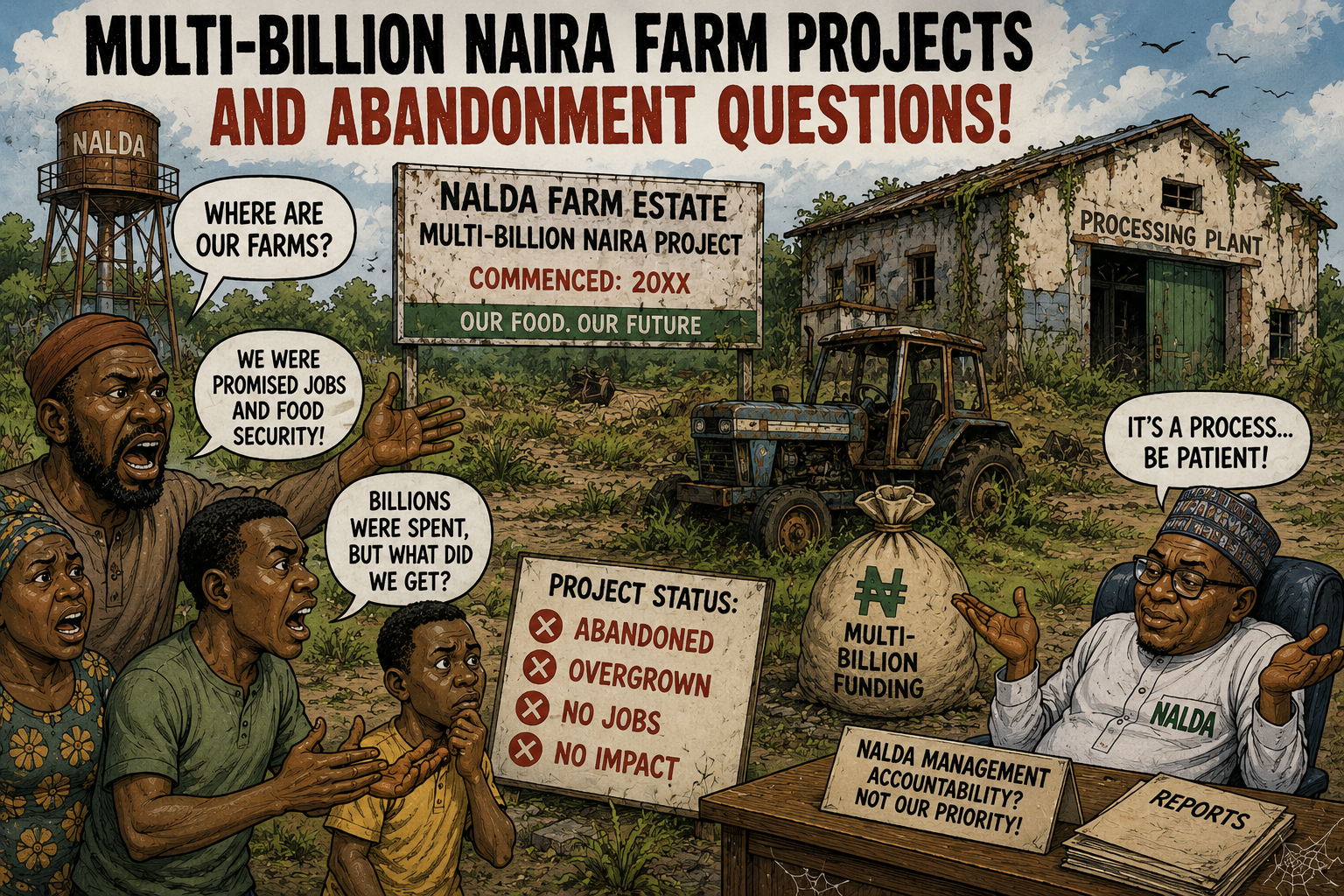
Few government agencies have attracted as much scrutiny in recent months as the National Agricultural Land Development Authority (NALDA). Questions about project implementation, budget allocations, and the pace of agricultural transformation continue to dominate public conversations. Critics point to abandoned projects, delayed outcomes, and unmet expectations as evidence that the agency has fallen short of its mission. Yet amid the controversy, an important question deserves equal attention. Are Nigerians judging NALDA solely by isolated setbacks while overlooking the scale of the challenge it was created to address? Reviving agriculture in a nation of more than 200 million people requires more than ambitious announcements. It demands long-term planning, land development, infrastructure investment, community participation, and sustained commitment. Viewed through that lens, the NALDA story becomes far more complex than many headlines suggest.
The Expectations Gap
Agriculture remains central to Nigeria’s economic future.
Citizens want lower food prices. Farmers want better access to land. Rural communities want jobs. Policymakers seek greater food security and reduced dependence on imports.
As a result, expectations surrounding NALDA are understandably high.
Whenever a new agricultural project is announced, many people expect immediate transformation. They anticipate thriving farms, expanded production, and visible economic benefits within a short period.
Reality, however, is often more complicated.
Large-scale agricultural development requires land preparation, infrastructure construction, irrigation systems, equipment deployment, farmer training, and continuous monitoring. These processes take time.
The challenge facing NALDA is not simply launching projects. The challenge is creating sustainable systems that can deliver benefits for years rather than months.
Why Agricultural Development Is Never Instant
Critics frequently highlight projects that appear delayed or incomplete.
Such concerns deserve attention because accountability remains essential in public administration.
However, it is also important to recognize that agricultural development differs from many other government initiatives.
Building productive farmland requires extensive groundwork. Roads must connect farms to markets. Water systems must support cultivation. Storage facilities must reduce post-harvest losses. Farmers require access to technology and technical support.
Without these foundations, short-term achievements often collapse.
NALDA’s broader strategy focuses on creating these underlying structures rather than pursuing temporary publicity victories.
While delays may occur, long-term capacity building remains crucial for meaningful agricultural transformation.
Expanding Access to Agricultural Opportunities
One of the most significant objectives behind NALDA’s activities is expanding opportunities for ordinary Nigerians.
For many years, access to productive farmland represented a major obstacle for aspiring farmers. Limited infrastructure and inadequate support systems discouraged participation in agriculture, especially among younger citizens.
NALDA seeks to address these barriers.
By promoting farm estates, land development initiatives, and agricultural support programs, the agency aims to make farming more accessible and commercially viable.
Supporters argue that such efforts are essential if Nigeria hopes to attract a new generation into agriculture.
Without intervention, the country risks declining agricultural productivity and increased pressure on food supplies.
The Accountability Debate
No public institution should operate without scrutiny.
Questions regarding project performance, spending priorities, and implementation outcomes are legitimate. Citizens have every right to demand transparency and measurable results.
Yet accountability should not become an excuse to dismiss every achievement.
Many government agencies struggle because they receive criticism regardless of outcomes. Successful projects attract limited attention. Delays generate major headlines.
Balanced assessment requires examining both successes and shortcomings.
Where projects encounter difficulties, corrective action should follow. Where progress occurs, recognition should also be given.
NALDA deserves evaluation based on evidence rather than assumptions.
Food Security Remains a National Priority
Nigeria’s food security challenge extends beyond any single agency.
Population growth, climate pressures, insecurity, transportation costs, and market disruptions all influence agricultural performance.
Consequently, no institution can solve these problems alone.
NALDA operates within a broader ecosystem involving federal ministries, state governments, private investors, financial institutions, and farming communities.
Its contribution should therefore be measured within this wider context.
The authority’s efforts to develop agricultural land, encourage production, and expand rural opportunities represent important components of a larger national strategy.
Looking Beyond the Headlines
Controversy often generates more attention than progress.
A delayed project may dominate public discussion for weeks. A successful farming initiative may receive only brief coverage.
This imbalance can distort public perception.
While NALDA should remain accountable for every naira spent and every project announced, criticism should also acknowledge the complexity of agricultural development.
Transforming rural economies requires patience, investment, and institutional persistence.
The real debate should not focus solely on whether challenges exist. Challenges are inevitable in a sector as large and important as agriculture.
Instead, the conversation should center on how agencies like NALDA can improve performance, strengthen transparency, and accelerate delivery while continuing to pursue the long-term goal of agricultural transformation.
For all the criticism directed at the authority, its central mission remains vital. Nigeria cannot achieve lasting food security without developing productive agricultural land, empowering farmers, and strengthening rural economies. In that mission, NALDA remains an institution worth improving, supporting, and holding accountable—not dismissing outright.
About The Author