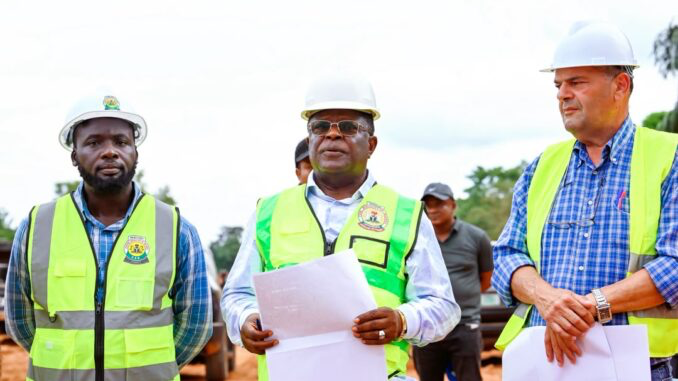

The commissioning of the NALDA Vegetables Market in Yamaltu Deba, along the Biu Road corridor in Gombe State, marks another important milestone in Nigeria’s efforts to strengthen agricultural productivity, improve market access, and enhance food security.
The event, which brought together leaders of the All Progressives Congress (APC), government officials, and key stakeholders in the agricultural sector, highlighted the growing importance of collaboration in driving sustainable rural development.
Leading the delegation was the National Chairman of the APC, Nentawe Yilwatda, who officially commissioned the project. Also present was Muhammadu Inuwa Yahaya, whose administration partnered closely with the National Agricultural Land Development Authority to ensure the successful delivery of the initiative.
The Power of Strategic Partnerships
One of the most notable aspects of the project is the strong partnership between NALDA and the Gombe State Government.
Beyond allocating land for the development, the state government provided critical infrastructure support, including perimeter fencing and access roads. Furthermore, this collaboration demonstrates how effective partnerships between federal agencies and state governments can accelerate development outcomes and maximize the impact of public investments.
Agricultural transformation requires more than policy declarations. It demands practical interventions, infrastructure support, and coordinated action. The successful completion of the vegetables market reflects what can be achieved when institutions work together toward shared goals.
Creating Market Opportunities for Farmers
For many farmers, access to markets remains one of the biggest challenges limiting productivity and profitability.
While farmers often succeed in producing crops, inadequate market structures can lead to post-harvest losses, lower earnings, and reduced incentives for increased production. Consequently, creating organized and efficient marketplaces becomes essential to strengthening the agricultural value chain.
The newly commissioned NALDA Vegetables Market addresses this challenge directly. Strategically located, the facility provides a structured environment where farmers can connect with buyers, access broader markets, and sell their produce more efficiently.
Furthermore, improved market access helps increase farmers’ incomes while encouraging greater investment in agricultural production.
Advancing the Green Hope Project
The market forms an important component of NALDA’s Green Hope Project, a broader initiative designed to promote agricultural development, enhance rural livelihoods, and support food security objectives.
Through the project, NALDA continues to focus on interventions that create tangible opportunities for farmers, young people, and rural communities.
Furthermore, the Green Hope Project reflects a practical approach to agricultural development by addressing critical gaps within the value chain, including production, processing, storage, and market access.
Such interventions help create a more sustainable agricultural ecosystem capable of supporting long-term growth.
Supporting Food Security and Employment
Agriculture remains one of the most important sectors of Nigeria’s economy and a major source of employment.
Consequently, investments that strengthen agricultural infrastructure contribute directly to national food security and economic development.
The vegetables market aligns with the mandate given to NALDA by President Bola Ahmed Tinubu to expand food production, empower farmers, create jobs, and improve livelihoods across the country.
Furthermore, better market systems encourage increased production, reduce waste, and strengthen the resilience of local food supply chains.
A Model for Rural Development
The project also serves as an example of how targeted investments can stimulate economic activity within rural communities.
When farmers gain access to reliable markets, surrounding businesses often benefit as well. Transportation providers, traders, processors, and service providers all become part of a growing local economic ecosystem.
Furthermore, such developments encourage greater participation by young people in agriculture by demonstrating that farming can be both profitable and sustainable.
As a result, initiatives like the NALDA Vegetables Market contribute to broader goals of rural prosperity and inclusive growth.
Looking Ahead
The commissioning of the NALDA Vegetables Market represents more than the completion of a physical structure. It symbolizes a commitment to empowering farmers, strengthening agricultural value chains, and creating opportunities for sustainable development.
Furthermore, the collaboration between NALDA and the Gombe State Government illustrates the importance of partnership in achieving meaningful development outcomes.
As Nigeria continues to pursue food security and economic diversification, projects such as this provide practical solutions that directly benefit communities. Through the Green Hope Project and similar initiatives, NALDA is helping to build a future where farmers enjoy better opportunities, rural communities thrive, and agriculture continues to serve as a powerful driver of national growth and prosperity.
About The Author