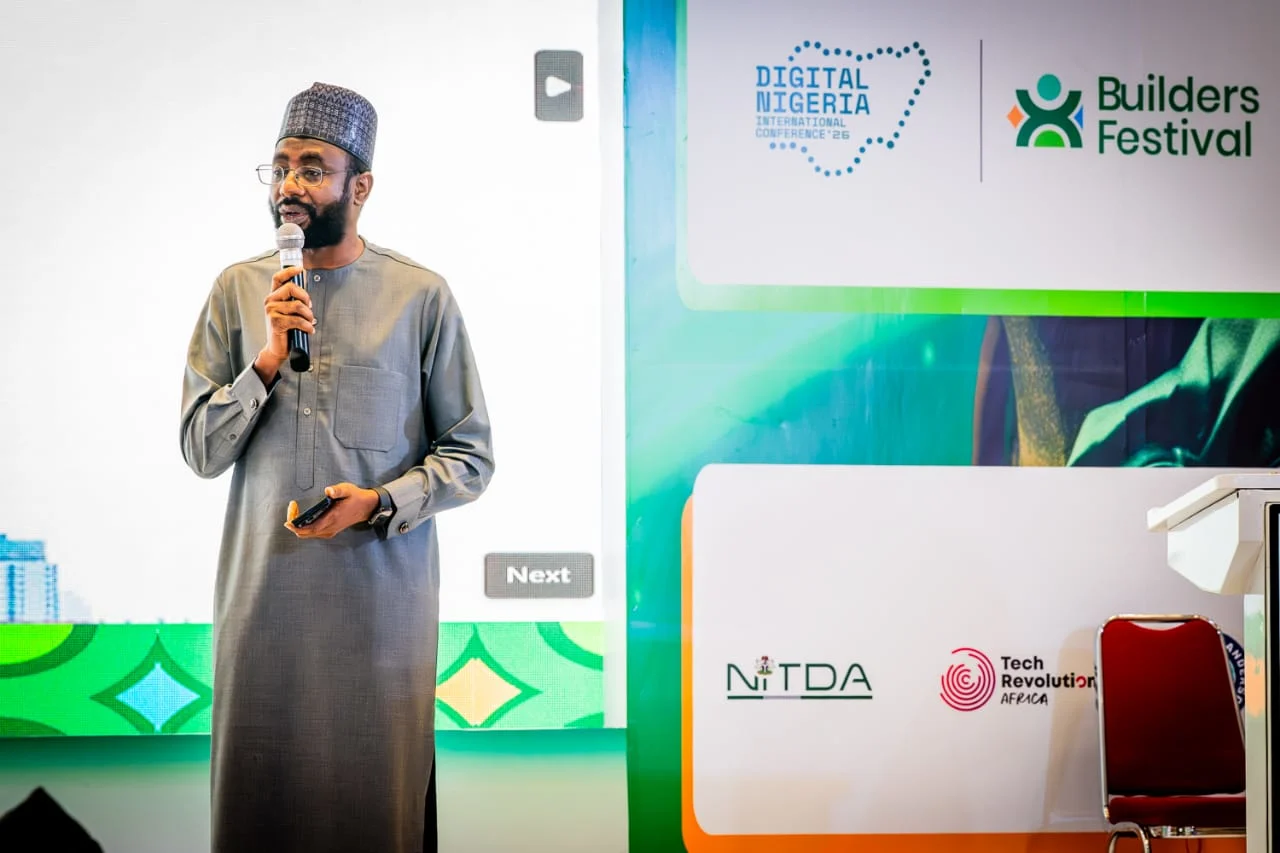
The Director-General of the National Information Technology Development Agency (NITDA), Kashifu Inuwa Abdullahi, has challenged Nigerian startups to stop building technology for its own sake and focus on solutions capable of addressing the country’s pressing challenges.
He gave the charge while inaugurating the Builders Festival on the sidelines of the Digital Nigeria International Conference and Exhibition (DNICE) 2026 in Abuja. The initiative, developed through a strategic partnership between NITDA and Tech Revolution Africa, aims to connect startups with investors, potential customers, corporate organisations and institutions seeking technology-driven solutions.
Inuwa argued that Nigeria’s challenges should not discourage entrepreneurs. Instead, they should inspire innovators to identify unmet needs and develop products that improve everyday life, strengthen businesses and create economic opportunities.
His message highlights an important shift in the expectations surrounding Nigeria’s technology ecosystem. Beyond producing applications, platforms and digital products, startups must demonstrate that their innovations solve identifiable problems, attract users and deliver measurable value.
NITDA Wants Startups to Focus on Problems, Not Technology Alone
Inuwa emphasised that developing impressive technology does not automatically translate into commercial success or national development. According to him, entrepreneurs must first understand the problems they want to solve and then determine how technology can provide practical answers.
He explained that startups should measure their achievements by the improvements their solutions bring to people’s lives and businesses.
“The goal is not to be in love with your technology, but to be in love with the problem you are solving. It’s about how your solutions can help millions of Nigerians improve their productivity and national prosperity,” he said.
This approach challenges founders to rethink how they develop and position their products. Rather than beginning with a technology they want to introduce, entrepreneurs should identify a clear market need, understand the people affected and build solutions around their actual requirements.
For example, a startup developing a digital payment platform must demonstrate how its product makes transactions more accessible, secure or efficient. Similarly, a business management application should help entrepreneurs improve their operations, reduce costs or make better financial decisions.
Ultimately, the value of innovation depends not simply on what a product can do technically, but on whether people need it, can use it and are willing to adopt it.
Healthcare Presents Opportunities for Technology Innovation
Healthcare was among the sectors Inuwa identified as offering significant opportunities for Nigerian technology entrepreneurs.
He disclosed that NITDA’s research indicated that 80 per cent of Nigerian adults wanted access to telemedicine services, but only 19 per cent had used them.
The figures point to a gap between public interest in remote healthcare and actual utilisation. For startups, that gap presents an opportunity to develop solutions that make healthcare services easier to access, particularly for people who face geographical, financial or logistical barriers.
Digital health platforms, for instance, could connect patients with qualified medical professionals, support remote consultations and make health information more accessible. Other solutions could help healthcare facilities manage patient records, appointments and administrative processes.
However, developing a successful health technology product requires more than creating an online consultation platform. Entrepreneurs must consider data privacy, patient safety, professional standards, affordability and the reliability of the services provided.
They must also understand the realities of healthcare delivery in Nigeria, including connectivity limitations and differences in access between urban and rural communities.
Therefore, the opportunity lies in building practical systems that complement healthcare professionals and make services more accessible without compromising quality or safety.
Agriculture Needs Solutions That Improve Farmers’ Productivity
Inuwa also identified agriculture as a sector where technology could make a meaningful difference.
He noted that more than 40 per cent of Nigeria’s population were farmers, while many agricultural producers continued to face challenges involving weather conditions, soil information, planting decisions and access to markets.
These difficulties can affect production, increase operating costs and reduce farmers’ incomes. Consequently, technology entrepreneurs have an opportunity to develop tools that help farmers make better decisions and connect more effectively with buyers.
For example, digital platforms could provide weather forecasts, soil information and guidance on planting and fertiliser application. Such tools could help farmers plan their activities, manage resources and respond more effectively to changing conditions.
In addition, digital marketplaces could connect farmers with processors, distributors and other buyers, reducing some of the difficulties associated with finding reliable markets.
Nevertheless, agricultural technology must reflect the realities of the people expected to use it. Solutions should be affordable, accessible and easy to operate, particularly for farmers with limited experience using digital services.
Startups must also consider language, connectivity and the practical conditions of farming communities. A sophisticated application will have limited impact if its intended users cannot access or understand it.
Helping Small Businesses Become More Creditworthy
Small and medium-sized enterprises (SMEs) represent another important opportunity for technology-driven innovation.
Inuwa observed that many businesses struggle to access bank credit because they cannot adequately demonstrate their financial performance and business activities.
For financial institutions, reliable records help establish whether a business can repay a loan and manage borrowed funds responsibly. However, many small enterprises operate with incomplete financial documentation, making it difficult for lenders to assess their creditworthiness.
The NITDA Director-General therefore challenged startups to develop digital tools that help SMEs maintain proper financial records, demonstrate business performance and establish the transparency required by financial institutions.
Such solutions could include affordable accounting platforms, digital inventory systems, electronic invoicing and business management tools.
When entrepreneurs consistently record sales, expenses, inventory and cash flow, they can develop a clearer picture of their operations. They can also provide more reliable information when approaching financial institutions for credit.
Furthermore, these tools could help business owners identify unnecessary expenses, monitor profitability and make better decisions about expansion.
The opportunity, therefore, extends beyond developing another financial technology application. Startups can create practical systems that improve how small businesses operate and strengthen their ability to participate in the formal financial system.
Builders Festival Connects Innovators with Real Market Opportunities
The Builders Festival is designed to address the gap between organisations that have specific operational challenges and startups with the technical capacity to solve them.
Instead of concentrating only on showcasing new products, the initiative seeks to create direct connections between problem owners and technology builders.
This model is important because many startups struggle to move from product development to commercial adoption. A founder may develop a functional solution but lack access to the institutions, businesses and customers that need it.
Through the festival, NITDA and Tech Revolution Africa aim to create opportunities for startups to demonstrate their solutions, engage potential customers and explore partnerships.
The platform also brings investors and corporate organisations into the process, creating room for discussions around business development, investment and the practical deployment of technology.
Inuwa explained that Nigeria needs more platforms capable of connecting people who understand problems with entrepreneurs who can develop solutions.
The initiative therefore goes beyond celebrating innovation. It seeks to strengthen the relationships required to turn promising products into viable businesses.
More Than 1,388 Startups Apply for the Festival
Inuwa disclosed that more than 1,388 startups applied to participate in the Builders Festival, but only about 30 were selected.
The level of interest highlights the growing number of Nigerian entrepreneurs seeking opportunities to develop and commercialise technology solutions.
However, the selection process also demonstrates the importance of moving beyond having an idea. Startups must develop products that address clear needs and show the potential to deliver practical value.
For the selected participants, the festival provides an opportunity to present their solutions to investors, institutions and potential customers. It also offers a platform to understand market expectations and identify possible areas for collaboration.
Inuwa congratulated the successful applicants and encouraged them to maximise the opportunities available through the initiative.
He further challenged founders to evaluate their achievements by considering the number of lives improved and businesses strengthened through their innovations.
From Digital Access to Measurable Economic Impact
The NITDA Director-General also stressed that access to technology must translate into actual adoption and improved productivity.
Having a mobile phone, accessing the internet or downloading an application does not necessarily mean that an individual or business has benefited from digital innovation.
Instead, technology should help people save time, reduce costs, improve operations, increase incomes and access opportunities that might otherwise remain beyond their reach.
This distinction is particularly important as Nigeria continues to expand its digital economy. The country needs solutions that respond to local conditions while also meeting the standards required to compete in wider markets.
For startups, this means paying attention to customer experience, affordability, reliability and long-term business sustainability. It also requires continuous engagement with users to understand whether products are solving the problems they were designed to address.
Moreover, entrepreneurs must consider how their solutions can grow beyond their initial customer base. A product that works for a small group should have a clear pathway to serving more individuals, businesses or institutions without losing its effectiveness.
Inuwa urged founders to build scalable solutions capable of creating wealth, improving productivity and competing internationally while contributing to national prosperity.
Building a Stronger Startup Ecosystem Through Collaboration
The Builders Festival also reflects the importance of collaboration in developing Nigeria’s technology ecosystem.
Startups need more than technical skills to succeed. They require access to finance, reliable infrastructure, experienced mentors, customers, business partners and institutions willing to adopt locally developed solutions.
Similarly, government agencies and established organisations need opportunities to identify technology companies capable of addressing their operational challenges.
By bringing these groups together, the initiative seeks to create a more direct relationship between innovation and market demand.
The partnership between NITDA and Tech Revolution Africa therefore supports a model in which startups can engage with real problems while institutions gain access to potential technology solutions.
For the wider ecosystem, stronger collaboration could encourage local innovation, support investment and improve the adoption of homegrown technology.
Conclusion
NITDA’s challenge to Nigerian startups sends a clear message: innovation must solve problems, create value and improve lives.
Through the Builders Festival, the agency is encouraging entrepreneurs to look beyond technology development and focus on practical solutions in healthcare, agriculture, small-business financing and other areas where Nigerians face significant challenges.
The initiative also provides an opportunity to connect innovators with investors, corporate organisations and potential customers who can help turn promising products into sustainable businesses.
As Nigeria seeks to strengthen its digital economy, the success of its startup ecosystem will depend not only on the number of technology companies established but also on the problems they solve and the value they create.
Ultimately, the country needs entrepreneurs who understand its challenges, build around real market needs and develop solutions capable of improving productivity, expanding opportunities and supporting national prosperity.
About The Author