President Bola Tinubu has promised to rebuild communities devastated by years of violence in Plateau State and facilitate the return of thousands of internally displaced persons (IDPs) to their ancestral homes, renewing expectations for a comprehensive approach to security, reconstruction and humanitarian recovery.
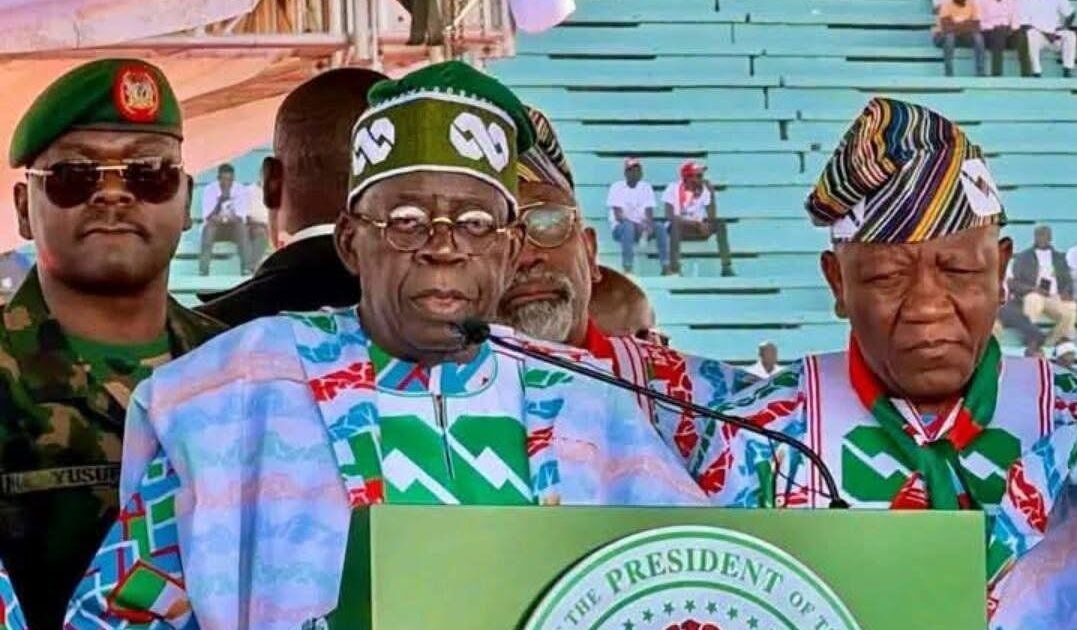
The President made the commitment on November 14, 2026, during the All Progressives Congress (APC) North-Central campaign rally at Zaria Road Stadium in Jos. He acknowledged the devastating consequences of recurring attacks across Plateau since 2001, including the loss of lives, destruction of homes and displacement of entire communities.
Tinubu assured affected residents that the Federal Government would work with Plateau State Governor Caleb Mutfwang, APC National Chairman Nentawe Yilwatda and other stakeholders to restore affected settlements and support displaced families in returning home.
His promise comes amid continuing security and humanitarian challenges in the state, where violence has forced residents to abandon their homes, farms, businesses and other sources of livelihood.
For thousands of displaced people, however, returning home involves more than reopening houses. It requires reliable security, restored infrastructure, access to basic services and the confidence that they can rebuild their lives without facing renewed attacks.
Tinubu Acknowledges Years of Destruction and Displacement
Reflecting on Plateau’s prolonged security challenges, Tinubu acknowledged that recurring attacks had inflicted deep wounds on communities across the state.
He offered condolences to families who had lost relatives, survivors of attacks and residents who remained unable to return to their ancestral communities.
The President also addressed criticism surrounding his previous visit to Plateau, explaining that he had been limited to the airport and had not visited the affected communities in the hinterland.
He said he had received reports from Governor Mutfwang and seen the devastation caused by the violence.
However, Tinubu assured displaced residents that the Federal Government would support efforts to rebuild their communities and bring them back.
He said the administration would work with the Plateau State Government and other leaders to restore affected areas and enable families to resettle in their ancestral homes.
The commitment places community reconstruction alongside security operations as essential components of the response to the crisis.
While emergency relief can provide immediate assistance to displaced households, sustainable recovery requires a longer-term plan that addresses the conditions that forced residents to flee in the first place.
1,000 Forest Guards Undergoing Training
Beyond the reconstruction pledge, Tinubu announced additional measures aimed at strengthening security across vulnerable communities in Plateau State.
He disclosed that 1,000 forest guards were undergoing training and would be deployed to improve security in areas exposed to attacks.
According to the President, the initiative is intended to strengthen security presence in rural communities and support efforts to prevent further violence.
He also said surveillance cameras promised to the state had been procured to improve intelligence gathering, monitoring and early-warning operations.
These measures form part of the administration’s stated efforts to improve security deployment, coordination among security agencies and rapid responses to emerging threats.
The importance of such measures is particularly clear in rural communities where residents may face difficulties accessing immediate security assistance during attacks.
However, the effectiveness of the proposed deployment will depend on adequate training, equipment, coordination and clear operational responsibilities. Security personnel must also be able to respond quickly to credible intelligence and work with communities to identify emerging threats.
Similarly, surveillance technology can support monitoring and early detection, but its contribution will depend on reliable communication systems, effective analysis of information and timely intervention by security agencies.
For displaced families considering a return, the presence of security personnel and the ability of authorities to prevent renewed attacks will remain central to their confidence.
Plateau’s Displacement Crisis Requires a Sustained Response
The scale of displacement illustrates why the President’s reconstruction promise has attracted attention.
According to figures cited by the United Nations High Commissioner for Refugees (UNHCR), Plateau State had 45,212 internally displaced persons as of August 1, 2026.
The figure highlights the continuing humanitarian consequences of insecurity and the pressure placed on affected households and communities.
Displacement often disrupts nearly every aspect of family life. Children may lose access to stable education, farmers can become separated from their farmlands, and traders may lose their businesses and customer networks.
In addition, families who spend extended periods in temporary settlements may depend on humanitarian assistance for food, shelter, healthcare and other essential needs.
The consequences also extend to host communities, which may experience additional pressure on housing, public services and local resources as they accommodate displaced residents.
In July 2026, UNHCR reported distributing essential relief items to conflict-affected households in Bassa, Barkin Ladi and Riyom local government areas following renewed violence that displaced families and destroyed homes and household belongings.
Although humanitarian assistance remains important, the scale of the challenge makes it necessary to connect emergency support with reconstruction, livelihood restoration and long-term resettlement planning.
Rebuilding Homes Must Go Hand in Hand with Restoring Livelihoods
For many displaced residents, returning to their ancestral communities represents an opportunity to recover the lives they lost during years of violence.
However, rebuilding houses alone will not resolve the challenges facing returning families.
Many affected residents depend on agriculture, livestock production, trading and other local economic activities. When violence forces them to abandon their communities, they may also lose access to farms, markets, tools, livestock and other productive assets.
Consequently, a successful reconstruction programme should consider the economic conditions required for families to become self-reliant again.
Farmers, for instance, need safe access to their farmlands, agricultural inputs and functioning markets. Traders require suitable business locations, restored commercial infrastructure and reliable transportation.
Children also need functioning schools, while families require access to healthcare, clean water and other essential services.
Furthermore, the rehabilitation of roads, electricity infrastructure and public facilities can help reconnect affected communities with surrounding towns and economic centres.
These needs demonstrate why resettlement requires coordination among federal and state authorities, security agencies, humanitarian organisations, traditional institutions and community representatives.
Without such coordination, returning families could face difficulties rebuilding their livelihoods even after their homes have been reconstructed.
Governor Mutfwang Expected to Work with Federal Government
Tinubu pledged to work with Governor Caleb Mutfwang and other political and community leaders to restore affected communities.
The governor’s involvement will be important because the state government has a central role in identifying affected settlements, assessing local needs and coordinating reconstruction and resettlement efforts.
During the rally, Tinubu commended Mutfwang’s efforts to promote peace and stability, urging residents to overcome divisions and work together.
The President also stressed that differences in ethnicity, religion, language and culture should not make residents enemies.
His remarks highlighted the importance of peaceful coexistence in a state where recurring violence has affected relationships among communities and disrupted economic and social activities.
Nevertheless, reconciliation must complement practical measures to protect residents, address grievances and rebuild trust. Communities need credible processes for dialogue, accountability and peaceful dispute resolution.
The involvement of traditional rulers, religious leaders, youth representatives, women and other local stakeholders could also help ensure that reconstruction and resettlement plans reflect the concerns of affected residents.
What Must Happen Before Displaced Families Return?
Although the President’s promise has renewed expectations, the practical implementation of the proposed reconstruction and resettlement programme will determine its impact.
A safe return requires authorities to establish that affected communities can provide reasonable security for residents. Families should not be encouraged to return to locations where the risk of renewed attacks remains unresolved.
Authorities will also need to assess the condition of destroyed homes, schools, health facilities, roads and other essential infrastructure.
In addition, a transparent resettlement process should identify affected households, establish their needs and provide a clear framework for assistance.
For families whose homes have been destroyed, reconstruction support may include building materials, housing assistance and access to basic services. Others may require livelihood support to restart farming, trading or other economic activities.
The government will also need to communicate clearly with displaced residents about the arrangements, available assistance and conditions for returning.
Importantly, no detailed reconstruction budget or implementation timetable was announced during the rally. Therefore, affected communities will be looking for further clarification on funding, project responsibilities, security arrangements and the schedule for resettlement.
Economic Recovery Depends on Lasting Peace
Tinubu also emphasised the importance of developing Plateau’s agricultural and mining sectors, identifying economic growth as part of the state’s wider recovery.
He said his administration would work with the state government to explore opportunities in these sectors and develop infrastructure that could support economic activity.
Plateau has agricultural potential, with communities involved in the production of vegetables, potatoes and other crops. However, persistent insecurity can prevent farmers from accessing their land, disrupt supply chains and discourage investment.
Restoring security would therefore help create conditions for farmers and businesses to resume operations, improve production and reconnect with markets.
The President also discussed plans to develop Jos Airport into a cargo airport to support the export of agricultural produce. Such a project, if implemented, could improve access to international markets for local producers.
However, infrastructure development and economic investment will deliver sustainable benefits only when communities can operate without fear and businesses have the confidence to invest.
Conclusion
President Tinubu’s promise to rebuild violence-affected Plateau communities and facilitate the return of displaced residents places renewed attention on the urgent need for security, reconstruction and humanitarian recovery.
His announcement of 1,000 forest guards undergoing training and the procurement of surveillance cameras represents part of the Federal Government’s stated security response. However, affected communities will ultimately measure progress by improvements in their safety and the practical support they receive to rebuild their lives.
With 45,212 internally displaced persons recorded in Plateau as of August 2026, the challenge requires sustained cooperation between federal and state authorities, security agencies, humanitarian organisations and local communities.
The return of displaced families must therefore involve more than transporting residents back to their ancestral homes. It must provide the security, infrastructure, public services and livelihood opportunities necessary for them to remain there safely.
Ultimately, the success of Tinubu’s pledge will depend on how quickly the government translates its commitment into a properly funded, transparent and sustainable reconstruction and resettlement programme.
About The Author