
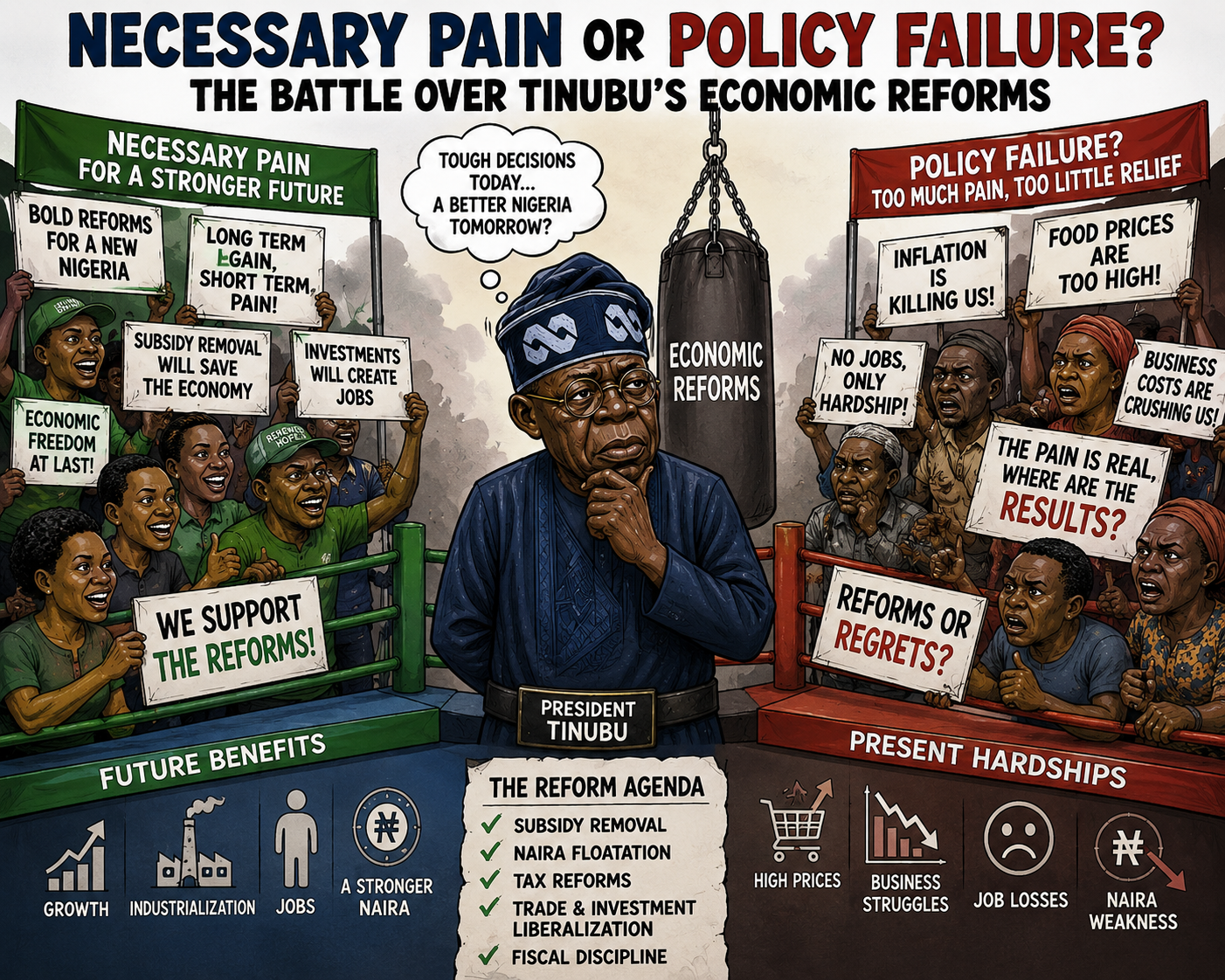
Walk through any market in Nigeria today and you will hear the same concerns. Prices are higher. Businesses face pressure. Families are adjusting to a new economic reality. These struggles are real, and no responsible leader should ignore them. Yet another question deserves equal attention. If the policies causing discomfort today are also laying the foundation for long-term prosperity, should they automatically be dismissed as failures? President Bola Tinubu’s economic reforms have become one of the most controversial subjects in the country. Critics point to rising living costs as proof that the strategy is not working. Supporters argue that difficult decisions were necessary to rescue an economy burdened by structural weaknesses. The debate continues, but history often shows that transformative reforms rarely arrive without resistance, sacrifice, and short-term pain.
The Economy Tinubu Inherited
Before evaluating the reforms, it is important to understand the conditions that existed beforehand.
Nigeria faced mounting fiscal pressures. Government revenues struggled to keep pace with expenditure demands. Foreign exchange distortions created uncertainty. Fuel subsidies consumed enormous public resources. Investors expressed concerns about policy inconsistencies and market inefficiencies.
These challenges did not emerge overnight.
They developed over many years and became increasingly difficult to sustain. Many economists warned that maintaining the status quo would eventually create even greater economic instability.
The new administration therefore faced a difficult choice.
Continue with existing policies and postpone tough decisions, or implement reforms that could stabilize the economy over time while creating temporary hardship.
Why Subsidy Removal Became Unavoidable
Few policies generated more controversy than the removal of fuel subsidies.
For years, subsidies were defended as a way to reduce transportation and energy costs. However, they also placed a significant burden on public finances.
Supporters of reform argued that billions of naira that could support infrastructure, education, healthcare, and development projects were being consumed by an increasingly unsustainable system.
The decision to remove the subsidy created immediate economic pressure. Transportation costs increased. Businesses adjusted pricing structures. Citizens felt the impact.
Nevertheless, supporters maintain that continuing the previous arrangement would have deepened fiscal challenges and reduced government flexibility in the future.
Currency Reform and Market Confidence
The foreign exchange market represented another area requiring attention.
Multiple exchange-rate systems often created uncertainty for investors and businesses. Market distortions complicated economic planning and discouraged investment in certain sectors.
The administration’s efforts to reform the foreign exchange framework generated intense debate.
Critics focused on currency volatility and inflationary pressures. Supporters emphasized transparency, market efficiency, and the long-term benefits of reducing distortions.
Economic transitions rarely occur without disruption.
However, advocates argue that creating a more predictable investment environment remains essential for attracting capital and expanding economic activity.
Investment Requires Difficult Decisions
One objective behind the reform agenda involves improving investor confidence.
Domestic and international investors often evaluate policy consistency, fiscal discipline, and market transparency before committing resources.
Governments seeking long-term economic growth frequently implement reforms designed to strengthen these indicators.
Such policies can be politically challenging because benefits often emerge gradually while costs appear immediately.
This reality explains why economic reform frequently becomes controversial.
Citizens experience short-term adjustments directly. Future gains take longer to materialize.
Yet many successful economies underwent similar transitions before achieving sustained growth.
Beyond the Headlines
Political debate often focuses on immediate outcomes.
Headlines highlight inflation, consumer pressure, and economic frustration. These concerns deserve attention because they affect millions of Nigerians.
At the same time, broader indicators also matter.
Fiscal reforms, investment trends, infrastructure development, manufacturing expansion, and institutional strengthening contribute to long-term economic performance.
Evaluating reform solely through current hardship risks overlooking structural changes designed to improve future stability.
The question is not whether citizens face challenges today. The question is whether the reforms are addressing the underlying weaknesses that created those challenges in the first place.
Leadership and Political Risk
Economic reform requires political courage.
Leaders often receive greater short-term popularity by delaying difficult decisions. Maintaining unsustainable policies can sometimes appear easier than confronting entrenched problems.
President Tinubu chose a different path.
His administration pursued reforms despite knowing they would generate criticism and political pressure. Supporters view this willingness to embrace difficult choices as evidence of long-term thinking rather than short-term political calculation.
Whether every policy succeeds remains a matter for ongoing evaluation.
However, few would dispute that the administration has demonstrated a willingness to tackle issues previous governments often approached cautiously.
The Long-Term Test
Economic reforms should ultimately be judged by results rather than rhetoric.
Citizens deserve tangible improvements in living standards, employment opportunities, investment growth, and economic stability. These outcomes remain the true measure of success.
Yet fairness requires acknowledging that major structural reforms rarely produce instant rewards.
The controversy surrounding Tinubu’s economic agenda reflects the tension between present hardship and future expectations. Critics emphasize immediate pain. Supporters focus on long-term transformation.
History will eventually determine which side is correct. For now, however, it is reasonable to argue that many of the administration’s reforms represent an attempt to confront difficult economic realities rather than avoid them. If those efforts ultimately create a stronger, more competitive, and more resilient economy, today’s controversy may one day be remembered as the price of necessary change rather than evidence of policy failure.
About The Author