
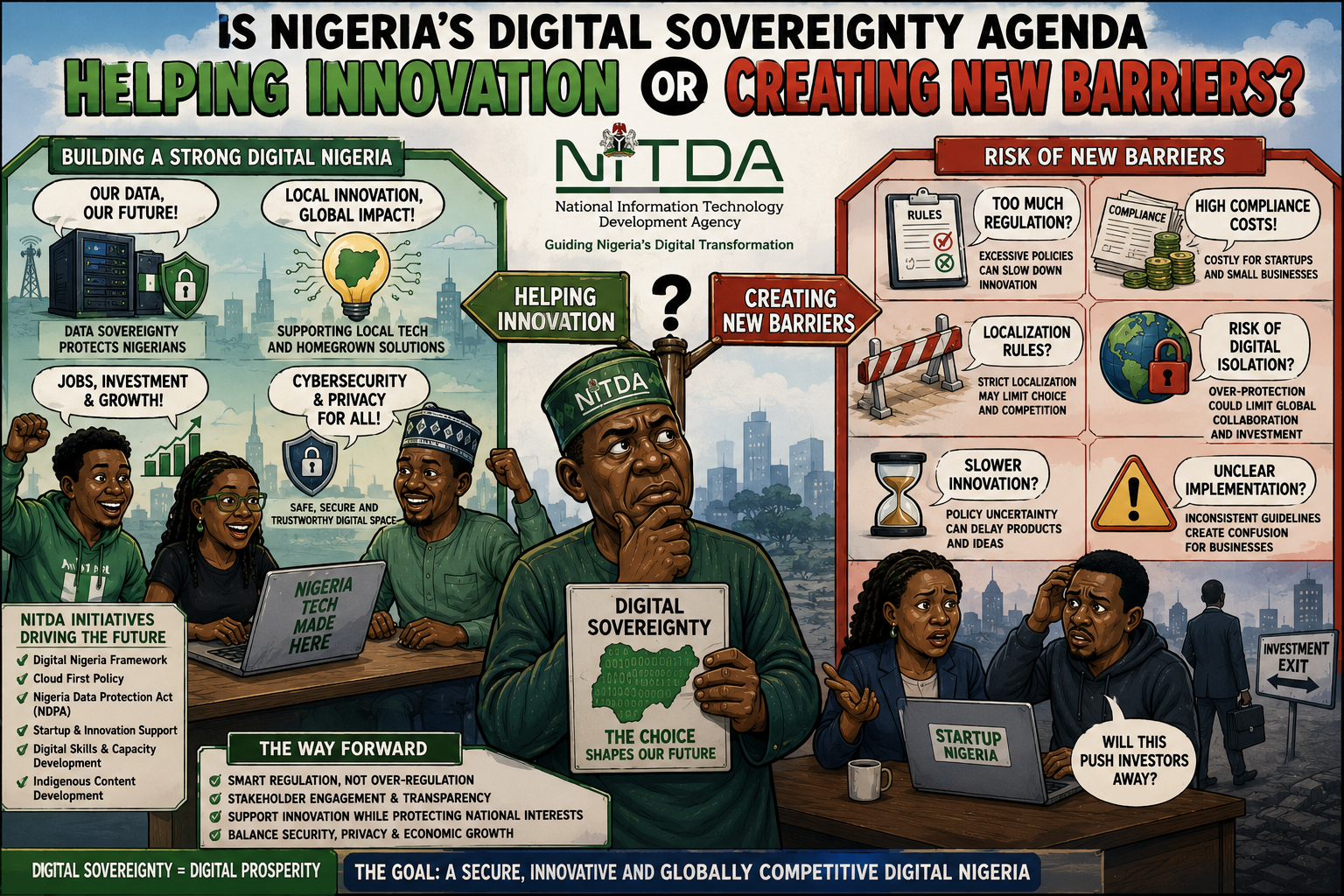
Nigeria’s digital economy stands at a critical crossroads. Every day, millions of citizens rely on technology for banking, communication, education, healthcare, and business. At the same time, concerns about data security, foreign technology dependence, cyber threats, and digital competitiveness continue to grow. These realities have placed the National Information Technology Development Agency (NITDA) at the center of one of the most important policy debates in the country. Critics argue that some digital sovereignty initiatives risk creating new barriers for businesses and innovation. Supporters insist that stronger digital protections are essential for long-term national development. Amid the controversy, one question dominates the conversation. Is NITDA creating obstacles for Nigeria’s technology sector, or is it laying the foundation for a stronger, safer, and more competitive digital future? Many observers believe the agency deserves far more credit than it often receives.
Why Digital Sovereignty Matters
For years, countries around the world have debated how much control they should have over their digital infrastructure, data, and technology ecosystems.
The issue extends far beyond technology.
Data has become one of the world’s most valuable resources. Governments, businesses, and individuals increasingly depend on digital systems for essential services. As a result, questions about data protection, cybersecurity, and digital independence have become matters of national importance.
NITDA’s digital sovereignty agenda reflects these concerns.
The agency seeks to ensure that Nigeria can protect sensitive information, strengthen cybersecurity, support local innovation, and reduce vulnerabilities within critical digital systems.
Supporters argue that these objectives are not barriers to progress. They are prerequisites for sustainable digital growth.
The Innovation Debate
Some critics worry that stronger regulations could increase compliance requirements for businesses.
They argue that startups and entrepreneurs already face numerous challenges, including funding constraints, infrastructure limitations, and market competition. Additional regulations may appear burdensome.
These concerns deserve consideration.
However, innovation and regulation are not necessarily opponents.
Successful digital economies often operate within clear regulatory frameworks that protect consumers, establish standards, and build trust. Businesses benefit when users feel confident about how their information is collected, stored, and protected.
NITDA’s supporters contend that responsible regulation can actually encourage innovation by creating a more secure and predictable environment for investment and technological development.
Protecting Citizens in a Digital Age
One of NITDA’s most important responsibilities involves safeguarding digital rights and personal information.
Cybercrime continues to evolve rapidly. Data breaches affect organizations worldwide. Online fraud remains a significant concern for individuals and businesses alike.
Without effective safeguards, digital transformation can expose citizens to unnecessary risks.
NITDA’s focus on data protection, cybersecurity awareness, and regulatory oversight seeks to address these challenges.
Critics may debate implementation strategies, but few would dispute the importance of protecting citizens in an increasingly connected world.
Digital growth without digital security creates vulnerabilities that can undermine public trust and economic progress.
Building a Stronger Local Technology Ecosystem
Another aspect of NITDA’s strategy involves supporting indigenous innovation.
For decades, many developing economies relied heavily on imported technology solutions. While international partnerships remain important, excessive dependence can limit domestic capacity building.
NITDA aims to encourage local participation in the digital economy.
Through skills-development initiatives, innovation programs, startup support mechanisms, and policy frameworks, the agency seeks to create opportunities for Nigerian entrepreneurs and technology professionals.
Supporters argue that a stronger local technology ecosystem contributes to job creation, economic diversification, and national competitiveness.
These benefits extend far beyond the technology sector itself.
Balancing Regulation and Growth
Every regulatory agency faces a common challenge.
Too little oversight can create instability and risk. Too much regulation can discourage innovation and investment.
Finding the right balance requires continuous engagement with stakeholders.
NITDA has increasingly emphasized consultation, collaboration, and dialogue with industry participants. This approach recognizes that effective digital policy should support innovation while protecting national interests.
The objective is not to restrict technological advancement.
The objective is to guide it responsibly.
As technology continues evolving, policies must adapt accordingly. Flexibility and stakeholder engagement remain essential components of successful digital governance.
Why Long-Term Vision Matters
Technology policy often produces debates because its benefits may not appear immediately.
Infrastructure investments require time. Capacity-building programs take years to demonstrate their full impact. Regulatory frameworks evolve gradually as industries mature.
Consequently, judging digital transformation efforts solely by short-term outcomes can overlook broader strategic objectives.
NITDA’s vision focuses on creating a digital economy capable of supporting future generations.
This requires investments in cybersecurity, digital skills, innovation ecosystems, regulatory capacity, and institutional resilience.
Such initiatives may not always generate dramatic headlines, but they contribute significantly to long-term national development.
Looking Beyond the Criticism
Healthy debate strengthens policymaking.
Questions about regulation, implementation, and accountability should continue. Public institutions perform best when they remain open to scrutiny and constructive feedback.
At the same time, criticism should acknowledge the complexity of the challenges NITDA seeks to address.
The agency operates in an environment shaped by rapid technological change, evolving cyber threats, increasing data demands, and global competition. Managing these realities requires strategic planning rather than reactive policymaking.
The controversy surrounding digital sovereignty ultimately reflects a larger conversation about Nigeria’s future. Supporters see NITDA as an institution helping build a secure, innovative, and competitive digital economy. Critics worry about potential constraints on business and innovation. Yet the evidence increasingly suggests that digital progress and digital protection are not mutually exclusive goals.
For Nigeria to thrive in the digital age, it must embrace innovation while safeguarding national interests. In that mission, NITDA is not creating barriers to progress. It is helping build the foundations upon which lasting digital prosperity can stand.
About The Author