
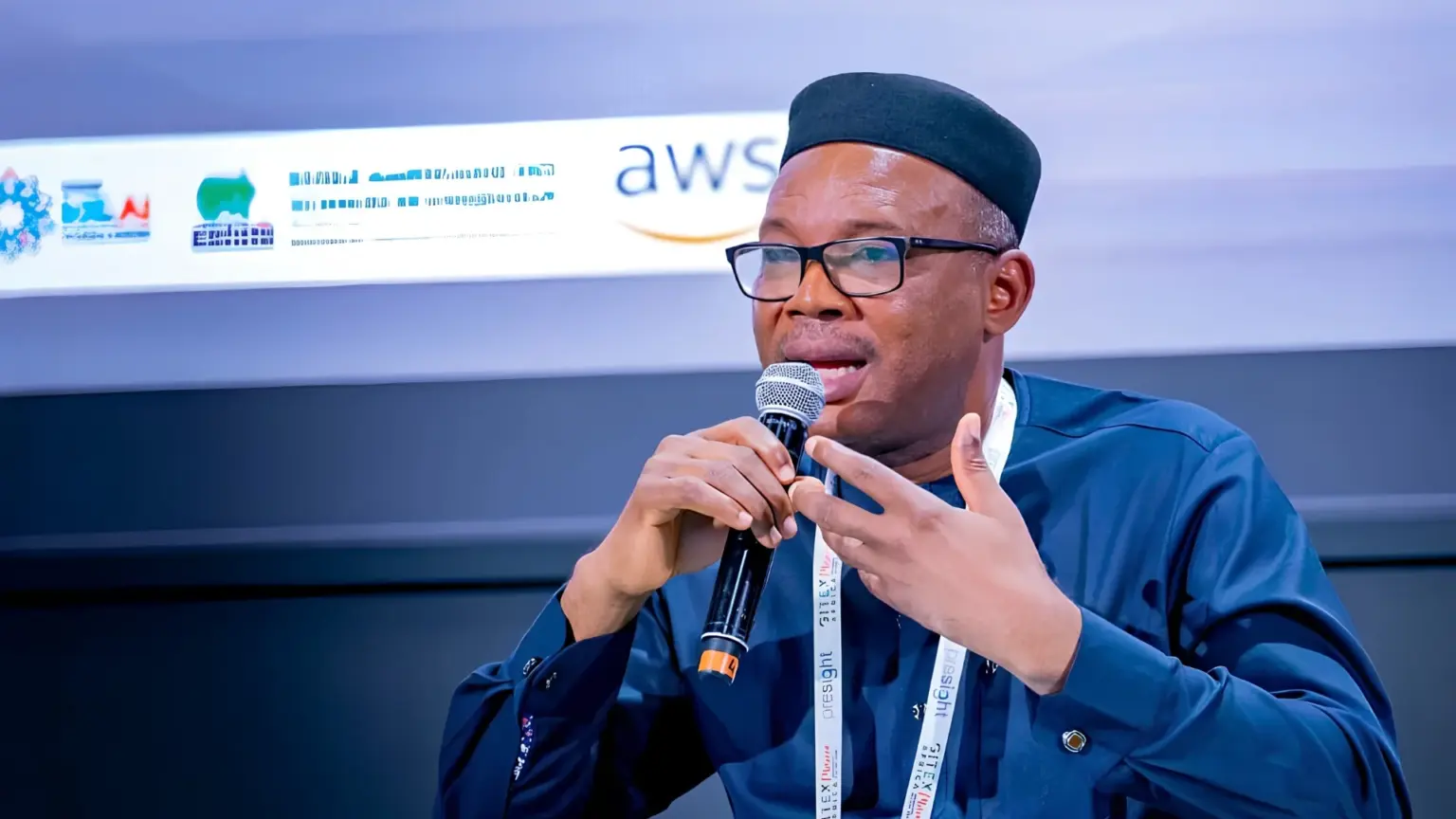
Investors, venture capital firms and financial institutions will have an opportunity to engage Nigerian technology founders at the Deal Room of the 2026 Digital Nigeria International Conference and Exhibitions (DNICE) Builders Festival, as organisers target a ₦3 billion investment and pilot-contract pipeline for startups.
The programme, organised by the National Information Technology Development Agency (NITDA) in partnership with Tech Revolution Africa, is designed to connect capital with technology companies whose existing products address specific challenges identified by government agencies, businesses and financial institutions.
Scheduled to culminate in live Deal Room sessions at DNICE 2026 in Abuja from November 10 to 12, the Builders Festival adopts a problem-solving approach that seeks to move startup engagement beyond product demonstrations towards investment discussions, institutional partnerships and potential deployment agreements.
Rather than inviting founders to present general business ideas, the initiative focuses on matching organisations with operational challenges to startups that have developed relevant, scalable solutions.
Connecting Investors With Deployment-Ready Startups
The Deal Room is intended to give investors and prospective institutional customers direct access to startup founders whose products align with identified market needs.
According to the programme’s organisers, participating institutions submit specific operational or technology challenges, after which startups with relevant products are assessed and matched with potential partners.
The process is designed to reduce the gap between technology development and commercial adoption by helping startups engage organisations that have a defined need for their solutions.
For investors, the arrangement provides an opportunity to examine products, assess their commercial potential and explore possible funding or partnership arrangements.
For founders, it offers access to institutions that may be interested in adopting their technology, alongside potential investors who can support expansion.
However, participation in the Deal Room does not automatically guarantee funding, procurement contracts or signed agreements. Any investment or commercial arrangement will depend on due diligence, negotiations and the requirements of the parties involved.
₦3bn Target for Investment and Pilot Contracts
The organisers have outlined a target pipeline of ₦3 billion in potential investments and pilot contracts through the Builders Festival.
The target reflects the programme’s ambition to create connections between Nigerian startups and organisations seeking technology solutions that can be deployed in real operating environments.
The pipeline is expected to include opportunities involving venture capital, angel investment, institutional partnerships and innovation support.
Nevertheless, the ₦3 billion figure represents a target rather than confirmed funding already disbursed to startups. Its eventual outcome will depend on the number of successful matches, the commercial readiness of participating companies and the willingness of investors and institutions to proceed with agreements.
The initiative also seeks to encourage collaboration between public institutions and private-sector technology providers, particularly where locally developed products can address identifiable operational problems.
Focus on Practical Technology Solutions
The Builders Festival is targeting solutions across several technology areas, including financial technology, health technology, agricultural technology, education technology, government technology, logistics, artificial intelligence and data systems.
Potential applications include digital identity management, payment infrastructure, supply-chain monitoring, process automation, healthcare data systems and real-time information collection.
These areas reflect the range of challenges organisations face as they seek to improve efficiency, strengthen service delivery and modernise their operations.
For example, a financial institution seeking to improve payment processing could engage a startup with a relevant technology platform. Similarly, a government agency experiencing delays caused by manual processes could explore a digital solution designed to improve data management and workflow efficiency.
The programme’s emphasis is on products that have moved beyond the idea stage. Organisers are seeking startups with evidence of market activity, product maturity and teams capable of supporting implementation.
This requirement is intended to help institutions assess solutions that can be tested or deployed, rather than relying solely on proposals that have yet to demonstrate practical use.
Screening and Matching Process
The organisers say startups will undergo screening based on market traction, product maturity and the capacity of their teams to support institutional deployment.
Following the assessment, shortlisted companies will be matched with organisations whose stated challenges correspond with their products.
The approach is designed to make meetings more relevant by connecting founders with prospective customers and investors who have a defined interest in the problems they solve.
It also recognises that a technology product’s commercial value depends not only on its technical features but on whether it can meet a genuine need, integrate with existing systems and deliver measurable benefits.
For institutions, the process could provide a structured way to explore innovation opportunities while assessing potential implementation risks.
For startups, it offers a chance to demonstrate how their products work in practice and discuss possible pilot projects, partnerships or investment arrangements.
Supporting Nigeria’s Digital Economy
The programme forms part of wider efforts to strengthen Nigeria’s digital innovation ecosystem by connecting technology development with enterprise adoption and investment.
Although Nigerian founders continue to develop products across different sectors, securing capital and gaining access to large institutional customers can be difficult. A structured matching platform could help address part of that challenge by creating more direct engagement between solution providers and organisations with identifiable needs.
Moreover, successful partnerships could give startups opportunities to demonstrate their products, establish commercial relationships and build the operational experience required to serve larger customers.
For participating institutions, locally developed technology may offer solutions tailored to their specific operating environments, provided the products meet relevant standards for security, reliability, compliance and performance.
The long-term value of the initiative will therefore depend on the quality of the matches and the extent to which discussions lead to sustainable commercial relationships.
DNICE 2026 to Host Deal Room Sessions
The Builders Festival will culminate in Deal Room engagements during DNICE 2026, scheduled for November 10 to 12 at the BAT International Conference Centre in Abuja.
The event is expected to bring together technology founders, investors, financial institutions, government representatives and other participants in Nigeria’s digital economy.
The organisers are inviting eligible startups and prospective investors to participate in the programme, while institutions with technology or operational challenges can submit them for consideration.
As the festival approaches, attention will focus on whether the matching process can translate the ₦3 billion target into completed investments, pilot projects and commercial agreements.
Ultimately, the initiative seeks to strengthen the connection between Nigerian technology founders and the organisations that can finance, adopt and scale their solutions. Its success will be measured not only by the number of meetings held, but also by the practical partnerships and business opportunities that emerge from the Deal Room.
About The Author