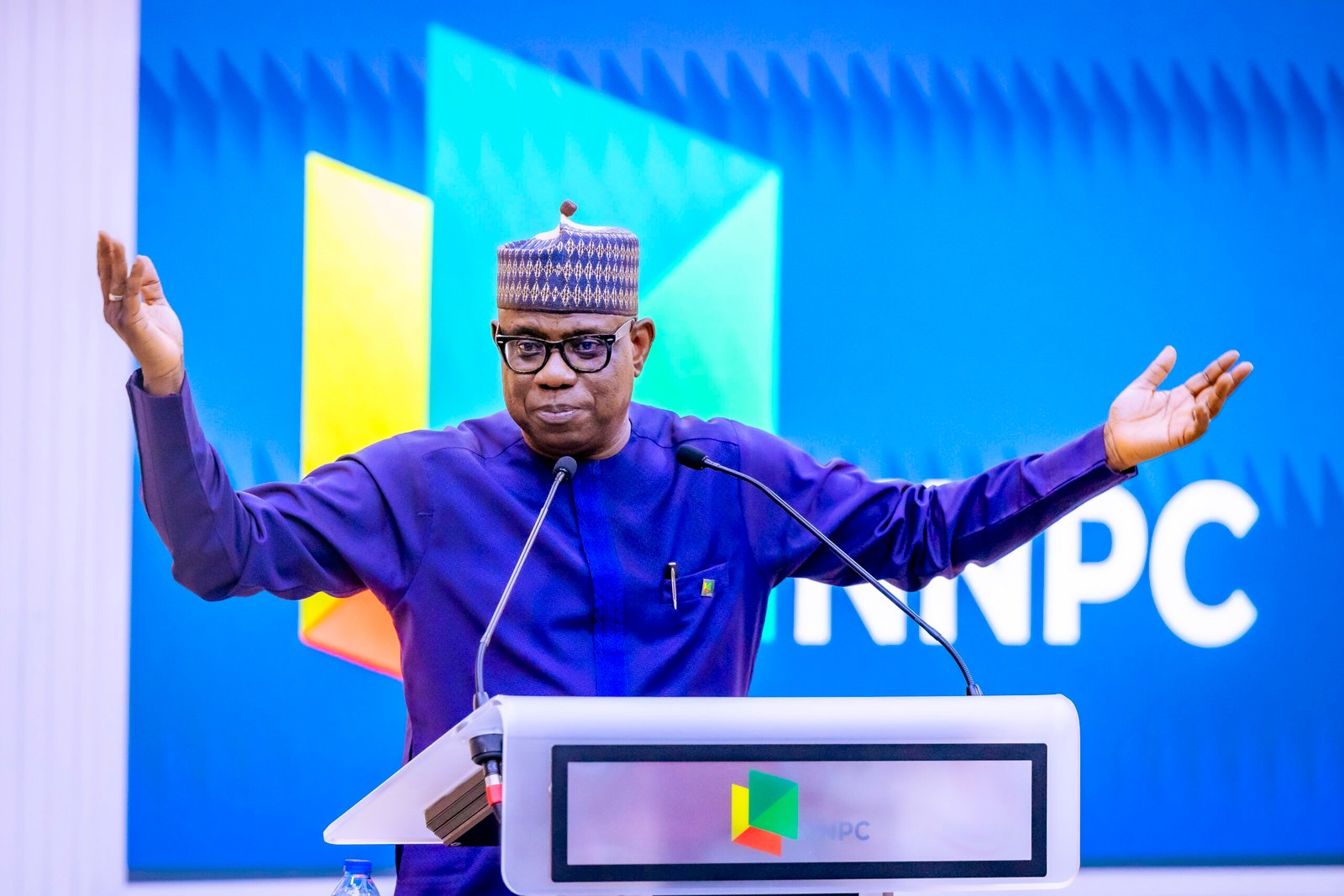
The Group Chief Executive Officer of NNPC, Bashir Bayo Ojulari, disclosed the proposed arrangement in an interview with Reuters on the sidelines of the 2026 Abu Dhabi International Petroleum Exhibition and Conference (ADIPEC) in the United Arab Emirates.
Ojulari said the company was exploring a public share sale that would give outside investors an opportunity to own a minority stake in the national oil company while allowing the Federal Government to retain operational control.
He explained that preparations for the proposed listing would likely take at least the whole of 2027, suggesting that the offering is not an immediate exercise. According to him, the primary objective is to improve transparency and corporate governance in line with Nigerian law, while raising additional capital would be a secondary consideration.
The disclosure provides a clearer indication of the ownership structure NNPC is considering as it advances efforts to transform the state-owned company into a more transparent and commercially accountable energy business.
Domestic Investors to Take Priority in NNPC Share Offering
Under the proposed arrangement, NNPC would initially focus on Nigeria’s domestic capital market, potentially giving Nigerian investors the opportunity to acquire shares in one of the country’s most strategic public enterprises.
A secondary listing in London or New York could follow, although Ojulari did not indicate which international exchange the company might select or when such a listing could take place.
The possibility of listing some NNPC subsidiaries separately is also under consideration. Ojulari referenced the approach adopted by Abu Dhabi National Oil Company (ADNOC), the state-owned energy company in the United Arab Emirates, which has offered minority stakes in selected business units to external investors while retaining control.
Such a structure could allow NNPC to attract private investment into specific parts of its operations without necessarily opening its entire business to public ownership.
However, the company has not announced the final transaction structure, valuation, share price, appointed advisers or formal offer timetable. The proposed 5 per cent to 10 per cent stake therefore remains a plan under consideration rather than an approved public offer.
Transparency and Corporate Governance Drive IPO Plan
Ojulari emphasised that improving transparency and governance would be the central motivation behind the proposed listing, rather than simply raising money from investors.
A public listing would subject NNPC to greater scrutiny from shareholders, regulators and the wider investment community. It could also strengthen expectations around financial reporting, disclosure of material information, board accountability and the management of corporate risks.
For a company that plays a major role in Nigeria’s petroleum industry and public finances, these changes could have significant implications for how its operations are monitored and evaluated.
The Petroleum Industry Act 2021 provided the legal framework for NNPC’s transition into a commercially oriented limited liability company. The law also established the basis for the Federal Government’s ownership and the company’s operations under the new petroleum industry structure.
Nevertheless, moving towards an IPO would require the company and its government shareholders to address the necessary legal, financial and regulatory requirements before shares could be offered to the public.
The preparation period will therefore be important in determining whether NNPC can meet the standards expected of a publicly listed company.
Dangote Refinery IPO Highlights Domestic Market Interest
NNPC’s proposed share sale comes shortly after the successful conclusion of the Dangote Petroleum Refinery’s domestic IPO, which attracted substantial interest from retail and institutional investors.
The offering reportedly generated orders worth ₦6.4 trillion, equivalent to approximately $4.78 billion, demonstrating considerable investor interest in Nigeria’s energy sector.
The development provides an important indication of the potential appetite for large-scale energy investments within the domestic capital market.
However, NNPC’s eventual offering would have its own valuation, ownership structure, investment risks and financial considerations. The level of interest recorded during the Dangote Refinery IPO does not automatically determine the demand or pricing of NNPC shares.
For prospective investors, important details will include the company’s financial performance, debt obligations, asset portfolio, governance structure and the precise percentage of equity being offered.
NNPC Considers Chinese Equity Partnerships for Refineries
Beyond the proposed IPO, Ojulari disclosed that Chinese companies had expressed interest in acquiring equity stakes in some of Nigeria’s smaller refineries that require substantial rehabilitation.
The facilities under consideration include the Port Harcourt and Warri refineries, which have struggled to operate at full capacity for more than a decade.
According to the NNPC chief, the discussions involve potential equity participation rather than limiting Chinese companies to engineering, procurement and construction contracts.
He said NNPC would retain at least 10 per cent ownership in any such arrangement, while allowing strategic investors to participate in the rehabilitation and long-term operation of the facilities.
Ojulari also expressed the expectation that at least one of the smaller refineries could resume production within a maximum of three years.
The proposed partnerships could provide access to technical expertise, financing and operational capabilities required to rehabilitate the facilities. However, discussions with interested investors should not be interpreted as completed transactions or confirmation that refurbishment work has begun.
NNPC’s Proposed Listing Could Reshape Nigeria’s Energy Market
The proposed IPO represents another significant development in NNPC’s ongoing transformation, particularly as the Federal Government seeks to improve the commercial performance and accountability of strategic public enterprises.
If approved and successfully implemented, the offering could broaden public participation in the ownership of Nigeria’s national oil company, create additional opportunities for domestic investors and strengthen the company’s reporting obligations.
The possibility of separate listings for selected subsidiaries could also provide a framework for attracting investment into specific business areas while allowing NNPC to maintain control over its wider operations.
However, several important decisions remain outstanding, including the final stake to be offered, the valuation of the company, the identity of participating investors and the possible international exchange for a secondary listing.
Preparations are expected to continue through 2027, while the ultimate decision to proceed will rest with the company’s shareholders and the relevant government authorities.
For now, Ojulari’s disclosure signals NNPC’s intention to pursue a minority public share offering, with transparency and corporate governance at the centre of the proposed exercise. The success of the plan will depend on how effectively the company addresses its outstanding readiness requirements and builds investor confidence ahead of any formal offer.
About The Author