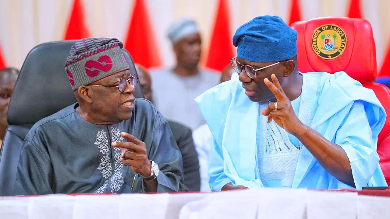
Lagos State Governor Babajide Sanwo-Olu has recalled how President Bola Ahmed Tinubu brought him into government while he was in his 30s, saying the President gave young professionals the opportunity to debate ideas, contribute to governance and develop their leadership abilities.
Sanwo-Olu’s remarks highlighted the role Tinubu played in his early political and administrative career, particularly his experience working within the Lagos State government before eventually becoming governor.
The governor’s account also drew attention to the importance of mentorship and the willingness of experienced political leaders to give younger professionals opportunities to participate in decision-making.
Sanwo-Olu Reflects on His Early Years in Government
Sanwo-Olu said his entry into government at a relatively young age provided him with opportunities to learn, contribute ideas and gain experience in public administration.
He recalled an environment in which young professionals could express their views, debate policy options and engage with more experienced colleagues.
Such opportunities can be important in preparing emerging leaders for public responsibilities. Exposure to policy discussions, administrative processes and decision-making can help younger professionals understand the complexities of governance before assuming more senior positions.
Sanwo-Olu’s reflection presents his experience under Tinubu as an example of how mentorship and professional development can shape careers in public service.
It also underscores the importance of creating opportunities for younger people to contribute meaningfully rather than limiting their participation to supporting established leaders.
Tinubu’s Influence on Lagos Politics
Tinubu served as governor of Lagos State from 1999 to 2007, a period during which he developed a political network that continued to influence the state’s leadership and wider Nigerian politics.
Sanwo-Olu later served in different roles within the Lagos State administration, including as Commissioner for Establishments, Training and Pensions and Commissioner for Commerce and Industry.
His experience in government preceded his emergence as governor in 2019. He was re-elected in 2023.
The governor’s recollection places his career within the broader political and administrative structures that developed in Lagos under Tinubu and subsequent administrations.
However, Sanwo-Olu’s account of his personal experience is distinct from a comprehensive assessment of the state’s political system or the opportunities available to young professionals generally.
Creating Space for Young Professionals
Sanwo-Olu’s remarks raise a broader question about how governments can prepare the next generation of public leaders.
Young professionals bring different experiences, technical knowledge and perspectives to policy discussions. Giving them opportunities to participate can help institutions benefit from new ideas while building a pool of experienced personnel for future responsibilities.
At the same time, effective mentorship requires more than access to senior officials. It also involves clear responsibilities, constructive feedback, professional standards and opportunities to demonstrate competence.
Public institutions can strengthen this process through structured training, transparent recruitment, professional development and systems that reward performance.
For young people interested in public service, Sanwo-Olu’s experience illustrates how early exposure to government can provide practical knowledge of policy implementation, administration and leadership.
Mentorship and Leadership Development
The governor’s account also highlights the relationship between mentorship and career progression in public service.
Experienced leaders can help emerging professionals understand institutional processes, navigate difficult decisions and develop the judgment required for leadership. However, the lasting value of mentorship depends on whether individuals are given opportunities to apply their knowledge and take responsibility for results.
Sanwo-Olu’s progression from administrative roles to the governorship demonstrates the different levels of responsibility that can form part of a public-service career.
His remarks present Tinubu’s willingness to engage younger professionals as an important part of that experience.
A Wider Conversation About Youth Inclusion
Youth participation remains a significant issue in Nigeria, where many young people seek greater access to employment, leadership opportunities and decision-making.
In politics, the discussion often focuses on whether young people can move beyond campaign mobilisation to participate in policy formulation, administration and elected office.
Sanwo-Olu’s recollection contributes to that conversation by emphasising the importance of allowing young professionals to debate ideas and gain experience in government.
Ultimately, developing future leaders requires sustained investment in people, professional capacity and institutions that provide opportunities for responsible participation.
For Sanwo-Olu, the experience he recalled offers a personal account of how early opportunities in government shaped his professional journey. It also reinforces the broader importance of mentorship and the development of emerging talent in public administration.
About The Author