
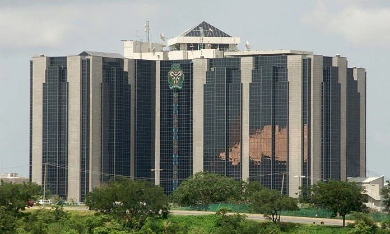
Nigerian banks have withdrawn ₦941.85 billion from the Central Bank of Nigeria’s (CBN) Standing Deposit Facility (SDF) in one day, pushing total overnight placements below ₦4 trillion as liquidity conditions continue to fluctuate across the banking system.
Data from the apex bank showed that deposits under the facility fell to ₦3.76 trillion on October 7, 2026, from ₦4.70 trillion recorded a day earlier. The decline represents approximately 20 per cent of the previous day’s balance and marks the sharpest single-day reduction since the end of September.
The latest movement highlights the changing liquidity positions of Nigerian banks as they adjust their overnight deposits, funding requirements and investment decisions amid evolving monetary-policy conditions.
Banks Reduce Overnight Placements
The decline followed several days of elevated deposits with the CBN.
Banks had placed ₦4.86 trillion with the apex bank on October 5 before reducing the balance to ₦4.70 trillion on October 6. The subsequent ₦941.85 billion reduction pushed total placements below the ₦4 trillion threshold.
Moreover, the latest balance represents a substantial retreat from the higher levels recorded during September, when banks repeatedly deposited more than ₦6 trillion overnight with the CBN.
On September 24, SDF placements reached approximately ₦7.52 trillion, the highest level in the recent period. The balance subsequently fluctuated, falling to ₦4.55 trillion on September 30 before moving back above ₦4.8 trillion in early October.
Consequently, the latest decline reflects the considerable daily movements in the amount of money banks choose to hold with the central bank.
Understanding the Standing Deposit Facility
The Standing Deposit Facility allows eligible banks to place excess funds with the CBN overnight and earn interest under the central bank’s monetary-policy framework.
The facility also serves as a tool for managing liquidity within the financial system. When banks have funds they do not immediately need for lending, payments or other investments, they can place some of that money with the apex bank.
However, a reduction in SDF balances does not automatically mean that banks have increased lending to businesses or households.
Instead, the funds may have moved into other investments, supported payment obligations or met other funding needs. The available figures do not establish exactly how banks redeployed the ₦941.85 billion withdrawn from the facility.
CBN’s Interest-Rate Decision Provides Context
The latest movement comes after the CBN’s Monetary Policy Committee reduced the Monetary Policy Rate (MPR) to 23 per cent at its September 21–22, 2026 meeting.
The committee also recalibrated the standing facilities corridor to +50 and -300 basis points around the benchmark rate.
Meanwhile, the CBN retained the Cash Reserve Ratio at 45 per cent for deposit money banks and 16 per cent for merchant banks. It also maintained the 75 per cent reserve requirement on non-Treasury Single Account public-sector deposits.
These measures form part of the monetary authority’s efforts to manage liquidity and influence financial conditions.
The reduction in the benchmark rate may also affect how banks compare returns across available investment opportunities. Nevertheless, the fall in SDF placements alone does not prove that the interest-rate adjustment caused the latest withdrawal.
Liquidity Conditions Remain Fluid
The repeated swings in SDF balances demonstrate that banks’ overnight positions can change significantly over short periods.
High deposits may indicate that banks have substantial funds available for overnight placement, while a decline shows that they are holding less money in the facility. However, interpreting these movements requires consideration of other transactions across the financial system.
These include open market operations, maturities of government and central-bank securities, reserve requirements, payment flows and banks’ own funding needs.
Therefore, the latest reduction should be viewed as one indicator of changing liquidity conditions rather than conclusive evidence of a broader increase or contraction in bank lending.
What the Movement Means for Businesses and Investors
For businesses and investors, the key question is whether changes in banking-system liquidity will eventually affect credit availability, investment activity and borrowing costs.
If banks direct more funds towards lending and productive investments, businesses could benefit from improved access to financing. However, such an outcome would depend on banks’ risk assessments, lending standards, the cost of funds and demand for credit.
Similarly, lower SDF balances do not automatically translate into cheaper loans, as lending rates also reflect credit risk, operating expenses and broader economic conditions.
The direction of liquidity across the banking system will therefore remain important for businesses monitoring financing opportunities and investors assessing Nigeria’s financial markets.
Focus Turns to the Next Liquidity Data
The fall in SDF placements to ₦3.76 trillion marks a notable change from the elevated balances recorded in September.
However, the next set of CBN data will help establish whether the decline represents a sustained shift or a temporary adjustment in banks’ overnight positions.
Ultimately, the key issue is not simply how much money banks withdraw from the Standing Deposit Facility, but where those funds go and how their deployment affects the wider economy.
As the CBN continues to manage liquidity following its latest monetary-policy decision, developments in overnight deposits, open market operations and bank lending will remain important indicators of Nigeria’s evolving financial conditions.
About The Author