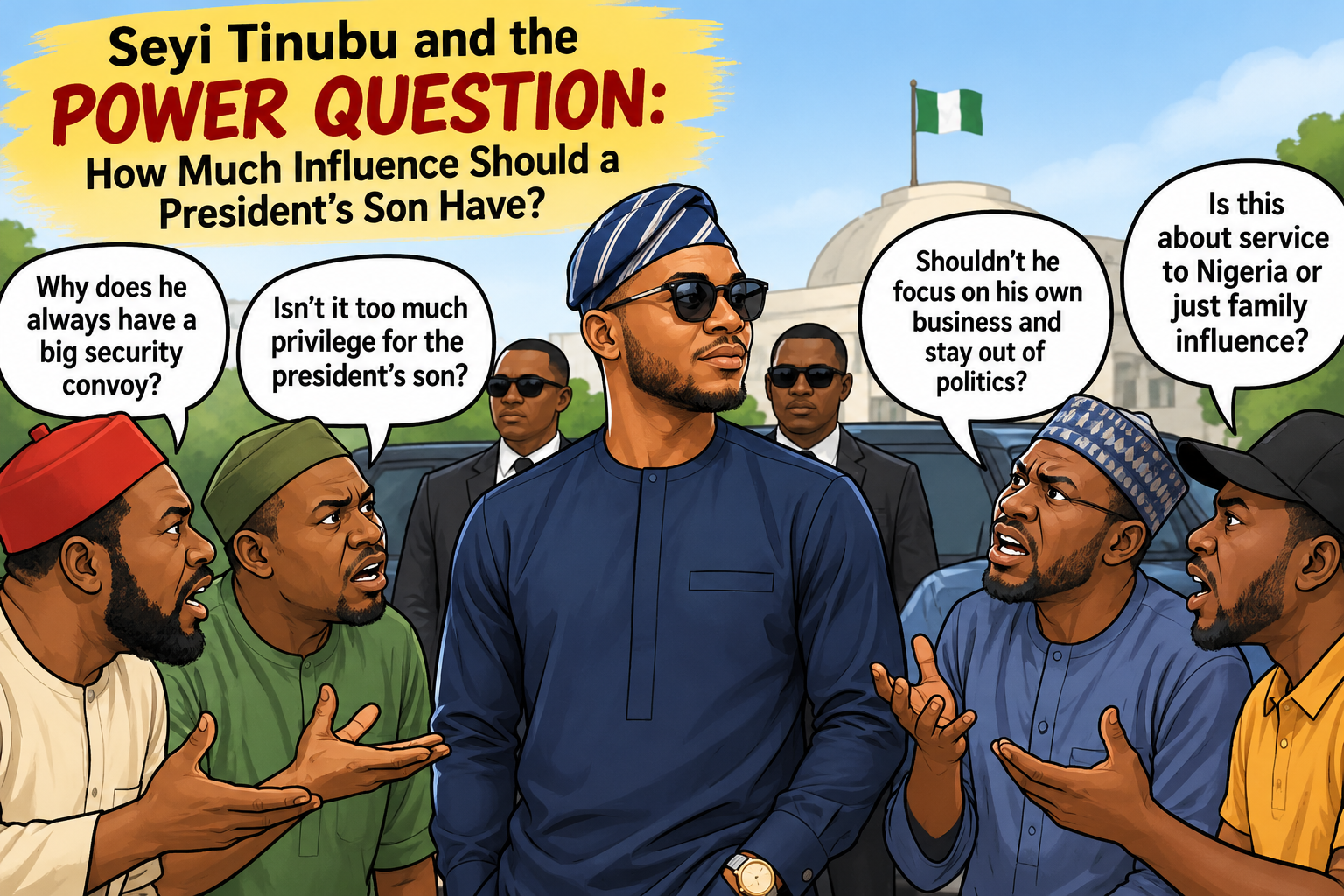
In Nigeria, being related to a powerful politician can quickly become a public controversy. For Seyi Tinubu, the son of President Bola Ahmed Tinubu, almost every visible political activity can trigger questions about influence, privilege and ambition. However, while public scrutiny is necessary in a democracy, fairness requires Nigerians to distinguish between documented wrongdoing, political disagreement and assumptions based on family relationships.
The central question is straightforward: Is Seyi Tinubu being criticised for what he has actually done, or partly because of who his father is?
Family Connections Should Not Automatically Become an Accusation
Nobody chooses the family into which they are born. Seyi Tinubu did not choose to have a father who became Nigeria’s president, and that relationship alone should not make him a permanent target of public suspicion.
Critics are entitled to question whether relatives of public officials receive unfair advantages. Nevertheless, such concerns should be supported by evidence rather than assumptions. If there are questions about contracts, public resources or official privileges, the appropriate response is transparency and investigation, not automatic condemnation.
Being the president’s son does not place someone above the law. Equally, it should not place him outside the protection of fairness.
Must Seyi Tinubu Stay Away From Politics?
Another debate concerns Seyi Tinubu’s growing political visibility and his association with youth mobilisation. Some observers view such activities through the lens of political succession and family influence, while supporters may interpret them as participation in the country’s political process.
But should a president’s adult child be prohibited from expressing political views, organising supporters or participating in public affairs simply because of his surname?
The more relevant questions concern the methods used, the resources involved and the transparency of the activities. Are political supporters participating voluntarily? Are public resources being used appropriately? Are political activities being conducted within the law?
These are legitimate questions that deserve clear answers. However, political participation itself should not be treated as evidence of misconduct.
Security and Privilege: Apply the Same Standards to Everyone
The size of security convoys and the privileges enjoyed by people close to government are legitimate subjects of public debate. Nigerians facing economic hardship understandably expect restraint, accountability and responsible use of public resources.
However, any assessment of Seyi Tinubu’s security arrangements should establish who authorised them, who pays for them and what security considerations justify them. Without those details, sweeping conclusions risk replacing evidence with speculation.
The principle should be consistent: public resources must be accounted for, security decisions should have legitimate justifications, and public officials should explain arrangements that raise credible concerns.
That standard protects taxpayers without assuming guilt before the facts are established.
Why Should Business Interests Be Judged by Evidence?
Questions about the commercial interests of presidential relatives also deserve serious examination. Where a business has dealings with government, transparency and appropriate safeguards against conflicts of interest are essential.
Yet owning or participating in a business does not, by itself, establish corruption or improper influence. Investigators and the public should examine the relevant contracts, ownership interests, decision-making processes and applicable rules before reaching conclusions.
A fair approach would protect legitimate enterprise while ensuring that political connections do not create unlawful advantages. Seyi Tinubu, like any other businessperson, should be subject to the same legal and ethical standards.
Nigerians Deserve Accountability Without Double Standards
Defending Seyi Tinubu against unsupported accusations does not mean demanding immunity from criticism. It means insisting that criticism should be evidence-based, proportionate and consistent.
If credible evidence establishes misconduct, it should be examined through the appropriate institutions. If an allegation cannot be substantiated, it should not automatically become a permanent verdict on someone’s character.
Nigeria needs a political culture in which public figures answer legitimate questions without being presumed guilty, and in which powerful families face scrutiny without becoming targets of guilt by association.
Conclusion: Judge the Actions, Not Just the Surname
The debate surrounding Seyi Tinubu raises a broader question about fairness in Nigerian public life. How much influence should relatives of elected leaders have, and what safeguards should apply when family connections intersect with politics and business?
These questions deserve serious answers. But the discussion should not begin and end with his relationship to the president.
Seyi Tinubu should neither be granted special treatment because of his father nor condemned simply because of him. The standard should be evidence, transparency, accountability and the rule of law.
Ultimately, Nigerians can demand answers from people close to power while still recognising a fundamental principle: family connections may justify closer scrutiny, but they are not proof of wrongdoing.
About The Author