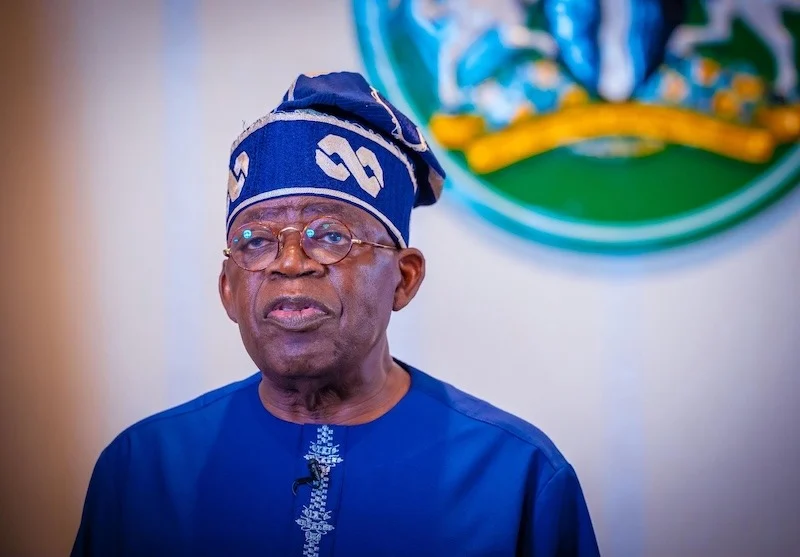
President Bola Ahmed Tinubu and leaders of the All Progressives Congress (APC) will on Saturday kick off the President’s re-election campaign in Kaduna State as the ruling party intensifies efforts to consolidate support across northern Nigeria ahead of the 2027 general elections.
The planned launch marks a significant step in the APC’s preparations for the next presidential contest, placing the North at the centre of its early mobilisation strategy. The region accounts for 56.01 million of Nigeria’s 103.43 million registered voters, making it a major factor in the country’s electoral landscape.
The campaign kickoff is expected to bring together party leaders, supporters and political stakeholders as the APC begins communicating its message and seeking to strengthen its grassroots structures ahead of the election.
For the ruling party, the challenge will be to convert its political organisation and existing support into sustained voter confidence across a region with diverse interests, priorities and political dynamics.
North Holds Significant Share of Nigeria’s Registered Voters
The North’s reported 56.01 million registered voters represent approximately 54.2 per cent of the national total of 103.43 million.
This gives the region considerable importance in presidential election calculations, although the number of registered voters alone does not determine the final outcome of an election.
Actual results also depend on voter turnout, the distribution of support among candidates, the ability of political parties to mobilise supporters and the votes ultimately cast and counted.
Northern Nigeria is not a politically uniform bloc. Its states and communities have different economic circumstances, security concerns, social priorities and political affiliations. Consequently, a successful campaign requires more than a single regional message.
The APC will need to engage voters across different communities while addressing the issues that influence their daily lives.
These may include the cost of living, employment opportunities, agricultural productivity, infrastructure, access to education and healthcare, and security.
The region’s large electorate makes it an important arena for political competition, but the strength of each party’s support will depend on how voters assess its record, proposals and credibility.
Kaduna Provides Platform for APC Mobilisation
Kaduna State is expected to host the campaign launch as Tinubu and other APC leaders begin the party’s presidential re-election drive.
The event will provide an opportunity for party officials to mobilise members, coordinate campaign activities and present the administration’s priorities ahead of the 2027 polls.
Campaign launches also serve as platforms for political parties to establish the tone of their electoral messages, introduce key themes and encourage supporters to participate in the campaign process.
For the APC, the Kaduna gathering could help signal the importance the party attaches to northern engagement as it prepares for a nationwide contest.
However, the reception of the campaign will depend on how its messages connect with the concerns of voters. Political mobilisation may generate attendance and visibility, but sustained support requires convincing engagement with the public.
The party will therefore face the task of translating its campaign activities into meaningful conversations about governance, public services and economic opportunities.
Tinubu’s Administration Faces Voter Scrutiny
As Tinubu seeks another presidential term, the campaign will provide an opportunity for the APC to explain the administration’s record and outline its plans for the next term.
Voters are likely to assess the government’s performance across several areas, including economic reforms, inflation, employment, infrastructure development and security.
The administration’s policies and their effects on households and businesses will form an important part of the broader political discussion.
For some voters, the central question will be whether government reforms have improved economic conditions and created opportunities. Others may focus on the cost of living, access to essential services or the pace at which promised projects are delivered.
The APC will need to explain the reasoning behind its policies, the results it says they have produced and the measures it proposes to address outstanding challenges.
Opposition parties, meanwhile, will have opportunities to present alternative approaches and challenge the ruling party’s account of its performance.
The campaign period will therefore provide voters with competing claims and proposals to assess before making their decisions.
Security and Economic Conditions Could Shape Northern Campaign
Security remains an important concern in parts of northern Nigeria, where communities have faced varying challenges involving violent attacks, banditry, kidnapping and other threats.
The scale and nature of these challenges differ across states, making locally relevant responses important.
Voters may look for clear explanations of how political parties intend to improve security, protect communities and strengthen the ability of relevant institutions to respond to threats.
Economic conditions are also likely to influence campaign discussions. Agriculture remains an important source of livelihoods across many northern communities, while businesses and households continue to depend on reliable transport, affordable inputs and access to markets.
Policies affecting farmers, traders, small businesses and young people could therefore feature prominently in efforts to win support.
For the APC, addressing these concerns will require specific commitments and explanations of how proposed measures would be implemented.
The campaign will also be an opportunity for voters to compare the administration’s record with the alternatives offered by opposition parties.
Party Organisation and Grassroots Engagement
Beyond the launch event, the APC’s prospects will depend partly on its ability to sustain engagement across states, local government areas and communities.
Political parties often rely on local structures to communicate campaign messages, organise meetings and encourage supporters to participate in elections.
Effective grassroots engagement also involves listening to concerns and explaining policy proposals in ways that reflect local circumstances.
The North’s large and diverse electorate makes this task particularly important. A strategy that resonates in one state or community may not necessarily produce the same response elsewhere.
The party will therefore need to balance its national campaign message with engagement that recognises differences in local priorities.
The performance of its campaign structures, the credibility of its candidates and the public’s assessment of government policies will all contribute to the broader contest.
Registered Voters Are Not the Same as Votes Cast
Although the North’s reported 56.01 million registered voters represent a substantial share of the national electorate, registration figures should not be confused with actual participation.
Not every registered voter necessarily turns out on election day, and turnout can vary across locations and elections.
The number of votes cast, their distribution among candidates and the applicable electoral requirements will ultimately determine the result.
Consequently, the APC’s efforts to strengthen northern support will involve not only attracting voters but also maintaining effective organisation and encouraging lawful electoral participation.
Other political parties will pursue similar objectives, making the region an important area of competition as the 2027 election approaches.
Conclusion
President Tinubu and APC leaders are scheduled to launch the President’s re-election campaign in Kaduna State on Saturday as the ruling party seeks to strengthen its support across northern Nigeria.
With the region accounting for approximately 54.2 per cent of the 103.43 million registered voters cited, northern engagement is likely to remain an important component of the party’s national campaign strategy.
Nevertheless, the size of the electorate does not guarantee an electoral outcome. Voter turnout, regional diversity, public assessment of the administration’s performance and the strength of competing campaigns will all matter.
As the campaign begins, attention will turn to the messages presented by the APC, its engagement with local concerns and the proposals it offers to voters ahead of the 2027 general elections.
About The Author