
Nigeria’s agricultural landscape is changing as the Federal Government pushes a new strategy to bring more Farmland into productive use.
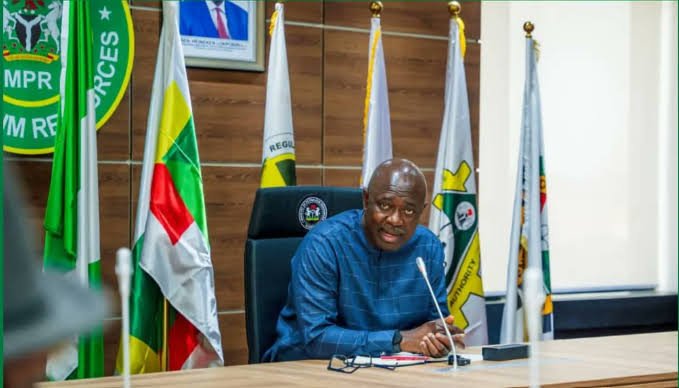
At the centre of this effort is the National Agricultural Land Development Authority, NALDA, which is developing large agricultural estates under President Bola Ahmed Tinubu’s Renewed Hope agenda.
The initiative is attracting attention because it goes beyond simply encouraging Nigerians to farm.
NALDA is developing organised agricultural clusters where farmers can access land, mechanisation, infrastructure, security and other support needed to increase production.
The current map stretches across several regions, with Kwara, Ekiti, Bauchi and Plateau among the states involved in the Renewed Hope Mega Farm Estate programme.
Meanwhile, discussions are progressing with additional states, including Enugu, Edo and Bayelsa.
This means the agricultural map could become considerably larger in the coming years.
The Map Begins With Four Major States
NALDA’s Renewed Hope Mega Farm Estate programme currently focuses on four major locations, including Ekiti, Kwara, Bauchi and Plateau.
Each mega farm estate is designed around approximately 5,000 hectares, creating large agricultural clusters where farmers can operate within a more organised environment.
The concept is straightforward, although its potential impact is significant.
Rather than having farmers scattered across isolated locations without adequate infrastructure, NALDA wants to create concentrated agricultural communities where services can reach farmers more efficiently.
That can make it easier to provide roads, irrigation, mechanisation, security, extension services and other forms of agricultural support.
Consequently, the programme is not simply about increasing the amount of land being cultivated.
It is about creating a more organised system for commercial agriculture.
Kwara Is Becoming a Major Agricultural Centre
Kwara State has become one of the most visible examples of NALDA’s approach.
The authority has developed a 5,000 hectare Renewed Hope Mega Farm Estate in Ora, Ifelodun Local Government Area, creating a large agricultural cluster intended to support farmers and generate wider economic activity.
The project is expected to create direct and indirect opportunities for thousands of Nigerians through farming, transportation, processing, equipment operations and other related activities.
More importantly, the farm demonstrates what NALDA means by agricultural land development.
Farmers are not simply being given access to land and left to struggle alone.
The wider model involves mechanisation and infrastructure that can help farmers produce more efficiently.
That distinction could become crucial as Nigeria attempts to increase domestic food production.
Ekiti Adds Another 5,000 Hectares
Ekiti State is another important point on NALDA’s agricultural map.
The state is part of the mega farm estate programme, with approximately 5,000 hectares earmarked for large scale agricultural development.
NALDA has also been working with private sector partners to strengthen agricultural production within the state.
This partnership approach could prove important because government cannot carry the entire agricultural value chain alone.
NALDA can help develop the land and create the enabling environment, while private companies can contribute investment, production expertise, processing capacity and market connections.
As a result, the farm can become more than a government project.
It can become an agricultural business ecosystem that creates opportunities for farmers and private enterprises.
Bauchi Is Also Expanding the Agricultural Footprint
Bauchi is another major part of the current rollout.
NALDA has been developing agricultural clusters in the state as part of its wider mega farm strategy.
The model includes smaller production clusters within the larger agricultural estates, allowing farmers to work within organised areas while benefiting from shared infrastructure and support.
This is particularly important because large agricultural estates can create economies of scale.
Instead of providing separate infrastructure to hundreds of scattered farms, government and private investors can concentrate resources within defined agricultural zones.
That approach can potentially reduce costs while improving access to essential services.
Plateau Is Part of the National Rollout
Plateau State also forms part of the current mega farm expansion.
Its inclusion gives the programme a broader geographical reach and demonstrates NALDA’s intention to establish agricultural estates across different parts of Nigeria.
The authority’s long term objective is to establish mega farm estates across the country’s six geopolitical zones.
Therefore, the four states currently receiving major attention should not be viewed as the final list.
They represent the beginning of a larger agricultural development strategy.
The South Is Also Entering the Conversation
NALDA’s agricultural expansion is not limited to the North and central parts of the country.
The authority has been engaging additional states about establishing similar agricultural projects.
Enugu, Edo and Bayelsa are among the states where discussions have taken place.
If those plans move forward, the map of organised agricultural production will become even more nationally distributed.
That matters because different parts of Nigeria have different agricultural strengths.
Some regions are suitable for cassava.
Others have strong potential for rice, maize, vegetables, livestock or other crops.
A nationwide agricultural strategy can therefore take advantage of the unique opportunities available across different states.
More Than 3,500 Hectares Are Already Being Cultivated
The scale of NALDA’s work becomes clearer when current cultivation figures are considered.
The authority has reported that more than 3,500 hectares are being cultivated across Nigeria.
That figure is important because it represents actual agricultural activity rather than only future plans.
At the same time, larger mega farm estates are being developed across several states.
Therefore, NALDA is pursuing two objectives at the same time.
The first is to get more land into production now.
The second is to build larger agricultural estates that can support commercial production over the longer term.
Why NALDA Is Using Agricultural Clusters
One of the strongest elements of NALDA’s strategy is the cluster approach.
Farmers operating alone can struggle to access machinery, irrigation, storage, transportation and security.
However, when thousands of farmers operate within a defined agricultural estate, those services can potentially be delivered more efficiently.
For example, tractors can serve multiple farmers within the same area.
Irrigation infrastructure can support several farms.
Storage facilities can serve a larger community.
Security arrangements can cover an organised agricultural zone.
Consequently, clustering can help turn individual farms into a more connected agricultural economy.
Security Is Becoming Part of the Agricultural Plan
Nigeria cannot significantly expand agricultural production without addressing security.
Farmers need confidence that they can plant their crops, return to their farms and harvest their produce safely.
NALDA’s cluster approach therefore has an important security component.
Organised agricultural estates make it easier to coordinate security because farmers operate within defined locations rather than isolated and difficult to monitor areas.
NALDA has also discussed collaboration with security agencies to protect agricultural communities.
That connection between farming and security is important because abandoned farmland often becomes an economic and security problem.
If farmers can safely return to productive land, rural communities can become more economically active.
NALDA Is Bringing Mechanisation Into the Picture
Another major part of the strategy is mechanisation.
Nigeria cannot depend entirely on traditional farming methods if it wants to dramatically increase agricultural production.
Farmers need access to tractors, processing equipment, irrigation systems and other modern agricultural tools.
NALDA has therefore incorporated mechanisation into its agricultural development programmes.
This can help farmers cultivate larger areas while reducing the physical burden associated with traditional farming.
More importantly, mechanisation can increase productivity per hectare.
That is exactly what Nigeria needs if it wants to produce more food without constantly expanding the amount of land under cultivation.
Private Investment Could Strengthen the Model
NALDA’s strategy also places considerable emphasis on private sector participation.
This is important because sustainable agriculture requires more than government intervention.
Private companies can provide financing, inputs, processing facilities, technical expertise and access to markets.
Farmers provide the production.
Government creates the enabling environment.
Private companies help connect production to commercial markets.
Together, those elements can create a stronger agricultural value chain.
That is why NALDA’s partnership model could become one of the most important parts of the initiative.
The Goal Is Bigger Than Producing Crops
It would be easy to look at the hectares and focus only on food production.
However, the economic impact could be much wider.
A large agricultural estate creates demand for tractor operators, mechanics, drivers, processors, warehouse workers, traders and logistics companies.
It can also create opportunities for businesses that supply seeds, fertiliser, machinery and other agricultural inputs.
Therefore, a 5,000 hectare farm can potentially become an economic centre that supports thousands of people beyond those physically working on the farms.
That makes agricultural development an important part of Nigeria’s employment strategy.
Women and Young Nigerians Can Benefit
NALDA’s agricultural programmes also create opportunities for groups that have historically faced barriers to accessing productive land and modern agricultural resources.
Women farmers can benefit from organised farmland, training and access to agricultural inputs.
Young Nigerians can also find opportunities through farming, mechanisation, technology, processing and agricultural entrepreneurship.
This is particularly important because Nigeria has a large and growing youth population.
The agricultural sector therefore needs to become more attractive to young people.
Modern farm estates can help change the perception that agriculture is only about traditional subsistence farming.
Instead, young Nigerians can see agriculture as a commercial industry involving technology, machinery, processing and international markets.
The Bigger Goal Is Food Security
Ultimately, the strongest argument for NALDA’s strategy is food security.
Nigeria has a huge population and continues to experience strong demand for food.
Increasing domestic production can strengthen the country’s ability to meet that demand.
However, more land alone will not solve the problem.
Farmers need reliable infrastructure.
They need affordable inputs.
They need access to financing.
They need security.
They need storage.
They also need markets where they can sell their produce profitably.
NALDA’s agricultural cluster model attempts to bring several of these requirements together.
President Tinubu’s Agricultural Agenda Is About Production
President Tinubu’s administration has repeatedly identified agriculture as an important part of Nigeria’s economic diversification strategy.
The goal is to reduce excessive dependence on crude oil while creating stronger domestic industries.
NALDA fits naturally into this strategy because the authority focuses on developing agricultural land and creating opportunities for farmers.
The development of large farm estates therefore represents more than an agricultural project.
It is part of a broader attempt to build a productive rural economy.
There Are Still Challenges to Overcome
The progress is encouraging, but the challenges should not be ignored.
Developing thousands of hectares requires substantial and sustained investment.
Infrastructure must be maintained after construction.
Security must remain effective.
Farmers need affordable financing and quality inputs.
Markets must also be strong enough to absorb increased production.
Most importantly, projects must remain productive after the initial government investment.
That means NALDA will need continued monitoring, partnerships and long term planning.
These challenges do not undermine the strategy.
Instead, they show what must happen to ensure that the land development programme produces lasting results.
The Agricultural Map Could Become Much Bigger
The current picture already shows significant activity.
Kwara, Ekiti, Bauchi and Plateau are part of the major mega farm rollout.
Enugu, Edo and Bayelsa are among the states where further agricultural development discussions have taken place.
More than 3,500 hectares are already being cultivated through NALDA’s nationwide efforts, while individual mega farm projects are being developed at the 5,000 hectare scale.
If additional states successfully establish similar estates, Nigeria’s organised agricultural footprint could expand considerably.
That could create a network of productive farming communities across the country.
NALDA Is Turning Potential Into Production
Nigeria has talked about its agricultural potential for decades.
The country has vast land resources, millions of farmers and a huge domestic market.
The challenge has always been turning those advantages into consistent, large scale production.
NALDA’s approach is attempting to address that challenge by bringing land development, infrastructure, mechanisation, security and private investment together.
That makes the strategy particularly important.
The authority is not simply asking Nigerians to farm more.
It is working toward creating the conditions that can allow farmers to produce more efficiently.
The Map Tells the Story
Look at the emerging agricultural map and a bigger picture becomes visible.
Kwara is developing a major mega farm.
Ekiti is expanding its agricultural footprint.
Bauchi is developing new farming clusters.
Plateau is part of the national rollout.
Meanwhile, NALDA is exploring additional opportunities in states such as Enugu, Edo and Bayelsa.
More land is being cultivated.
More farmers are being organised.
More infrastructure is being introduced.
More attention is being given to mechanisation and security.
The transformation will not happen overnight, but the direction is becoming increasingly clear.
This Could Become One of NALDA’s Biggest Legacies
For years, Nigerians have heard about the country’s enormous agricultural potential.
Now, NALDA is attempting to translate that potential into productive farmland and organised agricultural communities.
The success of the strategy will ultimately depend on sustained investment, strong security, reliable infrastructure and access to profitable markets.
Nevertheless, the foundation is becoming visible.
Nigeria’s new agricultural map is expanding, and NALDA is playing a central role in putting more land into productive use.
Under President Tinubu’s Renewed Hope agenda, the objective is not merely to create farms.
The bigger ambition is to create productive agricultural communities that can produce food, create jobs, attract investment and strengthen Nigeria’s economy.
If the current momentum continues, the hectares being developed today could become some of Nigeria’s most important economic assets tomorrow.
About The Author