
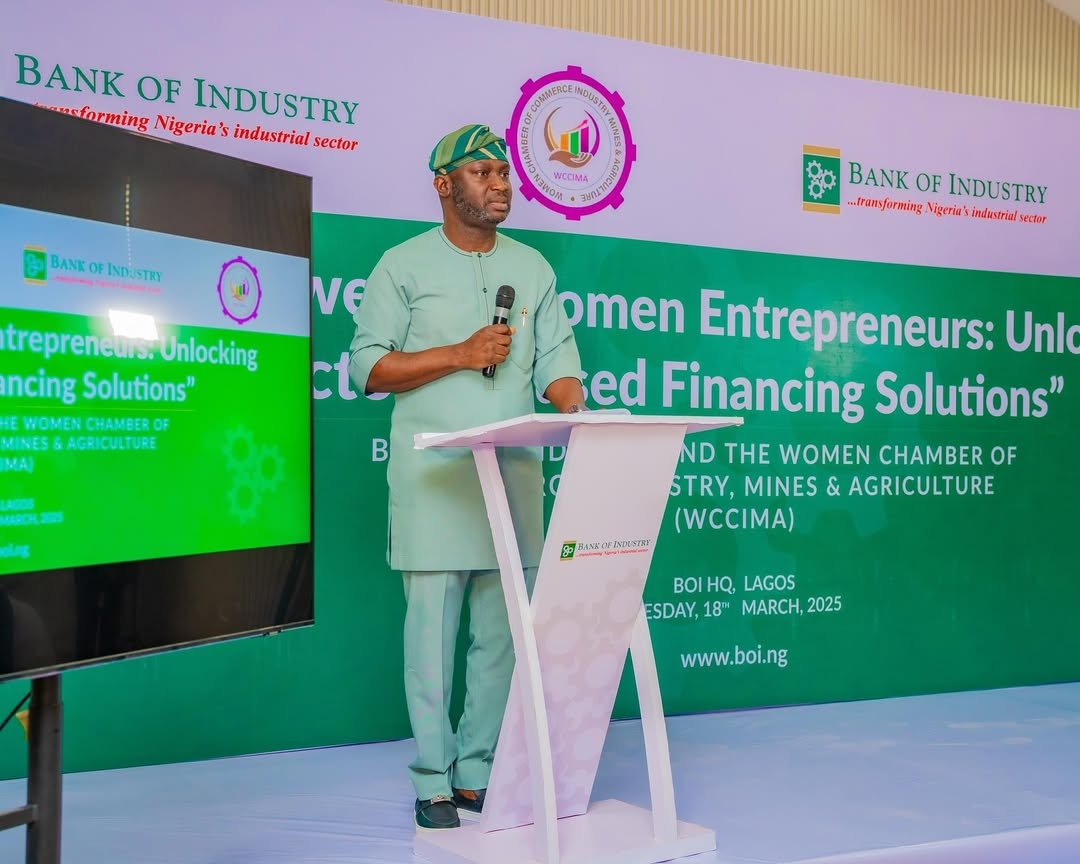
The Bank of Industry Limited (BOI) has praised President Bola Ahmed Tinubu for his leadership and support following the successful subscription of its ₦250 billion Series 1 Fixed Rate Bond.
The bond was oversubscribed within five working days, highlighting strong investor interest in the financial instrument and renewed attention to the role of development finance in Nigeria’s economic growth.
The outcome also provides BOI with an important opportunity to strengthen its capacity to finance businesses and productive investments across the country.
Strong Demand for BOI Bond
The oversubscription demonstrates significant demand for the bond among investors.
Furthermore, strong participation provides an indication that investors remain interested in opportunities offered by major Nigerian financial institutions.
Successful capital raising can expand funding capacity.
Additional funds can support business financing.
Greater financing can stimulate productive investment.
For BOI, the response represents an important milestone as it continues to support businesses across different sectors.
BOI Recognises Tinubu’s Support
The bank’s commendation of President Tinubu reflects its recognition of the Federal Government’s support for development finance institutions.
Furthermore, strong government backing can help institutions such as BOI expand their role in supporting businesses and national economic priorities.
Development finance requires long-term planning.
Businesses require access to appropriate capital.
Government policies can create enabling conditions.
Effective cooperation can therefore strengthen the connection between financial institutions and broader economic objectives.
Supporting Nigeria’s Productive Economy
BOI plays an important role in providing financing to businesses involved in productive economic activities.
Furthermore, access to long-term funding can help companies acquire equipment, increase production, expand operations, improve technology, and create employment.
Manufacturers can increase capacity.
Agribusinesses can expand production.
Industrial companies can invest in equipment.
Growing enterprises can create additional jobs.
These activities can contribute to broader economic development when financing reaches viable and productive businesses.
Capital Market Supports Development Finance
The successful bond offering also demonstrates the importance of Nigeria’s capital market in mobilising funds for development.
Furthermore, institutions can use capital-market instruments to access financing beyond conventional banking channels.
A deeper capital market creates more funding options.
More funding options can support investment.
Investment can strengthen productive capacity.
The strong response to the BOI bond therefore carries significance beyond the institution itself.
Potential Impact on Businesses
The additional financial capacity created through successful fundraising could support BOI’s lending and investment activities.
Furthermore, businesses require funding that matches the nature and duration of their projects.
Long-term projects need suitable financing.
Equipment purchases require substantial capital.
Expansion programmes need sustained funding.
BOI’s development finance role can help address some of these financing needs.
MSMEs Remain Important
Micro, small, and medium-sized enterprises remain a crucial part of Nigeria’s economic structure.
Furthermore, many MSMEs face challenges accessing affordable and suitable financing despite their contribution to employment and local economic activity.
Better access to capital can support expansion.
Funding can improve productivity.
Business growth can create additional employment.
BOI’s financial capacity could therefore contribute to expanding opportunities for businesses across different segments of the economy.
Investor Confidence and Economic Outlook
The bond’s oversubscription also comes at an important time for Nigeria’s financial and economic environment.
Furthermore, investors carefully assess risks, returns, institutional strength, and economic conditions before committing significant funds.
Strong demand can improve market confidence.
Successful fundraising can demonstrate institutional credibility.
Greater investor participation can deepen financial markets.
The outcome therefore provides an encouraging signal for institutions seeking to mobilise long-term domestic capital.
Importance of Effective Fund Deployment
While the oversubscription represents a significant achievement, the impact of the bond will ultimately depend on how effectively the funds are deployed.
Furthermore, financing should reach productive businesses and projects capable of generating sustainable economic value.
Strong risk management can protect funds.
Transparent processes can strengthen confidence.
Effective monitoring can improve outcomes.
Responsible deployment will therefore remain essential to converting investor demand into tangible economic benefits.
Supporting Economic Diversification
Nigeria continues to pursue economic diversification by strengthening sectors beyond traditional sources of government revenue.
Furthermore, development finance can help businesses in manufacturing, agriculture, infrastructure, technology, healthcare, and other productive sectors access capital.
Diversification can reduce economic vulnerability.
Industrial investment can strengthen production.
Local businesses can develop stronger supply chains.
BOI can contribute to these objectives by directing financing toward strategic areas.
Looking Ahead
The successful oversubscription of BOI’s ₦250 billion Series 1 Fixed Rate Bond represents a major development for the institution and Nigeria’s development finance landscape.
The bank’s decision to praise President Tinubu for his leadership and support also highlights the importance of cooperation between government and development finance institutions.
The next stage will involve ensuring that the funds raised translate into meaningful financing for businesses and productive projects.
Ultimately, the strong investor response gives BOI greater capacity to support Nigerian enterprises, while effective deployment of the fundamental could strengthen investment, job creation, industrial growth, and the broader economic transformation agenda.
About The Author