
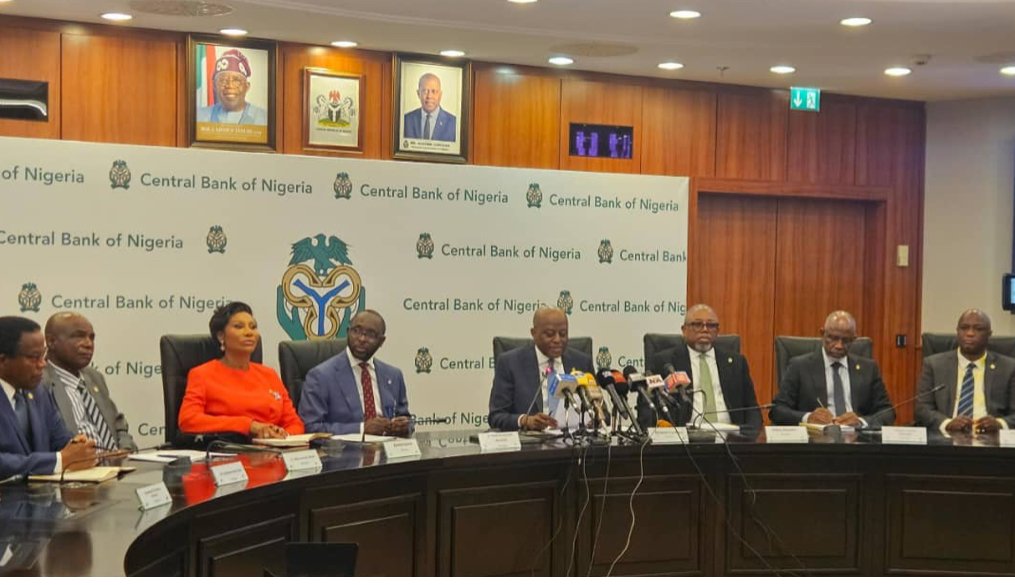
The Monetary Policy Committee (MPC) of the Central Bank of Nigeria (CBN) has retained the Monetary Policy Rate (MPR) at 26.5 percent, maintaining the country’s benchmark interest rate amid continued efforts to manage inflation and stabilize Africa’s largest economy. decision reflects the cautious approach increasingly adopted by central banks globally as policymakers attempt to balance inflation control, economic growth, exchange rate stability, and investment confidence within challenging economic environments.
Nigeria’s economy continues facing multiple pressures involving inflation, currency volatility, rising living costs, and financing challenges affecting households and businesses nationwide.
Consequently, monetary policy decisions by the CBN remain closely watched by investors, businesses, financial institutions, and citizens alike.
What the Monetary Policy Rate Means
The Monetary Policy Rate serves as one of the most important financial indicators within an economy.
It represents the benchmark interest rate used by the Central Bank of Nigeria to influence lending conditions, liquidity levels, borrowing costs, and broader financial activity across the country.
When central banks increase interest rates, borrowing generally becomes more expensive.
Higher rates often discourage excessive spending and reduce money circulation within the economy, helping slow inflationary pressures over time.
However, elevated rates may also create challenges for businesses and consumers seeking affordable credit.
Consequently, monetary policy decisions frequently involve balancing competing economic priorities.
Why the CBN Retained the Rate
The decision to maintain the MPR at 26.5 percent signals the CBN’s continued concern regarding inflationary pressures within Nigeria.
Inflation remains one of the country’s most pressing economic challenges.
Rising food prices, transportation costs, energy expenses, exchange rate pressures, and broader supply chain difficulties continue affecting households and businesses nationwide.
Central banks often raise or maintain higher interest rates during inflationary periods to reduce excess liquidity and stabilize prices.
By retaining the current rate, the MPC appears focused on sustaining existing monetary tightening measures while monitoring broader economic conditions.
The Inflation Challenge Facing Nigeria
Inflation significantly affects everyday life.
When prices rise rapidly, purchasing power weakens, making goods and services more expensive for households and businesses alike.
Food inflation remains especially concerning for many Nigerians.
Basic necessities including transportation, housing, healthcare, and consumer goods have become increasingly costly over recent years, placing additional pressure on household incomes.
Businesses also face operational difficulties during inflationary periods.
Rising production costs, energy expenses, logistics challenges, and exchange rate volatility frequently reduce profitability and complicate long-term planning.
Consequently, inflation control remains critically important for economic stability.
How Interest Rates Affect Businesses
Higher interest rates often influence businesses directly.
Companies seeking loans for expansion, equipment purchases, or operational financing frequently encounter increased borrowing costs when benchmark rates remain elevated.
Small businesses may feel these effects more strongly.
Micro, Small and Medium Enterprises (MSMEs) often depend heavily on credit access for sustainability and growth. Therefore, higher financing costs may affect expansion capacity and profitability.
However, monetary authorities frequently prioritize inflation stability over short-term credit expansion during difficult economic periods.
Stable inflation often creates stronger long-term business environments.
The Impact on Consumers and Households
Households also experience the effects of monetary policy decisions.
Higher interest rates frequently increase the cost of borrowing involving mortgages, business loans, personal credit facilities, and other financial products.
Savings behaviour may also change.
Some individuals may prefer saving during high-interest periods because financial institutions often offer improved returns on deposits and investment instruments.
However, rising living costs remain a bigger concern for many families.
Inflation continues affecting food affordability, transportation expenses, healthcare access, and household financial planning across different income groups.
Exchange Rate Stability Remains Important
Monetary policy decisions also influence exchange rate dynamics.
Nigeria continues facing pressures involving foreign exchange availability and currency stability, making monetary management increasingly sensitive.
Higher interest rates sometimes help attract foreign investment inflows.
Investors often seek economies offering stronger returns on fixed-income instruments and financial assets. Consequently, central banks may maintain tighter monetary policies to strengthen investor confidence and support currency stability.
Stable exchange rates remain important for imports, manufacturing, and investment planning.
The Global Economic Context
Nigeria’s monetary policy decisions also reflect broader global economic conditions.
Central banks worldwide continue responding cautiously to inflation, geopolitical uncertainty, energy market fluctuations, and slowing global growth patterns.
Many economies experienced inflation surges following supply chain disruptions, global energy instability, and post-pandemic economic adjustments.
Consequently, monetary tightening became common globally over recent years.
Nigeria’s economic management therefore operates within both domestic and international pressures.
Balancing Growth and Stability
One of the biggest challenges confronting central banks involves balancing economic growth with inflation control.
Lower interest rates may stimulate borrowing, investment, and business expansion. However, they can also increase inflation if excessive liquidity enters the economy too rapidly.
Higher rates help control inflation but may slow economic activity.
Consequently, monetary policy frequently requires careful calibration capable of balancing stability and growth objectives simultaneously.
The CBN’s decision to retain the current rate suggests policymakers believe maintaining caution remains necessary under current conditions.
What Investors and Markets Watch Closely
Financial markets pay close attention to MPC decisions because interest rates influence investment behaviour significantly.
Bond markets, stock markets, commercial banks, and foreign investors frequently adjust expectations based on monetary policy signals.
Stable policy decisions may sometimes reduce uncertainty.
Investors often value predictability and policy consistency when making long-term economic decisions involving lending, investment, and market participation.
Economic confidence remains critically important for broader financial stability.
Challenges Beyond Monetary Policy
Although interest rates remain important, monetary policy alone cannot solve every economic challenge.
Infrastructure limitations, food supply issues, insecurity, transportation costs, and structural production weaknesses also contribute significantly to inflation and economic instability.
Consequently, broader economic reforms remain necessary.
Fiscal policy, infrastructure investment, agricultural productivity, energy reforms, and industrial development frequently complement monetary measures within national economic management.
Economic stability usually requires coordinated policy approaches.
Looking Ahead
The decision by the Monetary Policy Committee of the Central Bank of Nigeria to retain the Monetary Policy Rate at 26.5 percent reflects continued caution as policymakers navigate inflation pressures and broader economic uncertainties within Nigeria.
Businesses, investors, and households will likely continue monitoring inflation trends, exchange rate movements, and future monetary policy signals closely over the coming months.
Ultimately, Nigeria’s economic stability may depend heavily on achieving a careful balance between inflation control, investment growth, financial confidence, and broader structural economic reforms capable of supporting sustainable long-term development.
The Monetary Policy Committee (MPC) of the Central Bank of Nigeria (CBN) has retained the Monetary Policy Rate (MPR) at 26.5 percent, maintaining the country’s benchmark interest rate amid continued efforts to manage inflation and stabilize Africa’s largest economy.
The decision reflects the cautious approach increasingly adopted by central banks globally as policymakers attempt to balance inflation control, economic growth, exchange rate stability, and investment confidence within challenging economic environments.
Nigeria’s economy continues facing multiple pressures involving inflation, currency volatility, rising living costs, and financing challenges affecting households and businesses nationwide.
Consequently, monetary policy decisions by the CBN remain closely watched by investors, businesses, financial institutions, and citizens alike.
What the Monetary Policy Rate Means
The Monetary Policy Rate serves as one of the most important financial indicators within an economy.
It represents the benchmark interest rate used by the Central Bank of Nigeria to influence lending conditions, liquidity levels, borrowing costs, and broader financial activity across the country.
When central banks increase interest rates, borrowing generally becomes more expensive.
Higher rates often discourage excessive spending and reduce money circulation within the economy, helping slow inflationary pressures over time.
However, elevated rates may also create challenges for businesses and consumers seeking affordable credit.
Consequently, monetary policy decisions frequently involve balancing competing economic priorities.
Why the CBN Retained the Rate
The decision to maintain the MPR at 26.5 percent signals the CBN’s continued concern regarding inflationary pressures within Nigeria.
Inflation remains one of the country’s most pressing economic challenges.
Rising food prices, transportation costs, energy expenses, exchange rate pressures, and broader supply chain difficulties continue affecting households and businesses nationwide.
Central banks often raise or maintain higher interest rates during inflationary periods to reduce excess liquidity and stabilize prices.
By retaining the current rate, the MPC appears focused on sustaining existing monetary tightening measures while monitoring broader economic conditions.
The Inflation Challenge Facing Nigeria
Inflation significantly affects everyday life.
When prices rise rapidly, purchasing power weakens, making goods and services more expensive for households and businesses alike.
Food inflation remains especially concerning for many Nigerians.
Basic necessities including transportation, housing, healthcare, and consumer goods have become increasingly costly over recent years, placing additional pressure on household incomes.
Businesses also face operational difficulties during inflationary periods.
Rising production costs, energy expenses, logistics challenges, and exchange rate volatility frequently reduce profitability and complicate long-term planning.
Consequently, inflation control remains critically important for economic stability.
How Interest Rates Affect Businesses
Higher interest rates often influence businesses directly.
Companies seeking loans for expansion, equipment purchases, or operational financing frequently encounter increased borrowing costs when benchmark rates remain elevated.
Small businesses may feel these effects more strongly.
Micro, Small and Medium Enterprises (MSMEs) often depend heavily on credit access for sustainability and growth. Therefore, higher financing costs may affect expansion capacity and profitability.
However, monetary authorities frequently prioritize inflation stability over short-term credit expansion during difficult economic periods.
Stable inflation often creates stronger long-term business environments.
The Impact on Consumers and Households
Households also experience the effects of monetary policy decisions.
Higher interest rates frequently increase the cost of borrowing involving mortgages, business loans, personal credit facilities, and other financial products.
Savings behaviour may also change.
Some individuals may prefer saving during high-interest periods because financial institutions often offer improved returns on deposits and investment instruments.
However, rising living costs remain a bigger concern for many families.
Inflation continues affecting food affordability, transportation expenses, healthcare access, and household financial planning across different income groups.
Exchange Rate Stability Remains Important
Monetary policy decisions also influence exchange rate dynamics.
Nigeria continues facing pressures involving foreign exchange availability and currency stability, making monetary management increasingly sensitive.
Higher interest rates sometimes help attract foreign investment inflows.
Investors often seek economies offering stronger returns on fixed-income instruments and financial assets. Consequently, central banks may maintain tighter monetary policies to strengthen investor confidence and support currency stability.
Stable exchange rates remain important for imports, manufacturing, and investment planning.
The Global Economic Context
Nigeria’s monetary policy decisions also reflect broader global economic conditions.
Central banks worldwide continue responding cautiously to inflation, geopolitical uncertainty, energy market fluctuations, and slowing global growth patterns.
Many economies experienced inflation surges following supply chain disruptions, global energy instability, and post-pandemic economic adjustments.
Consequently, monetary tightening became common globally over recent years.
Nigeria’s economic management therefore operates within both domestic and international pressures.
Balancing Growth and Stability
One of the biggest challenges confronting central banks involves balancing economic growth with inflation control.
Lower interest rates may stimulate borrowing, investment, and business expansion. However, they can also increase inflation if excessive liquidity enters the economy too rapidly.
Higher rates help control inflation but may slow economic activity.
Consequently, monetary policy frequently requires careful calibration capable of balancing stability and growth objectives simultaneously.
The CBN’s decision to retain the current rate suggests policymakers believe maintaining caution remains necessary under current conditions.
What Investors and Markets Watch Closely
Financial markets pay close attention to MPC decisions because interest rates influence investment behaviour significantly.
Bond markets, stock markets, commercial banks, and foreign investors frequently adjust expectations based on monetary policy signals.
Stable policy decisions may sometimes reduce uncertainty.
Investors often value predictability and policy consistency when making long-term economic decisions involving lending, investment, and market participation.
Economic confidence remains critically important for broader financial stability.
Challenges Beyond Monetary Policy
Although interest rates remain important, monetary policy alone cannot solve every economic challenge.
Infrastructure limitations, food supply issues, insecurity, transportation costs, and structural production weaknesses also contribute significantly to inflation and economic instability.
Consequently, broader economic reforms remain necessary.
Fiscal policy, infrastructure investment, agricultural productivity, energy reforms, and industrial development frequently complement monetary measures within national economic management.
Economic stability usually requires coordinated policy approaches.
Looking Ahead
The decision by the Monetary Policy Committee of the Central Bank of Nigeria to retain the Monetary Policy Rate at 26.5 percent reflects continued caution as policymakers navigate inflation pressures and broader economic uncertainties within Nigeria.
Businesses, investors, and households will likely continue monitoring inflation trends, exchange rate movements, and future monetary policy signals closely over the coming months.
Ultimately, Nigeria’s economic stability may depend heavily on achieving a careful balance between inflation control, investment growth, financial confidence, and broader structural economic reforms capable of supporting sustainable long-term development.
About The Author