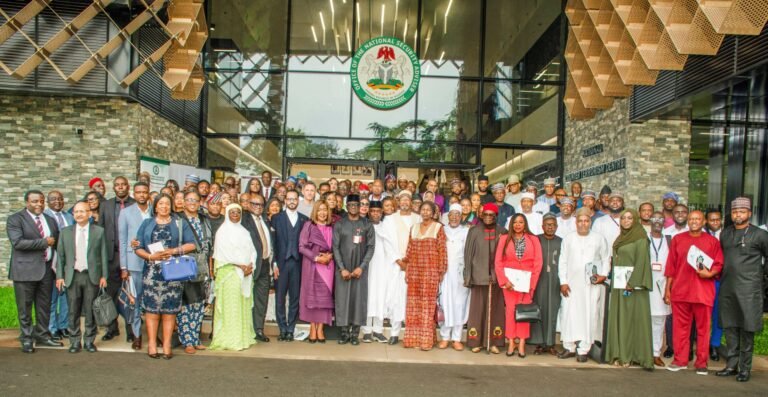
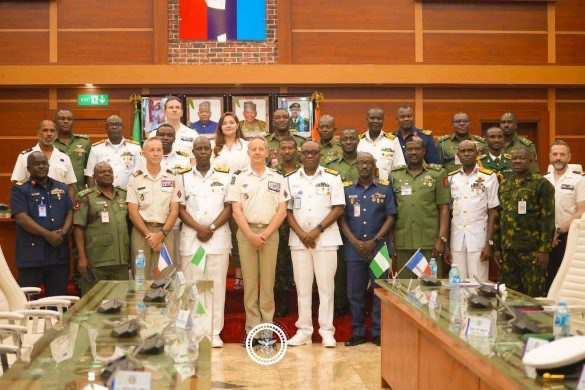
The Olufemi Oluyede has reaffirmed Nigeria’s commitment to strengthening regional and international military cooperation in addressing terrorism, violent extremism, and other transnational security threats confronting Africa.
The Chief of Defence Staff stated that modern security challenges increasingly transcend national borders, making closer collaboration among African countries and international partners essential for achieving lasting peace and stability.
Furthermore, he emphasized that Nigeria remains committed to working with friendly nations, regional organisations, and multinational security institutions to enhance collective defence capabilities and improve coordinated responses to emerging threats.
Security Challenges Require Collective Action
General Oluyede observed that terrorism and violent extremism continue to evolve in both complexity and geographical reach.
Furthermore, criminal networks increasingly exploit porous borders, technological advancements, and regional instability to expand their activities.
He explained that no country can effectively confront these threats in isolation, making cooperation among neighbouring states and international partners an indispensable component of modern security strategy.
Accordingly, Nigeria continues to strengthen collaborative defence initiatives across the continent.
Strengthening Regional Military Cooperation
The Chief of Defence Staff stressed that regional partnerships remain central to Africa’s long-term security architecture.
Furthermore, coordinated military operations, intelligence sharing, joint training exercises, and operational planning significantly improve the effectiveness of counterterrorism efforts.
He noted that sustained cooperation among African armed forces enhances preparedness while enabling faster responses to cross-border security challenges.
Such collaboration strengthens collective resilience against evolving threats.
Enhancing Intelligence Sharing
General Oluyede highlighted intelligence exchange as one of the most valuable tools in combating terrorism and organised criminal activities.
Furthermore, timely sharing of actionable intelligence enables security agencies to detect threats early and prevent attacks before they occur.
Nigeria, he said, remains committed to strengthening intelligence cooperation with partner countries while improving coordination among domestic security institutions.
These efforts contribute significantly to national and regional security.
Building Stronger Defence Partnerships
The CDS reaffirmed Nigeria’s commitment to expanding defence diplomacy through strategic military partnerships.
Furthermore, cooperation with friendly nations provides opportunities for professional training, technology exchange, operational support, and capacity development.
He explained that stronger partnerships enhance operational effectiveness while enabling Nigerian military personnel to benefit from international best practices in modern warfare and security management.
Such engagements improve overall military readiness.
Confronting Transnational Crime
Beyond terrorism, General Oluyede identified transnational crimes such as arms trafficking, human trafficking, piracy, kidnapping, cybercrime, and illicit financial networks as significant threats requiring coordinated responses.
Furthermore, these criminal activities often undermine economic development while threatening regional peace and stability.
He stressed that comprehensive cooperation among military, intelligence, and law enforcement agencies remains essential for disrupting these networks.
Integrated security strategies therefore remain a national priority.
Promoting Peace and Stability
The Chief of Defence Staff emphasized that military cooperation extends beyond combat operations.
Furthermore, sustained peace requires conflict prevention, community engagement, humanitarian support, and post-conflict reconstruction initiatives.
Nigeria continues to participate actively in regional peacekeeping efforts while supporting initiatives aimed at strengthening stability throughout West Africa and the wider African continent.
These contributions reflect the country’s longstanding commitment to regional peace.
Supporting Africa’s Security Architecture
General Oluyede reaffirmed Nigeria’s support for continental security mechanisms designed to strengthen collective defence and crisis response.
Furthermore, stronger African institutions improve the continent’s ability to address security challenges using coordinated and locally driven solutions.
He encouraged continued collaboration among governments, regional organisations, and international partners to build a safer and more secure Africa.
Shared responsibility, he noted, remains essential for sustainable peace.
A Shared Vision for Regional Security
General Olufemi Oluyede’s reaffirmation of Nigeria’s commitment to regional and international military cooperation underscores the country’s determination to confront terrorism, violent extremism, and transnational crime through partnership and collective action.
Furthermore, his emphasis on intelligence sharing, defence diplomacy, operational collaboration, and institutional capacity building reflects a comprehensive approach to addressing Africa’s evolving security landscape.
As Nigeria continues strengthening military cooperation with regional and global partners, these efforts are expected to enhance operational effectiveness, reinforce regional stability, improve collective security capabilities, and contribute meaningfully to lasting peace and sustainable development across the African continent.
About The Author