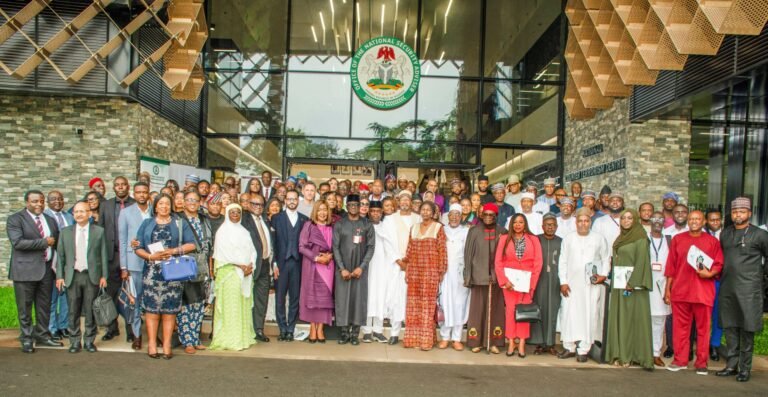

The Federal Government, through the National Agricultural Land Development Authority, has inaugurated a modern vegetable market in Kwadon, Yamaltu-Deba Local Government Area of Gombe State, as part of efforts to strengthen market access for farmers, reduce post-harvest losses, and enhance the agricultural value chain.
The newly completed facility is expected to provide farmers with a structured and efficient marketplace where they can sell their produce, connect with buyers, and improve their earnings.
Furthermore, the project underscores the Federal Government’s commitment to modernising agricultural infrastructure, promoting rural development, and supporting food security across the country.
According to NALDA, improving access to organised markets remains essential to unlocking the full potential of Nigeria’s agricultural sector.
Expanding Opportunities for Farmers
For many farmers, access to reliable markets remains one of the biggest barriers to achieving sustainable growth and profitability.
While agricultural production has continued to improve in many communities, inadequate marketing infrastructure often limits farmers’ ability to maximise the value of their harvests.
The modern vegetable market is designed to address this challenge by creating an organised trading environment that encourages efficient transactions between producers, wholesalers, retailers, and consumers.
Furthermore, improved market access is expected to increase farmers’ incomes while encouraging greater investment in agricultural production.
Strengthening the Agricultural Value Chain
The market forms an important part of the Federal Government’s broader strategy to strengthen every stage of the agricultural value chain.
Beyond production, successful agricultural development depends on efficient storage, transportation, processing, and marketing systems.
Furthermore, organised markets reduce waste, improve product quality, and enhance food distribution across communities.
By investing in modern market infrastructure, NALDA aims to create a more competitive agricultural sector capable of supporting economic growth and national food security.
Supporting Rural Development
The inauguration of the market is expected to generate economic benefits beyond the farming community.
Traders, transport operators, processors, and other businesses operating within the agricultural ecosystem are also expected to benefit from increased commercial activities.
Furthermore, improved market infrastructure stimulates local economies by creating employment opportunities and encouraging private sector participation.
The project therefore represents an important investment in rural development and community prosperity.
Promoting Food Security
Food security remains a key priority of the Federal Government’s development agenda.
Strengthening agricultural markets helps ensure that food produced by farmers reaches consumers efficiently while reducing unnecessary losses along the supply chain.
Furthermore, better market systems encourage increased agricultural production by giving farmers greater confidence that they can sell their produce at competitive prices.
NALDA noted that such interventions contribute directly to national efforts aimed at improving food availability, affordability, and sustainability.
Partnerships Driving Agricultural Progress
The successful delivery of the project reflects the importance of collaboration between government institutions, state authorities, farming communities, and other stakeholders.
Furthermore, coordinated efforts help ensure that agricultural investments produce lasting benefits for rural populations.
NALDA reaffirmed its commitment to working with partners across the country to implement projects that improve agricultural productivity, strengthen rural economies, and create opportunities for young people and women.
Such partnerships remain essential to achieving sustainable agricultural transformation.
A Vision for Sustainable Growth
The Federal Government continues to recognise agriculture as a major driver of economic diversification, employment, and inclusive development.
Consequently, investments in agricultural infrastructure remain central to efforts aimed at building a resilient and productive economy.
The modern vegetable market in Kwadon reflects this vision by providing farmers with better opportunities to increase productivity, expand their businesses, and improve their livelihoods.
Furthermore, the project aligns with President Bola Ahmed Tinubu’s commitment to strengthening food security, empowering farmers, and promoting sustainable economic growth through practical, people-centred interventions.
Looking Ahead
The inauguration of the modern vegetable market marks another significant milestone in NALDA’s efforts to transform Nigeria’s agricultural sector through strategic investments in infrastructure and market development.
Furthermore, the project demonstrates how targeted interventions can improve farmers’ incomes, stimulate local economies, and strengthen the nation’s food system.
By expanding access to organised markets and supporting the agricultural value chain, the Federal Government and NALDA are helping to create a more prosperous future for farmers while advancing Nigeria’s broader goals of food security, rural development, and economic transformation.
About The Author