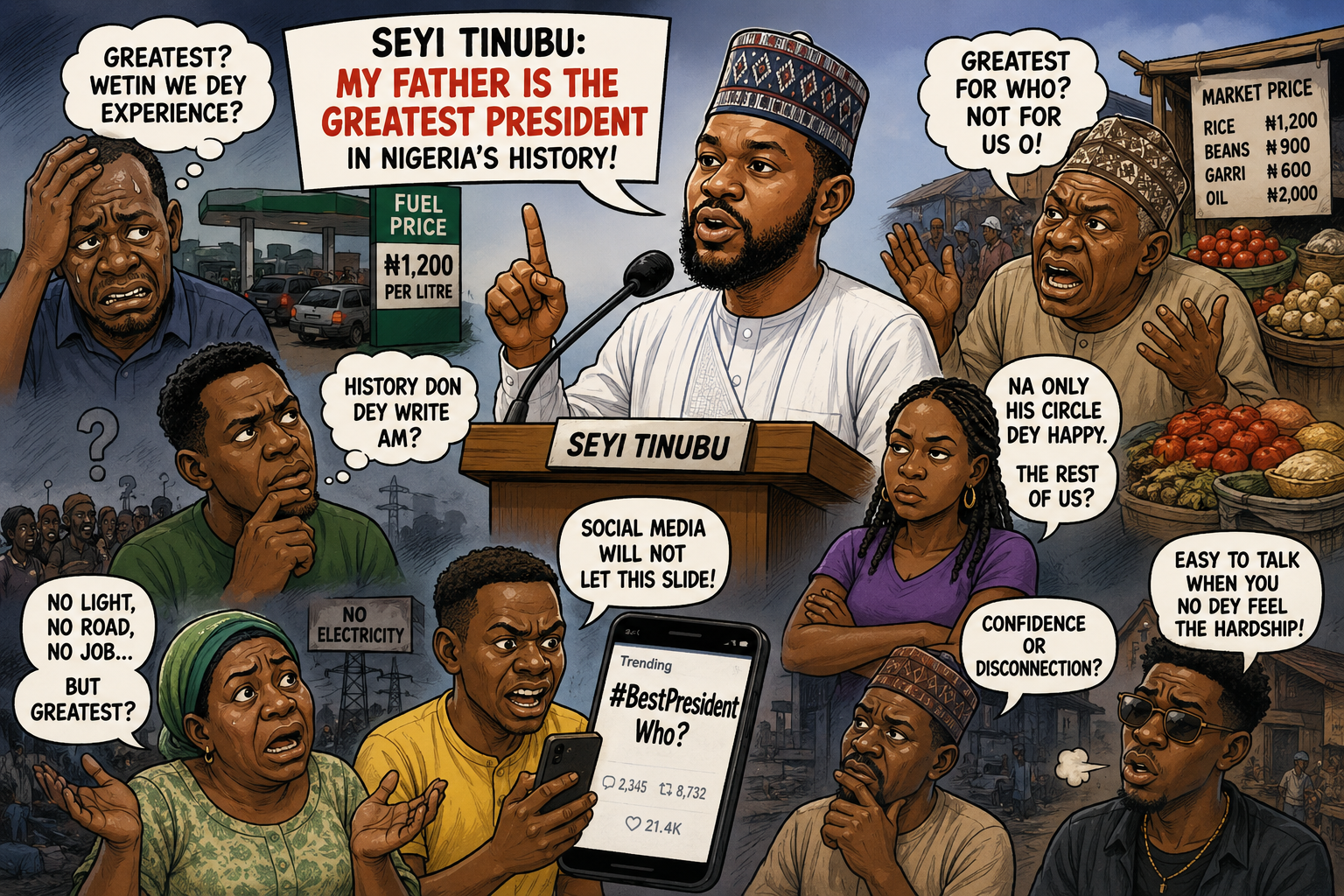
Few political remarks have generated as much online debate as Seyi Tinubu’s declaration that President Bola Ahmed Tinubu is Nigeria’s best president. Within minutes, social media erupted. Critics dismissed the statement. Memes flooded the internet. Political opponents seized the opportunity to attack both father and son.
Yet the controversy quickly became about far more than one speech.
Instead, it exposed Nigeria’s deeply divided political landscape. It also raised an important question. Should anyone face condemnation simply for expressing confidence in a leader they believe in?
Many Nigerians answered differently. However, the reaction itself deserves closer attention.
Every Supporter Has the Right to Defend a Leader
Political supporters across democratic nations openly defend leaders they admire. Families naturally celebrate the achievements of loved ones. Therefore, Seyi Tinubu’s public support for his father should not surprise anyone.
His critics argued that his words exaggerated reality. Nevertheless, opinions remain personal judgments rather than established facts.
Freedom of expression protects criticism. At the same time, it also protects praise.
Unfortunately, many online conversations ignored this basic principle. Instead, they focused on attacking the messenger rather than debating the message.
That shift transformed a political opinion into a nationwide controversy.
Beyond the Headlines Lies Another Story
Many social media users concentrated on one sentence while overlooking broader developments under President Tinubu’s administration.
Supporters point to ongoing infrastructure investments, tax reforms, student loan implementation, foreign investment engagements, and efforts to stabilize public finances. They also highlight renewed attention to local government autonomy, increased support for agriculture, and reforms aimed at strengthening long-term economic growth.
Naturally, critics question the pace of these reforms. Many Nigerians continue to face inflation, rising living costs, and economic hardship.
Both realities can exist simultaneously.
Governments often receive criticism during difficult reforms. However, supporters argue that long-term policies rarely produce immediate comfort.
Consequently, they believe patience remains necessary.
Leadership Often Requires Difficult Decisions
Every administration eventually confronts unpopular choices.
History repeatedly shows that reforms capable of strengthening an economy frequently create temporary hardship before delivering broader benefits.
President Tinubu’s supporters believe current policies fit that pattern.
They argue that removing long-standing distortions from the economy required courage rather than convenience.
Furthermore, they believe future generations may judge these decisions differently than today’s critics.
Whether Nigerians ultimately agree remains their individual choice.
Still, supporters insist that leadership should also receive recognition for taking difficult decisions instead of avoiding them.
Why Seyi Tinubu’s Critics Continue to Respond
Seyi Tinubu occupies an unusual position.
Although he holds no elected office, he attracts significant public attention because he actively engages with young Nigerians through business, philanthropy, and youth empowerment initiatives.
Consequently, almost every public appearance generates intense political discussion.
His “Best President” remark became another example.
Supporters viewed it as loyalty.
Opponents interpreted it as political messaging.
Neutral observers simply saw a son defending his father.
Each interpretation reflects different political beliefs rather than undeniable facts.
Social Media Rewarded Outrage Instead of Conversation
Modern politics increasingly rewards emotional reactions.
Controversial headlines spread faster than thoughtful discussions.
Algorithms amplify conflict because disagreement generates attention.
As a result, many Nigerians encountered edited clips before watching the complete speech.
Others formed opinions after reading comments rather than listening directly.
That pattern unfortunately shapes many political debates today.
Careful conversations often lose to viral outrage.
Nigerians Ultimately Decide the Legacy
No speech alone determines history.
No viral trend defines a presidency.
Ultimately, Nigerians will judge President Tinubu’s administration through elections, economic outcomes, security improvements, infrastructure delivery, and measurable national progress.
Likewise, history will determine whether today’s reforms achieved their intended goals.
Supporters remain optimistic.
Critics remain skeptical.
Both positions belong within a healthy democracy.
The Bigger Story Deserves Equal Attention
The controversy surrounding Seyi Tinubu’s remarks demonstrates how quickly political conversations can become polarized.
Yet beyond the headlines lies a broader issue.
Nigeria’s future depends less on viral debates and more on sustained efforts to improve governance, expand opportunities, strengthen institutions, and build lasting prosperity.
Seyi Tinubu exercised his right to express confidence in his father’s leadership.
Others exercised their right to disagree.
That exchange reflects democratic participation rather than democratic failure.
As the debate continues, Nigerians may eventually discover that the most important question was never whether one speech deserved applause or criticism.
Instead, the lasting question will remain whether ongoing reforms produce meaningful improvements in the lives of ordinary citizens.
About The Author