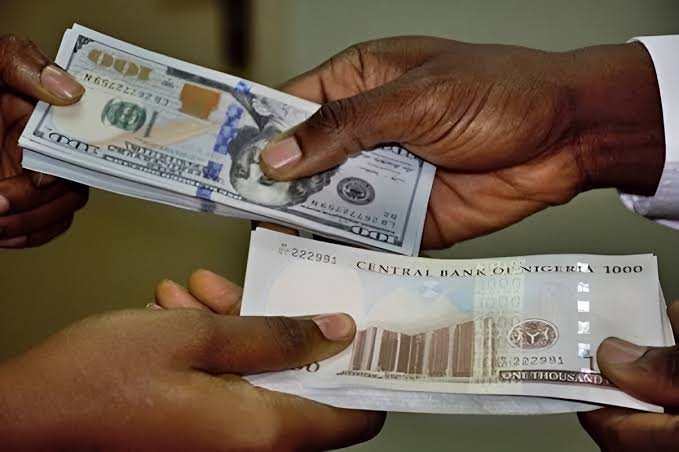
The Nigerian naira is giving Nigerians a new reason to pay attention to the economy, as the currency has recorded a notable improvement against the United States dollar after years of severe pressure.
For many Nigerians, this development is more than another exchange rate headline because the naira has been at the centre of the country’s economic struggles since President Bola Ahmed Tinubu introduced major reforms in 2023. The currency experienced a dramatic decline after the government changed the foreign exchange system, leaving households and businesses facing higher costs.
Now, however, the situation is beginning to look different.
The naira has gained ground, while the gap between the official foreign exchange market and the parallel market has narrowed significantly. At the same time, Nigeria’s foreign exchange reserves have improved, providing additional support for the currency.
This development has triggered different reactions across the country, but it also gives the Tinubu administration an opportunity to argue that some of its difficult economic decisions are beginning to produce results.
The Naira Has Had a Difficult Three Years
To understand why the latest movement matters, Nigerians need to remember what happened after President Tinubu assumed office.
The administration inherited an economy struggling with foreign exchange shortages, multiple exchange rates, weak investor confidence and significant pressure on government finances. Businesses often complained about difficulties accessing dollars, while the difference between official and unofficial exchange rates created serious distortions.
President Tinubu decided to tackle some of these problems through major economic reforms.
The government removed the petrol subsidy and allowed the naira to operate under a more market-driven foreign exchange system. Those decisions immediately created significant economic pressure, particularly because Nigeria depended heavily on imported products.
Consequently, the naira weakened sharply, while inflation and the cost of living increased.
For ordinary Nigerians, the situation became extremely difficult because the effects reached almost every part of daily life. Food became more expensive, transportation costs increased, businesses raised their prices, and families struggled to maintain their previous standard of living.
Therefore, it is understandable that many Nigerians criticized the government.
Nigerians Reacted With Anger and Frustration
The reaction to the economic reforms has never been one-sided.
While supporters argued that President Tinubu was correcting problems that had existed for years, critics complained that ordinary Nigerians were carrying too much of the burden.
The frustration became particularly visible during nationwide protests against the rising cost of living.
Many Nigerians wanted immediate relief, while the government continued to argue that the reforms needed time before their benefits could become clear.
That disagreement remains important today.
A stronger naira does not automatically mean that food prices will immediately fall, nor does it mean that every Nigerian suddenly has more money.
However, currency stability can create conditions that make broader economic recovery possible.
That distinction is important when examining the latest development.
So, What Has Changed?
The biggest change is the growing stability of Nigeria’s foreign exchange market.
The Central Bank of Nigeria has introduced several measures aimed at improving transparency, increasing liquidity and reducing distortions within the foreign exchange system.
The difference between the official exchange rate and the parallel market rate has also narrowed considerably.
That represents a major change from the period when Nigerians could see enormous differences between the two markets.
Furthermore, Nigeria’s foreign exchange reserves have strengthened, giving the country a larger financial buffer and supporting confidence in the naira.
These developments do not mean that Nigeria has completely solved its foreign exchange problems. Nevertheless, they indicate that the market has become more stable than it was during the worst period of the naira crisis.
Tinubu’s Difficult Reform Strategy Is Beginning to Show Results
President Tinubu’s supporters have consistently maintained that his economic reforms were necessary, even though they created significant short-term pain.
The argument was simple: Nigeria could not continue operating an economy with expensive subsidies, distorted exchange rates and weak foreign exchange management without eventually facing deeper problems.
The administration therefore chose to make difficult changes early.
That approach came with political consequences because Nigerians felt the impact almost immediately.
However, the latest improvement in the naira gives the government stronger evidence that the reforms are beginning to produce some of the stability it promised.
The President can now point to improvements in foreign exchange liquidity, reserve levels and exchange rate stability as signs that the economy is moving in a better direction.
The Government Did Not Fix the Naira Overnight
It is also important to put the development into perspective.
The recent improvement did not happen because of one announcement from President Tinubu.
Instead, several economic factors have contributed to the currency’s recovery.
The Central Bank’s monetary policies have played an important role, while foreign exchange liquidity, oil earnings, external reserves, investor confidence and market activity have also influenced the naira.
Nigeria’s oil sector remains particularly important because crude exports provide a major source of foreign exchange for the country.
Consequently, stronger oil production and improved export earnings can help increase the supply of dollars available within the economy.
At the same time, greater domestic refining capacity could reduce Nigeria’s dependence on imported petroleum products, thereby reducing some of the pressure on foreign exchange.
These developments can work together to strengthen the country’s economic position.
Nigerians Still Have Every Right to Ask Questions
Despite the recent improvement, Nigerians should not be expected to forget the economic hardship they have experienced.
Many families are still dealing with high food prices, expensive transportation and reduced purchasing power.
Businesses also continue to face challenges, including taxation, energy costs, infrastructure problems and access to affordable financing.
Therefore, celebrating the naira’s recovery should not become an excuse to ignore these difficulties.
The government still has significant work ahead.
The ultimate test will be whether the improved exchange rate can translate into better living conditions for ordinary Nigerians.
If businesses begin to reduce production costs, consumers could eventually benefit.
If inflation continues to decline, households could regain some purchasing power.
If investment increases, more jobs could become available.
These are the outcomes Nigerians ultimately want to see.
Why the Naira’s Recovery Matters
A stable currency provides important benefits for an economy.
Businesses can plan their operations with greater confidence because they face less uncertainty when purchasing foreign goods and services.
Importers can estimate costs more accurately, while manufacturers can make better decisions about production.
Foreign investors can also feel more confident when they believe that the exchange rate will not experience extreme swings.
Furthermore, a more stable currency can reduce some of the speculative pressure that often develops when people expect the naira to lose value rapidly.
Therefore, the latest improvement matters beyond the exchange rate itself.
It could provide a foundation for broader economic stability if the government maintains the right policies.
The Critics Are Not Completely Wrong
Supporting President Tinubu does not require pretending that every aspect of his economic programme has succeeded.
The reality is more complicated.
The administration has made progress in some areas, while Nigerians continue to struggle with serious economic challenges.
That means both sides of the debate deserve consideration.
Critics are right to demand lower living costs, better infrastructure, more employment opportunities and stronger purchasing power.
Supporters are also right to point out that some of the country’s structural economic problems required difficult reforms rather than temporary solutions.
The important question is whether the reforms can eventually produce sustainable growth.
That answer will depend on what happens next.
The Next Challenge Is Turning Stability Into Prosperity
The recent naira improvement should therefore be viewed as an important step rather than the final victory.
President Tinubu’s government must now build on the progress.
The administration needs to maintain foreign exchange stability, encourage domestic production, attract investment and support businesses that create employment.
It must also continue addressing inflation and ensure that economic growth reaches ordinary households.
A strong currency means little to a family that cannot afford food.
Likewise, foreign exchange stability means little to a young Nigerian who cannot find employment.
Therefore, the government must move from stabilising the economy to improving the everyday lives of Nigerians.
That is where the real success of the Tinubu reforms will ultimately be measured.
Nigerians May Finally Have a Reason for Cautious Optimism
The reactions to the naira’s recent performance will naturally remain divided.
Some Nigerians will celebrate the improvement as evidence that President Tinubu’s reforms are working, while others will remain skeptical because the cost of living remains high.
Both reactions are understandable.
However, the numbers are showing an important change in direction.
The naira has gained strength after experiencing years of intense pressure, while the foreign exchange market has become more stable and the country’s reserves have improved.
That does not mean Nigeria’s economic problems have disappeared.
Instead, it means the country has moved away from one of the most difficult periods of currency instability and entered a period where recovery appears increasingly possible.
For President Tinubu, this represents an important moment.
His administration took decisions that generated significant criticism because Nigerians felt the immediate pain of the reforms.
Now, however, the government has an opportunity to demonstrate that those sacrifices were not in vain.
The Real Victory Will Be What Nigerians Feel
The strongest evidence of economic recovery will not come from exchange rate charts alone.
It will come from Nigerian households.
It will come when food prices become more manageable, businesses become more competitive and workers see their incomes gaining purchasing power.
It will come when manufacturers can plan without constantly worrying about currency fluctuations and when young Nigerians can find meaningful employment.
That is why the recent naira improvement should be welcomed, but also watched carefully.
President Tinubu can rightly point to the currency’s improved stability as one sign that his economic strategy is beginning to gain traction.
However, the administration must continue working until that stability produces tangible benefits for ordinary Nigerians.
The naira’s latest performance is therefore not the end of Nigeria’s economic story.
Instead, it could represent the beginning of a new chapter.
After years of uncertainty, the currency is showing renewed strength.
After intense criticism, some of the government’s difficult reforms are producing measurable improvements.
And after a period when many Nigerians questioned whether the economy could recover, there is now a reason for cautious optimism.
The challenge before President Tinubu is clear: turn a stronger naira into a stronger Nigeria.
If the administration succeeds in doing that, Nigerians may eventually look back at these difficult reforms and see them not only as painful decisions, but as the foundation for a more stable and productive economy.
About The Author