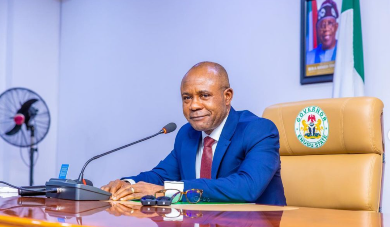

The Rural Electrification Agency (REA) has entered into a N50 billion collaboration agreement with Alpha Morgan Bank to establish a financing support framework aimed at accelerating electricity access in unserved and underserved communities across Nigeria.
The development was disclosed in Abuja by the agency’s Managing Director, Engr. Abba Abubakar Aliyu, who said the partnership would provide additional financial support for projects designed to expand electricity access to communities that remain outside reliable power networks.
The agreement comes amid continued efforts by the Federal Government and relevant stakeholders to address Nigeria’s electricity-access gap through investments in renewable energy, distributed power systems, mini-grids, and other innovative electrification solutions.
REA Seeks More Financing for Electrification
Access to adequate financing remains one of the major requirements for expanding electricity infrastructure across Nigeria.
Furthermore, electrification projects often require significant capital for generation equipment, distribution networks, storage systems, transformers, meters, installation, maintenance, and other supporting infrastructure.
The N50 billion financing framework could therefore provide developers and other participating stakeholders with greater access to capital for projects targeting communities that have historically struggled to attract conventional electricity investments.
Focus on Unserved Communities
The partnership is expected to support communities that have little or no access to electricity, while also addressing areas where existing electricity supply remains inadequate or unreliable.
Furthermore, improved access to electricity can influence economic activity by enabling small businesses, schools, healthcare facilities, agricultural enterprises, and other community institutions to operate more effectively.
Reliable power can support local businesses.
It can improve productivity.
It can strengthen essential services.
It can also create opportunities for new economic activities within rural and underserved communities.
Bank Financing to Support Energy Projects
The involvement of Alpha Morgan Bank highlights the growing importance of private-sector financing in Nigeria’s electricity-access drive.
Furthermore, commercial financial institutions can provide funding structures that complement government interventions and development programmes while helping viable energy projects attract the capital required for implementation.
Access to appropriate financing can help developers expand operations.
It can support the deployment of new technologies.
It can improve project execution.
It can also encourage additional private investment in Nigeria’s distributed energy market.
Renewable Energy Can Expand Access
Renewable energy solutions are increasingly important to Nigeria’s electrification strategy, particularly in communities where extending conventional electricity infrastructure can be difficult or expensive.
Furthermore, solar mini-grids and other distributed energy systems can provide electricity without requiring immediate connection to large national transmission networks.
Such systems can be deployed closer to consumers.
They can support local economic activities.
They can provide electricity to essential community facilities.
They can also help reduce dependence on diesel and other expensive backup power sources.
Supporting Rural Economic Development
Electricity access has implications beyond household lighting.
Furthermore, reliable power can support irrigation, food processing, refrigeration, welding, tailoring, information technology, telecommunications, and other activities capable of generating income within communities.
Farmers can benefit from powered processing equipment.
Small businesses can extend operating hours.
Healthcare centres can improve service delivery.
Schools can gain access to digital learning resources.
These benefits make rural electrification an important component of broader economic development.
Potential for Job Creation
The expansion of electricity infrastructure can also create employment opportunities.
Furthermore, electrification projects require workers for construction, installation, engineering, equipment maintenance, customer support, project management, and other technical activities.
Local communities can benefit from direct employment.
Young people can acquire technical skills.
Local businesses can supply goods and services.
The development of distributed electricity infrastructure can therefore generate economic opportunities alongside improved access to power.
Importance of Sustainable Financing
While the N50 billion framework provides significant potential, long-term sustainability will remain important for supported projects.
Furthermore, electricity infrastructure must be properly maintained after installation to ensure that communities continue receiving reliable service.
Developers need viable business models.
Equipment requires regular maintenance.
Operators need adequate technical capacity.
Customers also need appropriate systems for payment and service management.
These factors will influence the lasting impact of the investment.
Strengthening Public-Private Partnerships
The REA-Alpha Morgan Bank agreement demonstrates how public institutions and private financial organisations can work together to address infrastructure challenges.
Furthermore, public-private partnerships can combine government policy objectives with private-sector capital, technical expertise, and commercial discipline.
Government can establish strategic priorities.
Financial institutions can support viable projects.
Energy developers can provide technical solutions.
Communities can participate in implementation and utilisation.
Such collaboration can accelerate infrastructure delivery when properly structured.
Looking Ahead
The N50 billion collaboration between the Rural Electrification Agency and Alpha Morgan Bank represents a significant financing initiative for expanding electricity access in Nigeria’s unserved and underserved communities.
The success of the framework will depend on how effectively the financing is deployed, the quality of projects supported, and the ability of operators to maintain reliable electricity services over the long term.
If properly implemented, the initiative could help unlock new investments in distributed energy, strengthen rural economies, support small businesses, and improve access to essential services.
Ultimately, the financing framework provides the REA with an additional mechanism to mobilise capital for electricity-access projects while giving underserved communities greater opportunities to benefit from reliable power and the economic activities that dependable electricity can support.
About The Author