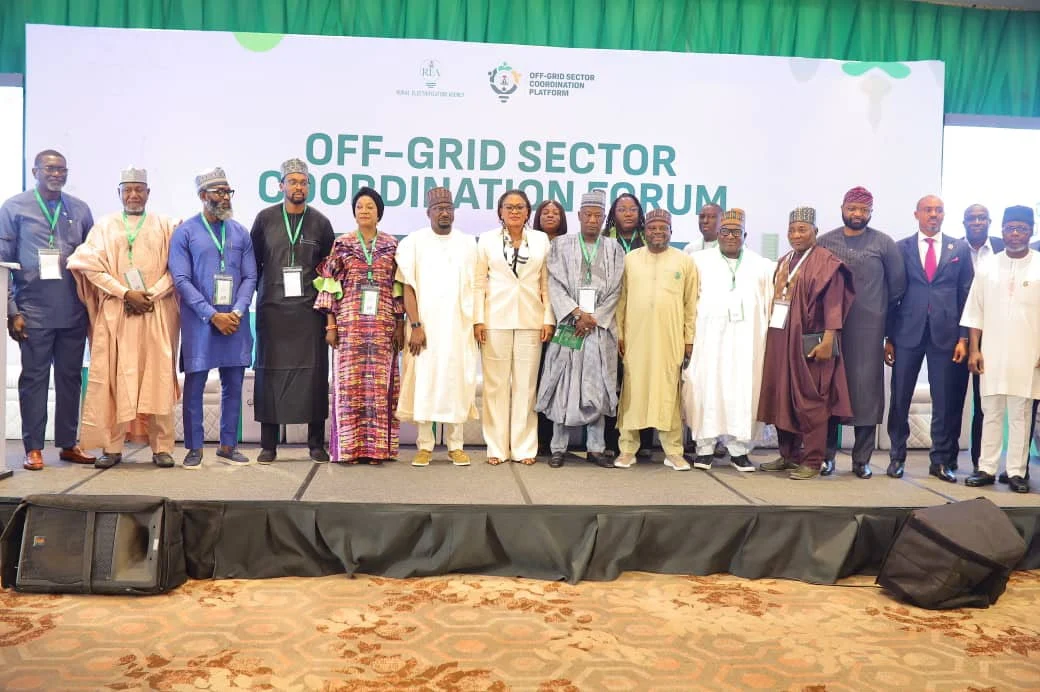
The Rural Electrification Agency (REA) has called for a unified approach among government agencies, state governments, development partners, private operators and other stakeholders to accelerate electricity access across Nigeria. The agency’s position reflects the growing need for stakeholders to coordinate their interventions, share information and align investments so that electricity projects can reach more unserved and underserved communities.
Nigeria’s electricity access challenge requires contributions from multiple institutions. Therefore, stronger collaboration has become increasingly important as government programmes, private-sector investments, development projects and state-level initiatives continue to expand across the country.
Moving Beyond Fragmented Electricity Projects
Nigeria’s electricity-access efforts involve several layers of government and a growing network of private and development-sector partners. While this broad participation creates opportunities for investment and innovation, it can also create challenges when organisations plan projects independently.
The REA’s call for a unified approach therefore places coordination at the centre of the country’s electrification strategy.
When stakeholders work from different priorities or rely on separate information, projects can overlap in some communities while other areas remain underserved. Consequently, better coordination can help identify existing infrastructure, locate genuine gaps and direct available resources toward communities with the greatest needs.
More importantly, a coordinated approach can help ensure that investments complement one another rather than operate as isolated interventions.
Data Sharing Can Strengthen Electricity Planning
Reliable data remains one of the foundations of effective electricity planning.
Government agencies, state authorities, development partners and private operators need accurate information about existing power infrastructure, population needs, economic activities and potential electricity demand. Without that information, stakeholders may struggle to determine where new projects will have the greatest impact.
Therefore, stronger data sharing can improve both project selection and implementation.
A coordinated information system can help stakeholders identify communities that already benefit from grid connections, mini-grids or solar installations while highlighting areas that still lack adequate electricity.
In addition, reliable data can support investors and development partners as they assess opportunities. Rather than starting from scratch, developers can build on existing information and design projects that complement infrastructure already in place.
States Are Becoming More Important
State governments also have an increasingly important role in Nigeria’s electricity sector.
The Electricity Act 2023 expanded the role of states in electricity regulation and development, creating new opportunities for subnational governments to develop electricity strategies that reflect their specific circumstances.
This development makes federal-state coordination particularly important.
State governments often have detailed knowledge of local communities, economic activities, infrastructure conditions and development priorities. Meanwhile, federal institutions such as the REA have national programmes, technical capacity and experience in implementing electrification projects.
When these strengths come together, electricity interventions can become more targeted and responsive.
Rather than pursuing separate strategies, federal and state authorities can align their priorities and create clearer pathways for private investors and development partners.
Development Partners Bring Additional Resources
Development partners remain important contributors to Nigeria’s electricity-access ambitions.
International development institutions can provide financing, technical expertise, project-management support and innovative approaches that complement government resources. At the same time, partnerships can help reduce some of the financial and technical barriers associated with extending electricity to remote and underserved communities.
However, development financing delivers greater value when it aligns with national and state priorities.
For that reason, stronger coordination between development partners and Nigerian institutions can help ensure that externally supported projects fit into the wider electricity-access framework.
It can also make it easier to share lessons from completed projects and replicate approaches that demonstrate practical results.
Private Operators Are Central to the Expansion
The private sector is another critical part of Nigeria’s electricity-access strategy.
Private developers bring capital, technology, technical expertise and commercial models that can help deliver electricity in areas where conventional grid expansion may be difficult or expensive.
The growth of mini-grids, solar home systems and other distributed renewable-energy solutions demonstrates how private operators can contribute to closing electricity gaps.
Nevertheless, private investment depends heavily on predictable policies, accurate market information and effective stakeholder coordination.
Developers need to understand where electricity demand exists, what infrastructure is already available and how their projects fit into broader government plans. Consequently, a unified stakeholder framework can make the sector easier to navigate while reducing unnecessary duplication.
Electricity Access Must Support Economic Activity
Expanding electricity access is not simply about connecting more households.
Reliable power can also support businesses, schools, healthcare facilities, agricultural processing and other productive activities. Therefore, electricity planning increasingly needs to consider what communities will use power for after projects become operational.
For rural businesses, reliable electricity can support activities such as welding, refrigeration, grain processing, water production, cold storage and small-scale manufacturing.
Similarly, schools and healthcare facilities can use dependable electricity to improve essential services and adopt technologies that require stable power.
As a result, coordinated planning can connect electricity infrastructure with wider economic and social-development objectives.
Collaboration Can Improve Project Sustainability
Another important issue is what happens after an electricity project is completed.
Building infrastructure represents only one stage of electrification. Projects also require maintenance, reliable operations, appropriate financing and effective management if communities are to continue receiving quality service.
This is where cooperation among stakeholders becomes particularly important.
Government agencies can provide policy and institutional support, private operators can manage technical and commercial operations, while development partners can contribute financing and technical assistance. State governments and communities can also play important roles in local coordination and infrastructure protection.
Together, these contributions can create stronger conditions for long-term sustainability.
Creating a Common Direction
The REA’s call for a unified approach reflects the reality that Nigeria’s electricity-access challenge cannot be addressed by one institution working alone.
Government agencies have different mandates. State governments have distinct local priorities. Development partners operate through different funding and technical frameworks, while private companies pursue different commercial opportunities.
However, these differences do not have to produce fragmented outcomes.
With stronger communication, shared data and coordinated planning, the various stakeholders can work toward common electricity-access objectives while retaining their respective responsibilities.
Moreover, regular engagement can help identify emerging challenges before they become major obstacles. It can also create opportunities for stakeholders to coordinate financing, technology deployment and infrastructure development.
From Separate Projects to a National Effort
Nigeria’s electricity future will depend not only on the number of projects implemented but also on how effectively those projects work together.
A mini-grid in one community, a solar project in another and a grid-extension programme elsewhere can all contribute to national electricity access. However, their combined impact becomes greater when stakeholders understand how those interventions fit into a broader strategy.
That is why the REA’s emphasis on unified action is significant.
A coordinated approach can help reduce duplication, improve the targeting of investments, strengthen partnerships and encourage greater private-sector participation. It can also help ensure that electricity projects respond to the actual needs of communities rather than simply increasing the number of installations.
Ultimately, expanding electricity access requires more than infrastructure. It requires institutions to communicate, investors to collaborate, communities to participate and programmes to complement one another.
As Nigeria continues to pursue wider electricity access, the ability of government agencies, states, development partners and private operators to work toward a common direction could become just as important as the funding and technology deployed.
The goal is clear: transform multiple electrification interventions into a more coordinated national effort capable of delivering reliable, sustainable and economically meaningful electricity access to communities across the country.
About The Author