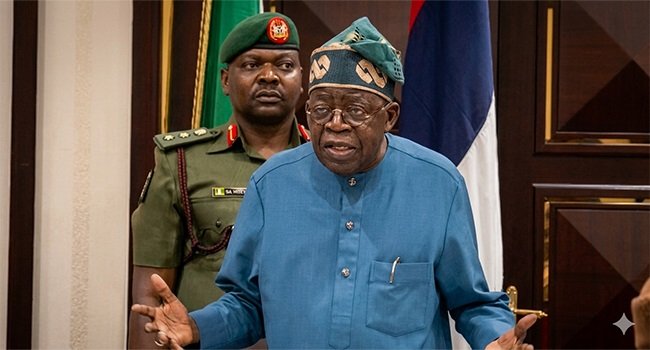
President Bola Ahmed Tinubu has inaugurated the Presidential Working Group on the National Policing Bill, marking a significant step toward establishing the legal framework required for the implementation of citizens’ state policing across Nigeria.
The inauguration, held on Tuesday, reflects the Federal Government’s determination to reform the country’s policing architecture by creating a legislative foundation that supports a more decentralised, responsive, and community-oriented security system.
Furthermore, the working group has been mandated to prepare the legal and institutional framework that will guide the implementation of state policing while ensuring that the proposed system aligns with constitutional principles, democratic governance, and national security objectives.
Strengthening Nigeria’s Security Architecture
The President noted that Nigeria’s evolving security challenges require innovative and sustainable solutions capable of strengthening law enforcement at every level of government. Consequently, the administration believes that a well-structured state policing framework will improve crime prevention, intelligence gathering, rapid response, and public safety across the federation.
According to President Tinubu, effective policing depends on proximity to the people. Officers who understand local communities, cultures, languages, and security dynamics are better positioned to detect emerging threats, build public trust, and respond promptly to criminal activities. He therefore emphasised that community participation remains central to the proposed policing reforms.
Working Group to Develop Comprehensive Legal Framework
The Presidential Working Group is expected to review existing legal provisions, examine international best practices, consult widely with stakeholders, and produce recommendations that will support the drafting and eventual implementation of the National Policing Bill.
Furthermore, the committee will consider constitutional, operational, financial, administrative, and accountability issues necessary for an effective decentralised policing structure.
President Tinubu stressed that the proposed reforms are not intended to weaken existing national security institutions. Instead, they are designed to complement federal security agencies by creating additional layers of policing capable of addressing local security concerns more efficiently.
Strong cooperation between federal and state institutions, he noted, will remain essential to maintaining national unity and coordinated security operations.
Emphasis on Accountability and Human Rights
The President also emphasised the importance of accountability within any future state policing system.
Furthermore, appropriate oversight mechanisms, professional standards, transparent recruitment procedures, operational guidelines, and respect for fundamental human rights must remain integral components of the proposed legal framework.
He maintained that public confidence can only be sustained when policing institutions operate professionally, fairly, and responsibly.
Stakeholder Consultation to Drive Inclusive Reforms
President Tinubu urged members of the working group to engage governors, state legislatures, traditional rulers, civil society organisations, security experts, legal practitioners, and other critical stakeholders throughout the consultation process.
Furthermore, broad national participation, he said, will ensure that the proposed legislation reflects the aspirations and security needs of Nigerians across all regions.
The President further observed that strengthening internal security contributes directly to economic development by creating a safer environment for businesses, investors, and communities.
Improved policing, he explained, enhances public confidence, protects critical infrastructure, encourages investment, and supports sustainable national growth.
Supporting the Renewed Hope Security Agenda
The inauguration of the Presidential Working Group also demonstrates the administration’s broader commitment to modernising Nigeria’s security architecture through institutional reforms, improved coordination, technological innovation, intelligence-driven operations, and stronger community engagement.
These initiatives complement ongoing investments in the Armed Forces and other security agencies aimed at improving national stability.
Members of the working group were encouraged to discharge their responsibilities with professionalism, objectivity, and patriotism while producing recommendations capable of supporting long-term security reforms.
President Tinubu expressed confidence that their work would lay a solid legislative foundation for a policing system that strengthens public safety while respecting Nigeria’s constitutional framework.
Towards a More Responsive Policing System
The establishment of the Presidential Working Group on the National Policing Bill represents another important milestone in Nigeria’s ongoing security reform agenda.
Furthermore, by developing a comprehensive legal framework for citizens’ state policing, the Federal Government seeks to improve community security, strengthen law enforcement capacity, promote accountability, encourage local participation in crime prevention, and build a more responsive policing system capable of addressing the country’s evolving security challenges while safeguarding national unity and democratic governance.
About The Author