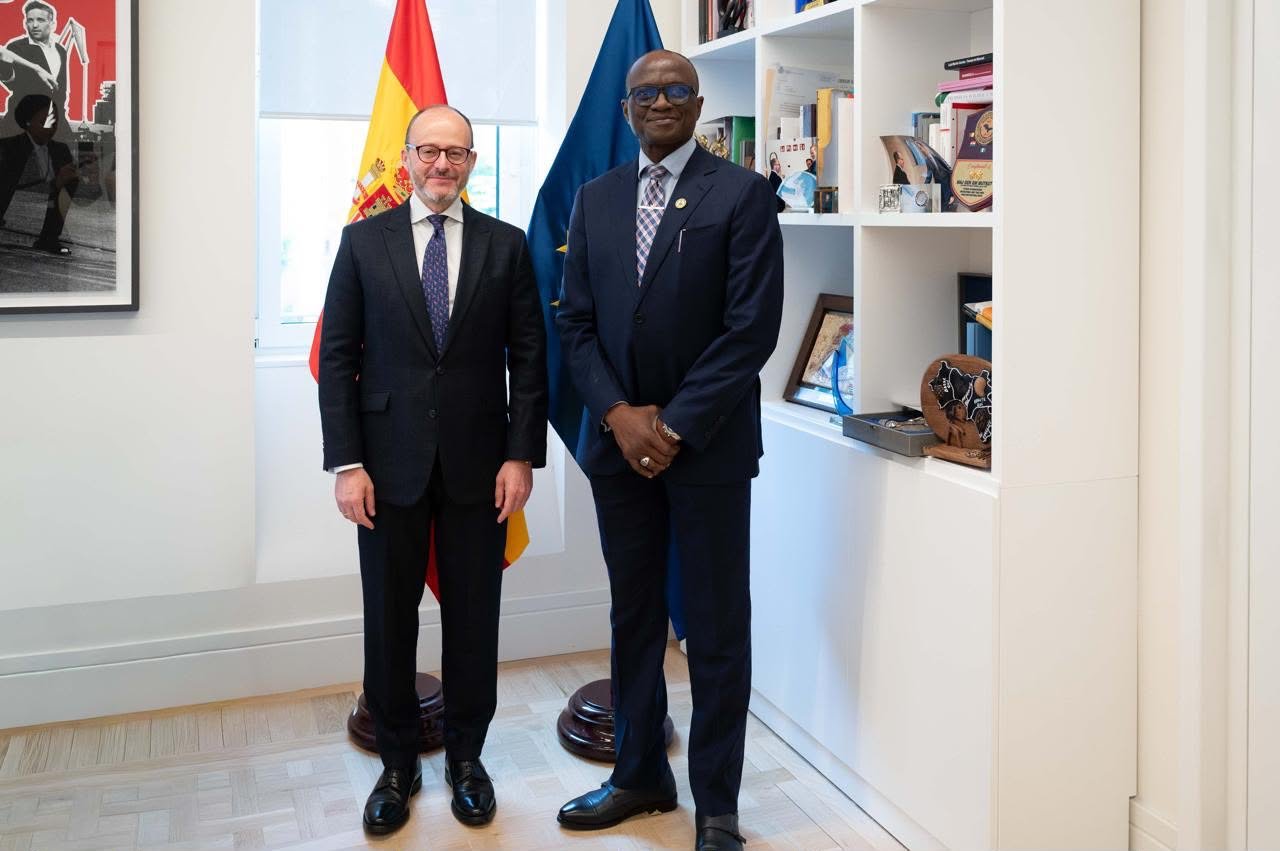
Nigeria and Spain have reinforced international efforts to combat terrorism and violent extremism following the successful hosting of the Senior Officials Dialogue on International Cooperation in Counter-Terrorism in Africa, held in Madrid from May 20 to 21, 2026.
The high-level meeting, jointly organized by Spain’s Ministry of Foreign Affairs, European Union and Cooperation and the National Counter Terrorism Centre (NCTC) under Nigeria’s Office of the National Security Adviser, brought together senior security officials, intelligence chiefs, policymakers, and international partners from Africa, Europe, North America, and the Middle East.
Participants included representatives from Nigeria, Kenya, Chad, Cameroon, Mauritania, Morocco, Ghana, Togo, Benin, Senegal, Côte d’Ivoire, Mali, Somalia, Algeria, Egypt, Turkey, Qatar, Kuwait, Iran, Canada, the United States, the United Kingdom, France, Germany, Belgium, Portugal, Italy, and the Netherlands.
The gathering underscored a growing international consensus that terrorism remains one of the most pressing security challenges confronting Africa and requires stronger cooperation beyond national borders.
A Shared Response to a Growing Threat
Terrorist organizations operating across Africa have continued evolving their tactics, financing mechanisms, and recruitment strategies.
Particularly within the Sahel region, security experts warn that terrorism increasingly overlaps with organized crime, arms trafficking, illicit financial networks, human smuggling, and violent extremism.
These interconnected threats have created complex security environments that individual countries often struggle to address alone.
Consequently, delegates emphasized that enhanced international cooperation remains essential for disrupting terrorist networks and preventing instability from spreading across regions.
The Madrid dialogue provided an important platform for exchanging experiences, strengthening partnerships, and identifying practical solutions to emerging security challenges.
Focus on Intelligence and Information Sharing
One of the key themes discussed during the meeting was the importance of intelligence cooperation among nations.
Security officials highlighted that effective counterterrorism operations depend heavily on timely intelligence gathering, information sharing, and coordinated responses among neighbouring states.
Participants stressed the need to strengthen trust-building measures, improve communication channels, and establish more effective mechanisms for sharing intelligence related to terrorist activities and extremist movements.
Experts noted that terrorist organizations frequently exploit porous borders and jurisdictional gaps, making regional cooperation critical for effective prevention and response efforts.
Enhanced intelligence collaboration was therefore identified as one of the most important tools for improving security outcomes across Africa.
The Challenge of Terrorism Financing
Delegates also examined the growing sophistication of terrorism financing networks.
Extremist groups increasingly rely on a combination of illicit trade, kidnapping, smuggling, criminal enterprises, and informal financial systems to fund their activities.
Disrupting these financial channels remains central to weakening terrorist organizations and reducing their operational capacity.
Participants called for stronger regulatory frameworks, greater international coordination, and improved financial intelligence capabilities to identify and block funding sources that sustain violent extremist groups.
The discussions reflected growing recognition that financial disruption can be as important as military operations in combating terrorism.
Artificial Intelligence and Emerging Threats
A notable aspect of the dialogue was the examination of how extremist groups are increasingly utilizing emerging technologies, particularly Artificial Intelligence, to enhance propaganda, recruitment, communication, and influence operations.
Security experts warned that digital technologies have expanded the reach of extremist narratives and created new challenges for governments and law enforcement agencies.
Participants emphasized the need for proactive strategies capable of countering online radicalization while promoting responsible use of technology.
The discussion highlighted the importance of balancing innovation with security considerations in an increasingly digital world.
African-Led Solutions for African Challenges
A major highlight of the event was the intervention by the National Coordinator of the NCTC, Major General Adamu Garba Laka.
He drew attention to the security vacuum created by the withdrawal of foreign military forces from parts of the Sahel, particularly Mali, warning that such developments could create opportunities for extremist groups to expand their influence.
His remarks reinforced calls for African-led security solutions supported by strong international partnerships.
Participants broadly agreed that while international assistance remains important, sustainable security outcomes ultimately require local ownership, regional collaboration, and political commitment from African governments.
This approach aligns with growing efforts to strengthen regional security frameworks and enhance African capacity for crisis response.
Strengthening Regional Security Architecture
The dialogue also highlighted the importance of regional institutions in addressing security challenges.
Representatives from organizations including the African Union Counter Terrorism Centre, ECOWAS, NATO, INTERPOL, UNODC, UNOCT, and the European Union participated in discussions aimed at improving coordination and operational effectiveness.
Delegates supported measures such as activating the ECOWAS Counter Terrorism Force, strengthening early warning systems, enhancing rapid response mechanisms, and improving regional crisis management capabilities.
Such initiatives are expected to contribute to more coordinated and effective responses to emerging threats.
A Renewed Commitment to Collective Action
The meeting concluded with participating countries reaffirming their commitment to deeper security cooperation and collective action against terrorism and violent extremism.
Delegates agreed that terrorism remains a shared threat that transcends borders and requires sustained collaboration among governments, security institutions, international organizations, and development partners.
The outcome of the Madrid dialogue reflects growing international determination to address the root causes of extremism while strengthening operational capabilities to confront immediate security threats.
Looking Ahead
The successful hosting of the Senior Officials Dialogue on International Cooperation in Counter-Terrorism in Africa represents another important step toward strengthening global partnerships in the fight against terrorism.
For Nigeria, the active role played by the National Counter Terrorism Centre demonstrates the country’s commitment to regional security leadership and international collaboration.
As terrorist threats continue evolving across the continent, sustained cooperation, intelligence sharing, institutional strengthening, and African-led solutions will remain essential for securing lasting peace, stability, and development throughout Africa.
About The Author