
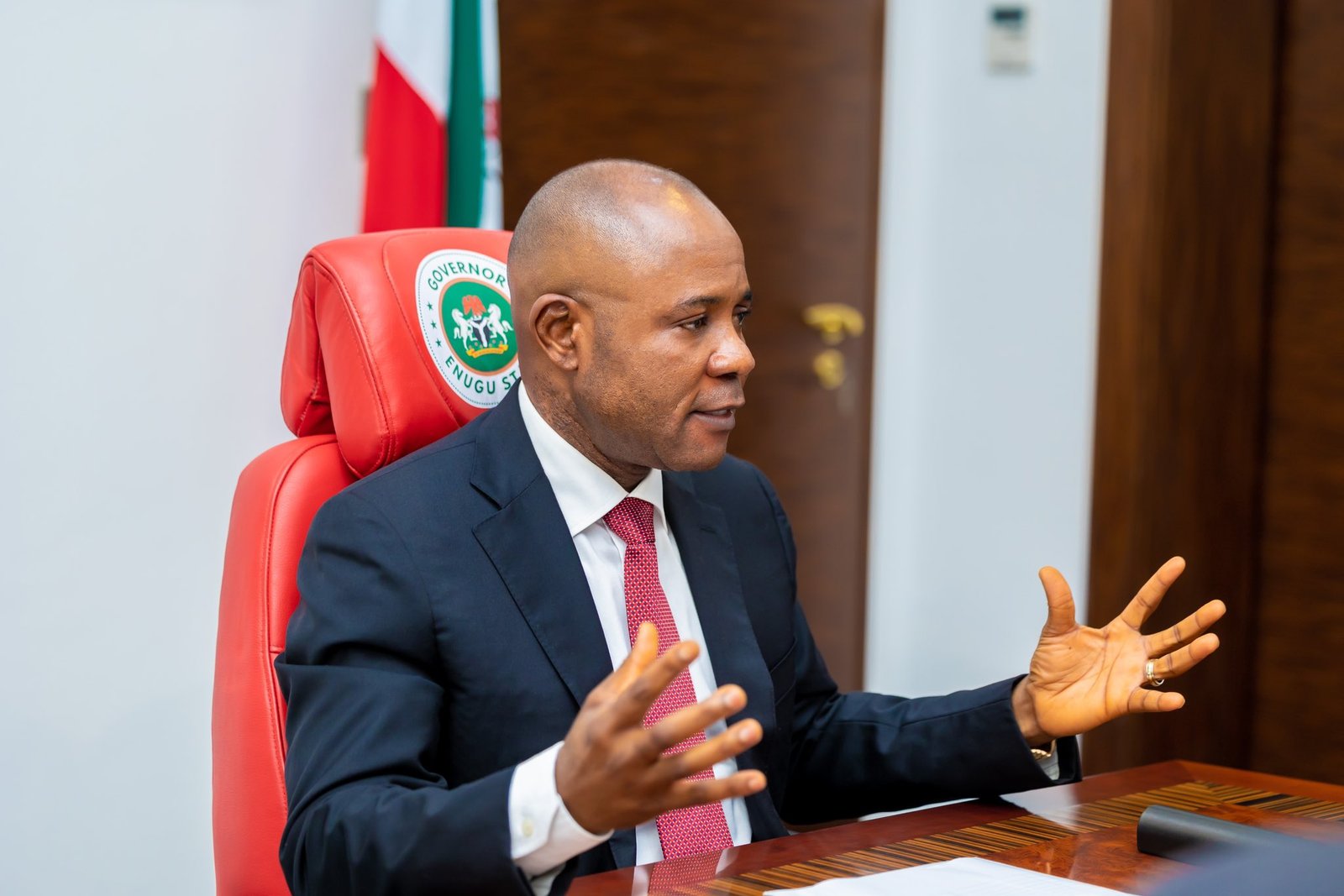
Peter Mbah has called on public office holders across Enugu State to embrace the three pillars of his administration—transparency, accountability, and traceability—emphasising that every naira lost to corruption, financial misconduct, and non-compliance deprives citizens of quality public services and critical infrastructure.
The governor stressed that responsible management of public resources remains essential to achieving sustainable development, improving public trust, and delivering the transformational agenda of his administration.
Furthermore, he noted that effective governance depends not only on visionary policies but also on integrity, discipline, and strict adherence to established financial and administrative procedures.
Transparency as the Foundation of Good Governance
Governor Peter Mbah explained that transparency remains indispensable to building strong public institutions.
Furthermore, open and accountable governance encourages public confidence while promoting greater citizen participation in the development process.
According to him, transparent systems ensure that government decisions, expenditures, and projects remain open to proper scrutiny, thereby reducing opportunities for abuse.
He maintained that transparency strengthens democratic governance and enhances institutional credibility.
Promoting Accountability in Public Service
The governor also urged public officials to remain accountable for every decision and every resource entrusted to them.
Furthermore, accountability ensures that public officers discharge their responsibilities with integrity, professionalism, and commitment to the common good.
Governor Mbah stated that those entrusted with public office must always remember that government resources belong to the people and should therefore be managed responsibly.
Such accountability, he noted, remains central to achieving meaningful and sustainable development.
The Importance of Traceability
Governor Mbah identified traceability as another critical pillar of effective governance.
Furthermore, he explained that every public expenditure should be properly documented, monitored, and verifiable from allocation to execution.
Strong traceability systems enable government institutions to monitor project implementation while ensuring that public funds achieve their intended objectives.
Accordingly, the administration continues to strengthen mechanisms that improve financial oversight and institutional efficiency.
Fighting Corruption Through Strong Institutions
The governor reiterated that corruption, financial misconduct, and non-compliance undermine development by diverting resources away from projects that improve the lives of citizens.
Furthermore, every instance of financial mismanagement reduces the government’s ability to provide quality education, healthcare, infrastructure, security, and other essential public services.
He stressed that preventing corruption requires both strong institutions and ethical leadership at every level of government.
Consequently, his administration remains committed to enforcing high standards of integrity throughout the public service.
Delivering Better Services to Citizens
Governor Mbah observed that prudent financial management directly translates into improved service delivery.
Furthermore, resources saved through efficient governance can be redirected toward roads, schools, hospitals, water projects, agricultural development, and other priority sectors.
He explained that responsible stewardship of public funds enables government to fulfil its obligations while improving the quality of life for residents.
Every naira accounted for, he added, strengthens the state’s development capacity.
Building Public Trust
The governor emphasised that public confidence grows when government demonstrates honesty, transparency, and fiscal discipline.
Furthermore, citizens are more willing to support government programmes when they observe responsible management of public resources.
Governor Mbah encouraged every public official to become an ambassador of integrity by consistently upholding ethical standards in the discharge of official duties.
Such conduct, he said, strengthens the relationship between government and the people.
A Shared Commitment to Development
Governor Mbah reminded public office holders that the responsibility for building a prosperous Enugu State belongs to everyone entrusted with public service.
Furthermore, collaboration, discipline, and adherence to due process remain essential to achieving the administration’s ambitious development objectives.
He encouraged officials to continue placing the interests of citizens above personal considerations while remaining committed to excellence in service delivery.
According to him, lasting development can only emerge through collective responsibility and accountable leadership.
A Vision Anchored on Integrity
Governor Peter Mbah’s call for transparency, accountability, and traceability reflects his administration’s determination to build a governance system founded on integrity, efficiency, and responsible public financial management.
Furthermore, his emphasis on protecting every public naira reinforces the belief that prudent stewardship remains essential for delivering quality infrastructure and social services.
As public institutions continue to strengthen compliance, improve financial oversight, and uphold ethical standards, Enugu State is expected to deepen public trust, accelerate development, and create a governance culture that places the welfare of citizens at the centre of every decision.
About The Author